 Pin Recipe
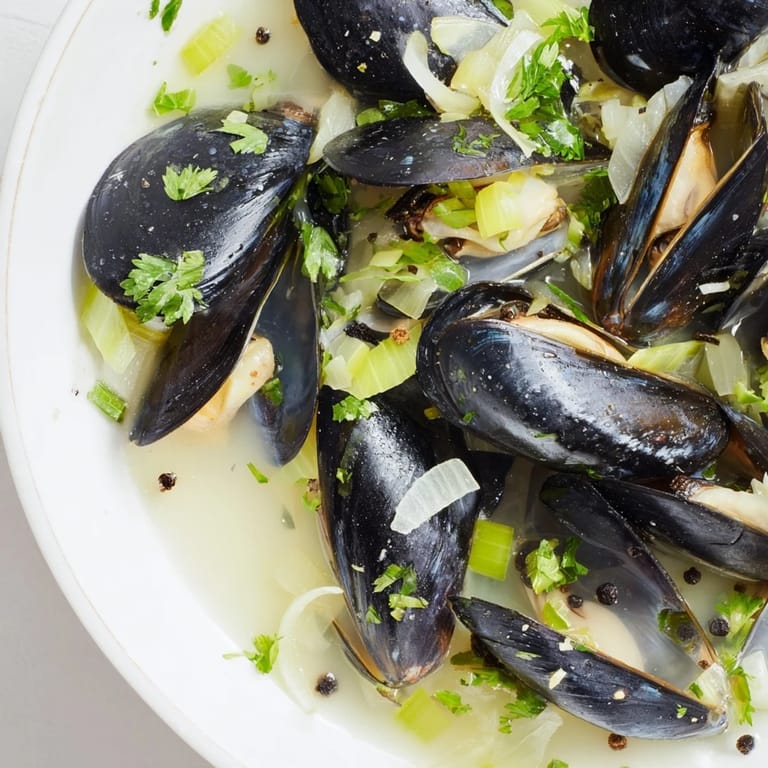
 There's something about the briny ocean smell that hits you the moment those mussels crack open—it transported me straight to a small harbor town where I first watched a Belgian cook work her magic in a cramped kitchen. She moved with such ease, tossing fresh mussels into a pot of fragrant wine and aromatics, and within minutes had created something that tasted like the sea itself. That moment taught me that the best dishes don't need complexity, just respect for honest ingredients and a little patience.
I made this for a dinner party once when I was nervous about impressing guests, and it became the moment I realized sometimes the simplest dishes speak loudest. Everyone passed around the pot, fighting over the last few mussels and the remaining broth, and nobody wanted to leave the table. The wine steamed off into something magical, and I realized that Belgian home cooking isn't about showing off—it's about creating moments worth remembering.
What's for Dinner Tonight? 🤔
Stop stressing. Get 10 fast recipes that actually work on busy nights.
Free. No spam. Just easy meals.
Ingredients
- Fresh live mussels (2 kg): Always buy the day of and keep them cold; discard any that feel heavy or don't close when tapped, as they're likely dead and unsafe.
- Shallots (2 medium, finely chopped): Their subtle sweetness mellows as they soften, building depth in the broth without overpowering the mussels.
- Garlic (2 cloves, minced): Mince it fine so it releases quickly into the oil—this creates an instant aroma that wakes up your kitchen.
- Leek, white part only (1 small, finely sliced): The white part is milder than green, giving you gentle onion flavor without harshness.
- Celery (2 stalks, finely chopped): A quiet player that adds earthiness and helps build a savory base for the wine.
- Fresh flat-leaf parsley (1 small bunch, chopped): Stir it in just before serving so the brightness stays fresh, not cooked away.
- Fresh thyme (2 sprigs) and bay leaf (1): These herbs infuse slowly into the wine, creating an aromatic foundation that defines the dish.
- Dry white wine (300 ml): Choose something you'd drink—the wine becomes the soul of the broth, so it shouldn't taste harsh or overly acidic.
- Olive oil (2 tbsp): This is your cooking medium for the aromatics, letting flavors bloom before the wine arrives.
- Black pepper and sea salt: Go easy on salt since mussels themselves are briny; taste the broth first and adjust from there.
- Lemon wedges: Squeeze these over the finished dish to cut richness and brighten the briny flavors.
Instructions
- Prepare your mussels:
- Rinse them under cold running water while you scrub the shells gently with your fingers or a small brush. Any mussel that feels oddly heavy, smells off, or won't close when you tap it firmly belongs in the trash—trust your instincts.
- Build the flavor base:
- Heat olive oil in your pot over medium heat, then add shallots, garlic, leek, and celery. Let them soften for about 3–4 minutes, stirring occasionally until the kitchen fills with that sweet, savory aroma that signals they're ready.
- Add herbs and wine:
- Drop in your thyme sprigs and bay leaf, then pour in the white wine. Bring it to a gentle simmer and let it bubble quietly for a minute while the wine's acidity brightens everything together.
- Steam the mussels:
- Tip all your cleaned mussels into the pot, cover tightly with a lid, and increase the heat to high. After about 5–7 minutes of steaming, shake the pot gently to redistribute—you'll hear the mussels shifting, a satisfying sound that means they're opening.
- Finish with care:
- Once most mussels have cracked open (discard any stubborn ones that refuse), remove the pot from heat and stir in your chopped parsley. Add black pepper to taste, then carefully taste the broth—if it needs salt, add just a pinch since the mussels themselves are naturally salty.
- Serve while hot:
- Ladle everything into deep bowls so each person gets plenty of broth, and set lemon wedges and crusty bread nearby for soaking up every drop.
 Pin Recipe
 I'll never forget the first time someone mopped the bottom of their bowl with bread, made eye contact with me, and said nothing else was needed. That simple gesture told me everything about what honest cooking can do—it doesn't need explanation or apology, just the confidence to let ingredients speak for themselves.
The Science of Steaming
Mussels are like little alarm clocks that pop open when heat hits them. The high heat creates steam that forces their shells apart, releasing their sweet meat into the surrounding liquid. This isn't violence—it's how they're designed to cook, and it happens fast enough that the meat stays tender instead of becoming rubbery. The tight lid is crucial because it traps that steam, creating a miniature sauna where every mussel gets treated equally.
Wine Pairing and Serving
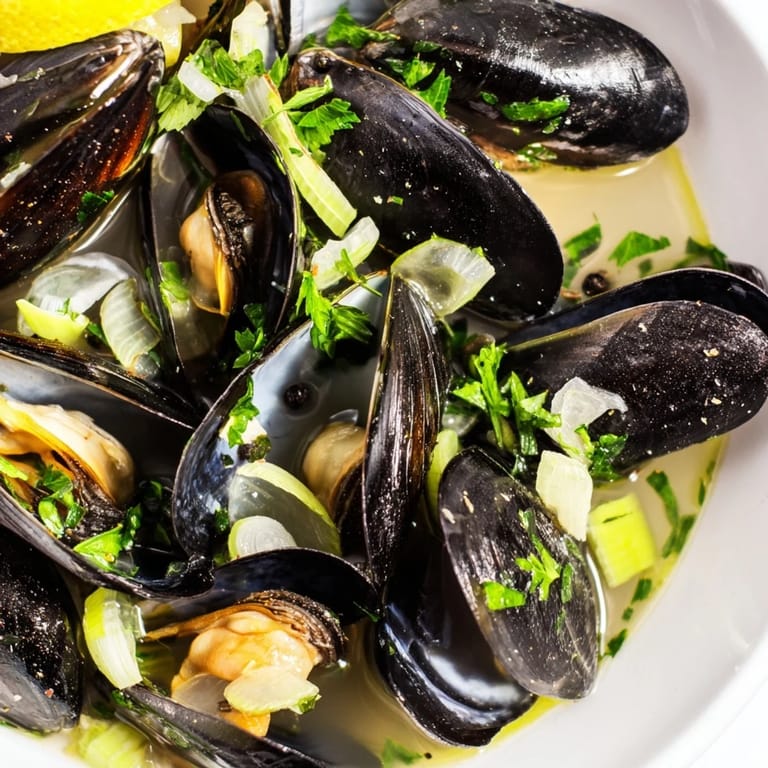
The white wine you use becomes the broth itself, so choose something crisp and dry—a Sauvignon Blanc, Muscadet, or even a simple Pinot Grigio all work beautifully. Serve moules marinière in deep bowls where the broth pools around the mussels, and have crusty bread standing by like an essential teammate. In Belgium, this dish often arrives with frites and mayonnaise on the side, turning dinner into an event rather than just a meal.
Beyond the Basic Recipe
Once you understand the foundation, variations come naturally. Some cooks add a splash of cream at the end for richness, others stir in a knob of butter just before serving, and adventurous types sneak in a pinch of saffron for something unexpected. The leftover broth becomes liquid gold—freeze it and use it as a base for seafood soups, or simply reheat it with crusty bread for a simple lunch that tastes like yesterday's dinner party magic.
- A tablespoon of cream stirred in just before serving creates silky richness without heaviness.
- Save every drop of broth and use it within three days for seafood pasta or soup.
- If mussels feel expensive, remember that two kilograms feeds four people generously, making it surprisingly economical.
 Pin Recipe
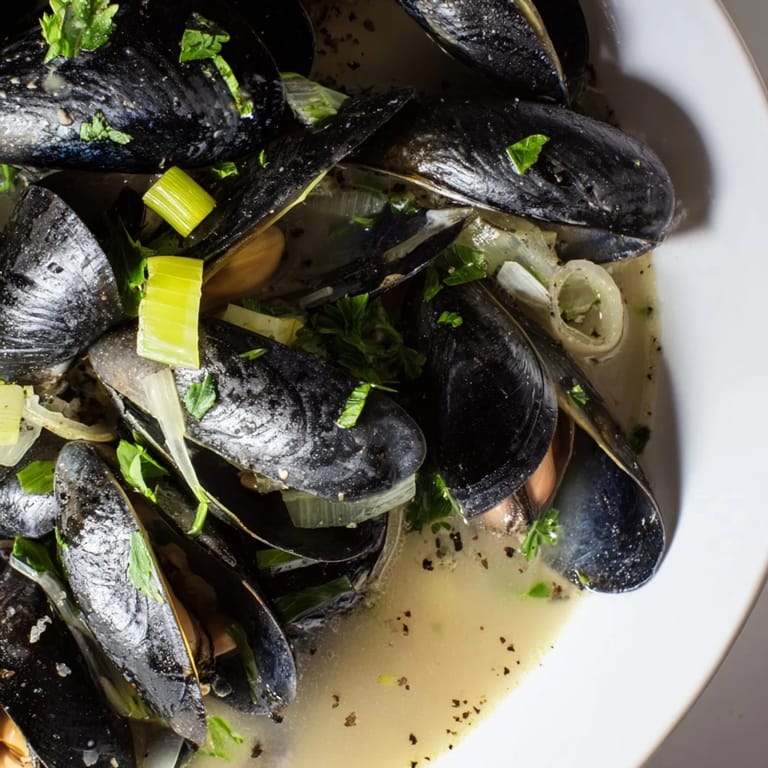
 Moules marinière taught me that elegance lives in simplicity, not complexity. There's real joy in a dish that asks so little yet delivers so much—a reminder that sometimes the best meals are the ones where the ingredients do the talking and you simply listen.
Recipe FAQs
- → How should I clean the mussels before cooking?
Rinse mussels under cold water, scrub the shells, and discard any that are cracked or remain open when tapped.
- → Can I use a different type of wine?
Dry white wine works best to enhance flavors, but a light, crisp wine alternative can be used without overpowering the mussels.
- → What herbs complement this mussel preparation?
Thyme, bay leaf, and flat-leaf parsley add aromatic depth and fresh herbal notes to the dish.
- → How long are mussels steamed?
Steam mussels for 5–7 minutes until shells open, indicating they are cooked through and tender.
- → Is it necessary to remove unopened mussels after steaming?
Yes, unopened mussels should be discarded as they may be unsafe to eat.
- → What sides pair well with this mussel preparation?
Crusty bread or classic Belgian fries are ideal for soaking up the flavorful broth.