 Pin Recipe
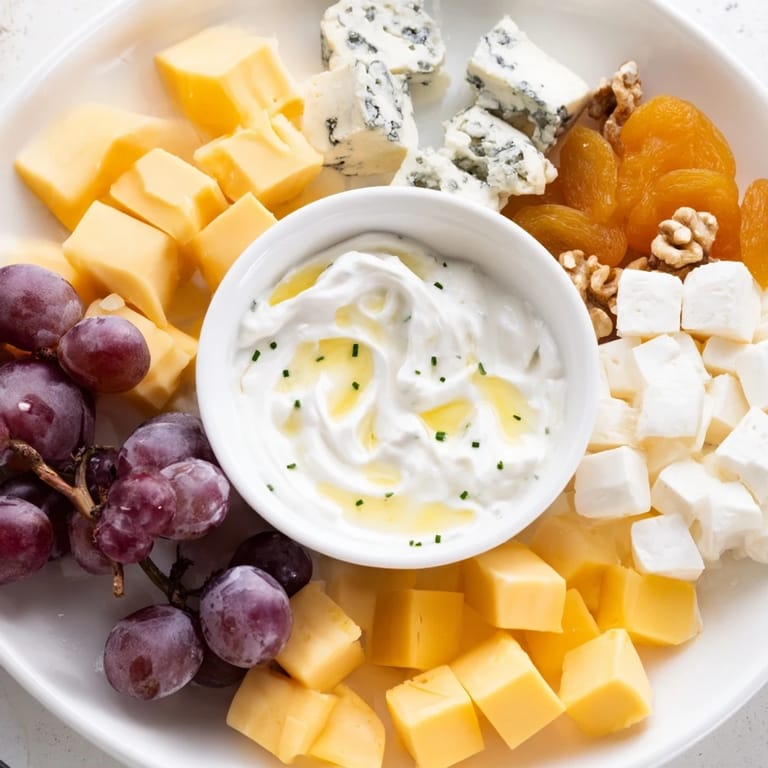
 A friend brought a platter to a dinner party that made everyone stop mid-conversation—not just to eat, but to admire it first. It was arranged like something from a gallery, with cheeses fanned out in perfect quadrants around a creamy center. I'd never thought of a cheese board as architecture before, but once I saw how the shape and colors created this natural gathering point, I understood why the Celtic cross pattern has endured for centuries. It turns out that ancient design principles work just as well on a plate as they do in stone.
The first time I actually made this platter, I was hosting a small tasting with people who took their cheese seriously. I was nervous about whether the proportions would work or if the dip would hold its own against four strong personalities of cheese. But then something clicked: the chive dip became a bridge between flavors, the honey deepened the blue cheese moment, and the grapes gave everyone a palate cleanser between bites. By the end of the night, the platter had become a map of the conversation—you could see where people had lingered by which quadrants were half-empty.
What's for Dinner Tonight? 🤔
Stop stressing. Get 10 fast recipes that actually work on busy nights.
Free. No spam. Just easy meals.
Ingredients
- Irish Cheddar, cubed: This one's personal—something about the slightly crystalline texture and warm, earthy flavor makes it feel like the heart of the board. Cut it into generous cubes so people can pick them up and taste them on their own.
- Brie, sliced: The soft, creamy counterpoint that makes everyone happy. Slice it thin enough that it's elegant but thick enough that it holds together when someone picks up a piece.
- Blue Cheese, crumbled: The bold voice that demands attention. Its salty punch reminds your palate that cheese is alive, and the honey drizzle softens it into something almost sweet.
- Manchego, sliced: This Spanish cheese brings a slightly nutty, firm texture that's almost buttery. It's the quiet sophistication on your board, and it pairs beautifully with the dried fruit.
- Sour Cream or Greek Yogurt: Use whichever you have—I prefer Greek yogurt because it's slightly thicker and holds its shape better when people dip into it repeatedly throughout the evening.
- Fresh Chives, finely chopped: Don't skip this or use dried. The bright, oniony bite brings the dip to life and keeps it from feeling too heavy.
- Lemon Juice: Just a teaspoon keeps everything tasting fresh and prevents the dip from tasting flat or one-dimensional.
- Seedless Red Grapes: These are your color contrast and your palate cleansers. They roll slightly as people reach for them, so arrange them strategically.
- Dried Apricots: They add a chewy sweetness that bridges the gap between the salty cheeses and any crackers. The golden color is beautiful too.
- Walnuts: Toasted or raw, these add crunch and earthiness. I like to scatter them to suggest the cross lines, but they also just taste good.
- Honey: A good honey here matters. Drizzle it warm over the blue cheese and it becomes this luxurious moment on the board.
- Rustic Crackers: Choose ones that won't shatter when someone spreads cheese on them. You want them sturdy enough to support a generous bite.
- Baguette, sliced: Toast the slices lightly if you want them to feel more substantial, or leave them soft if you prefer them to soak up the flavors.
Instructions
- Make the Dip First:
- While everything else sits at room temperature, mix your sour cream or yogurt with the chopped chives and lemon juice. Taste it and season with salt and pepper—this is your flavor anchor, so don't be shy. It should taste bright enough that someone eating it plain wants another spoonful.
- Find Your Center:
- Place the bowl of dip in the absolute center of your serving platter. This is the hub everything radiates from, so take a moment to get it right.
- Build the Quadrants:
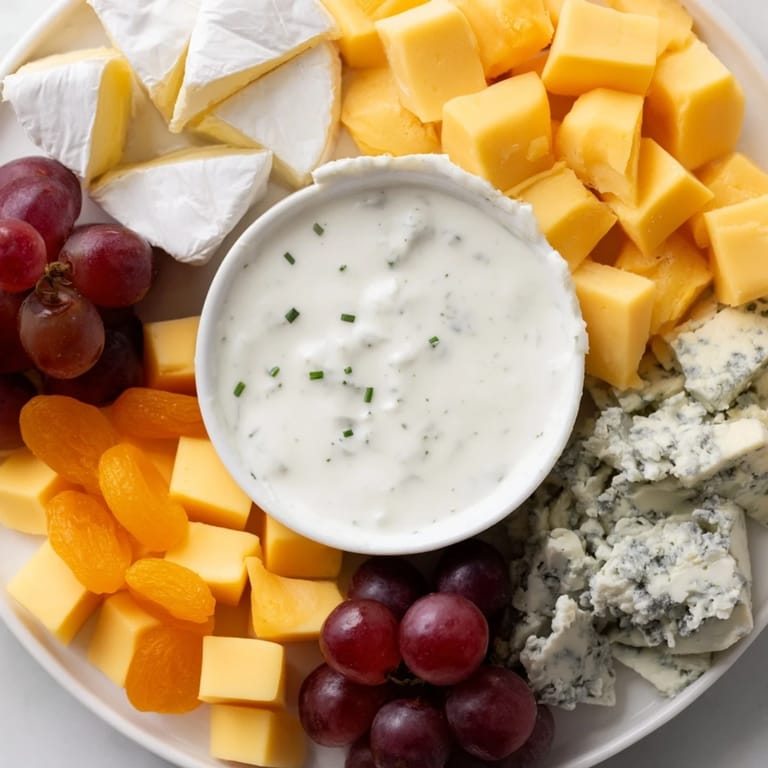
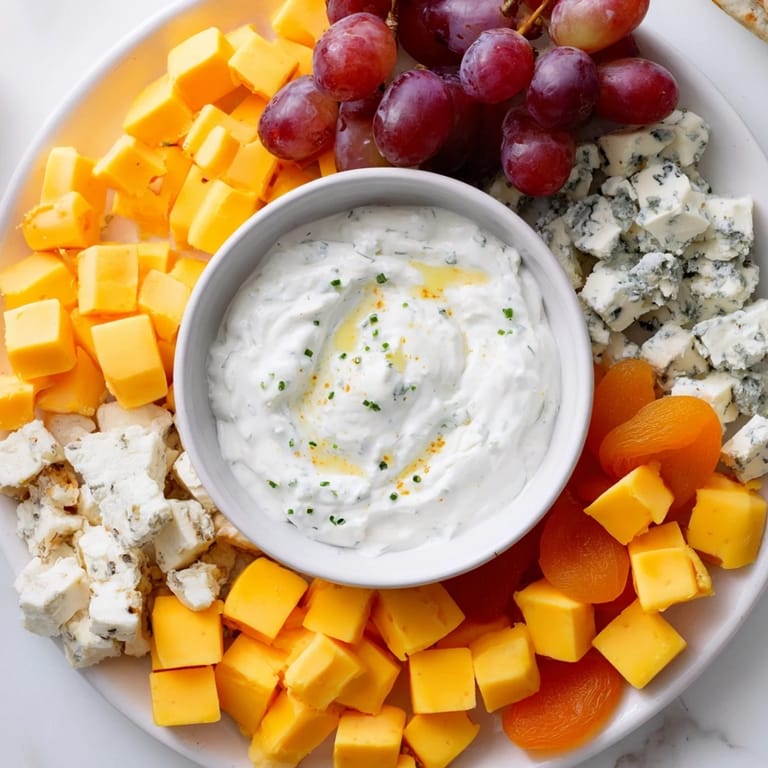
- Imagine a cross dividing your platter into four equal sections. Start with one cheese in the first quadrant—fan it or group it, whatever feels more elegant to you. Move clockwise, placing each different cheese in its own space. Step back and look at it. You want the colors to pop against each other.
- Fill the Spaces:
- The gaps between cheese quadrants are where your grapes, apricots, and walnuts live. Scatter them with intention, not randomly. I like to create little vertical lines of walnuts to reinforce the cross shape, almost like drawing with food.
- The Honey Moment:
- Warm your honey slightly so it's pourable, then let it drizzle over the blue cheese in a thin, golden thread. It will pool slightly and look intentional, not accidental.
- Crackers and Bread:
- Arrange these around the outer edge of the platter in a casual fan or pile. Leave some space—your guests need room to maneuver without knocking things over.
- Serve at Room Temperature:
- Take the platter out of the refrigerator at least thirty minutes before serving. Cold cheese is a missed opportunity—room temperature is when each one shows its true personality.
 Pin Recipe
 There was this moment during one tasting when a guest who claimed to dislike blue cheese took a small piece, dipped it in the yogurt, and then reached back for another. By the end of the evening, she'd worked her way through almost the entire blue cheese quadrant. That's when I realized this platter wasn't just about feeding people—it was about giving them permission to be curious, to try things in a low-pressure way, and maybe discover they liked something they thought they didn't.
The Story Behind the Celtic Cross Pattern
The Celtic cross isn't just beautiful—it's functional. The circle around the center point represents wholeness, and the four arms reaching out suggest balance and direction. On a cheese platter, this same logic works magically: your eye naturally moves from the center outward, you're never confused about where to start, and everything feels intentional rather than scattered. It's a pattern that's survived for over a thousand years, which tells you something about how well humans respond to it.
Pairing Wine and Building a Moment
A cheese platter is really an invitation to slow down, and the wine you choose either honors that or fights against it. A crisp Sauvignon Blanc cuts through the richness of the brie and cheddar, while a light Pinot Noir brings out the earthiness in the manchego and the walnuts. The point isn't to be fancy—it's to make the experience feel complete, like someone thought ahead about how all the pieces would taste together. Pour the wine into actual glasses, not plastic cups, and give everyone time to breathe between bites.
The Details That Matter
It's easy to think of a cheese platter as just an assembly job, but the small choices matter: a sharp cheese knife for the hard manchego, a butter knife for the soft brie, a small spoon for the dip. When guests can serve themselves without frustration, the whole experience feels more luxurious. The honey drizzle should look like it was placed with intention, not rushed. The walnuts should be arranged to echo the cross shape, even if only you know the geometry you're working with.
- If you're making this ahead, keep everything in separate containers and assemble only when guests are about to arrive for maximum freshness.
- Apple or pear slices can join the party, but add them no more than thirty minutes before serving so they don't oxidize and turn brown.
- This platter feeds eight comfortably, but the ratios scale beautifully if you need to feed more—just keep the proportions equal and the cross shape centered.
 Pin Recipe
 There's something generous about a platter like this, something that says you made room for people and their preferences. Whether someone reaches for the sharp cheese or the soft one, the honey-draped blue or the buttery manchego, they're being honored by the variety you've offered. That's the real gift.
Recipe FAQs
- → How do I create the Celtic cross layout?
Divide a large round platter visually into four quadrants, placing each cheese type in its own section around a central dip for a striking effect.
- → What can I use for the central dip?
Mix sour cream or Greek yogurt with finely chopped fresh chives, lemon juice, salt, and pepper for a refreshing complement to the cheeses.
- → Can I substitute the cheeses used?
Yes, feel free to swap cheeses with regional favorites or seasonal varieties to suit your preferences or dietary needs.
- → How should I serve the platter for best flavor?
Bring cheeses to room temperature before serving to enhance their natural flavors and textures.
- → What accompaniments pair well with this platter?
Red grapes, dried apricots, walnuts, honey, rustic crackers, and sliced baguette add variety and balance to the presentation.