 Pin Recipe
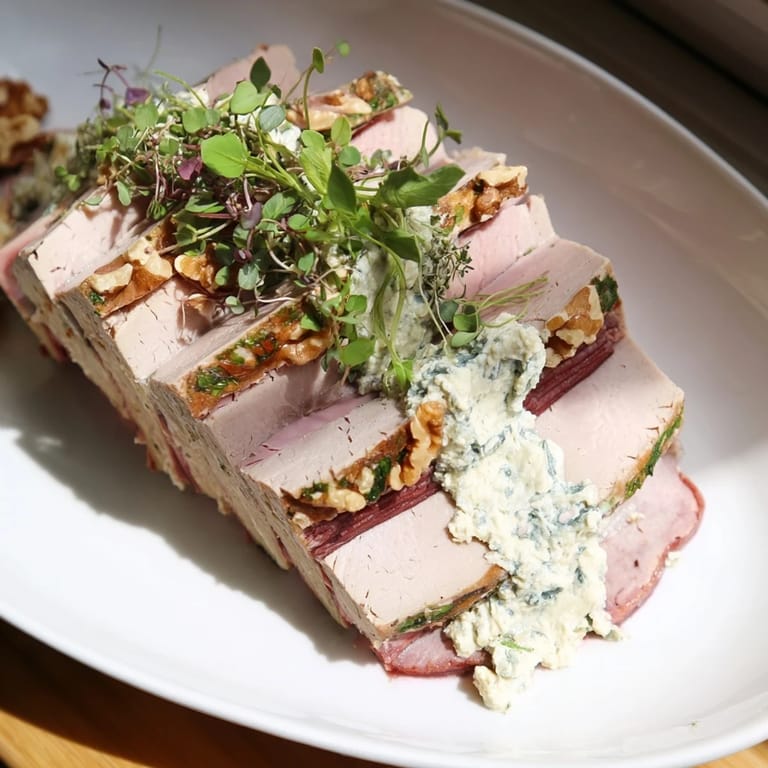
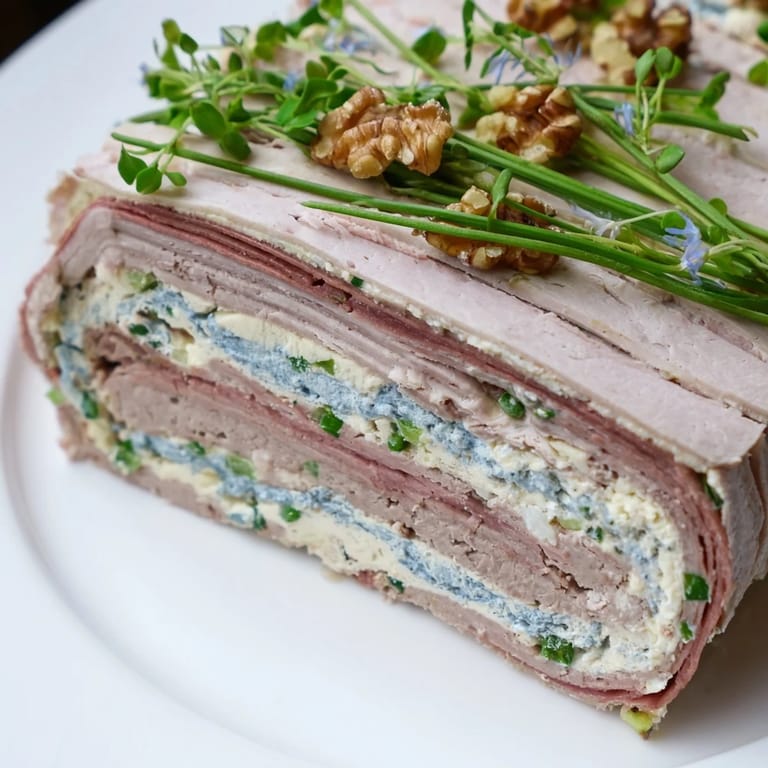
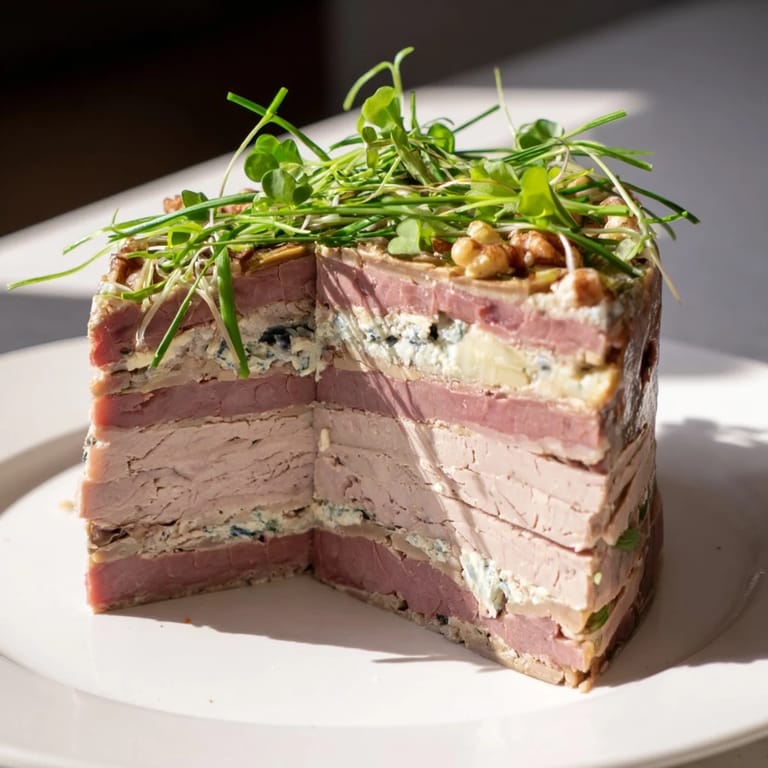
 The first time I visited the Grand Canyon, I stood at the rim watching the light shift across those impossible layers of rust and gold, and I couldn't stop thinking about food. Not in a hungry way, but in that way where your brain gets stuck on an image and won't let go. Years later, in my kitchen on a random Tuesday, I decided to build something that captured that feeling—a terrine that looked like those canyon walls, with a river of blue cheese running through the center like water carving through stone. It took three attempts and a lot of burnt custard before I got it right, but when I finally unmolded it and saw those layers stacked in perfect stripes, I understood why I'd been chasing this idea all along.
I made this for a dinner party last autumn when my sister was visiting from out of state, and I remember her taking a photo before anyone could eat it. The afternoon sun hit the platter just right, and suddenly this thing I'd stressed over for hours looked exactly like what I'd imagined—dramatic, intentional, a little bit wild. My nephew asked if it was actually supposed to taste good or if it was just pretty, which was fair, but then he had seconds and didn't ask any more questions.
What's for Dinner Tonight? 🤔
Stop stressing. Get 10 fast recipes that actually work on busy nights.
Free. No spam. Just easy meals.
Ingredients
- Beef sirloin, thinly sliced (300g): This is your foundation layer—choose a tender cut and slice it thin enough to drape slightly, which gives you that natural cliff-face effect you're after.
- Turkey breast, thinly sliced (250g): Turkey stays pale and clean-looking, which matters when you're building something visual; it creates contrast without being too heavy.
- Smoked ham, thinly sliced (200g): The smoke adds flavor that threads through the whole thing, and the pink hue breaks up the monotony of the meat tones.
- Pork loin, thinly sliced (200g): Mild and slightly sweet, it acts as a neutral bridge between the stronger flavors and keeps the whole terrine balanced.
- Blue cheese, crumbled (150g): This is your river, and it needs to be bold enough to taste like something intentional; don't water it down or it disappears.
- Cream cheese, softened (100g): This binds the blue cheese without drowning its flavor—the balance matters more than you'd think.
- Heavy cream (30ml for mousse, 60ml for binding): The cream in the blue cheese mixture should be whipped just slightly to lighten it; for the binding layer, keep it simple and unwhipped.
- Fresh chives and parsley (1 tbsp each, finely chopped): These herbs keep the blue cheese from tasting flat and one-note; they're small additions that matter.
- Eggs (4 large): These bind the layers together during cooking, so use fresh eggs and don't skip whisking the binding mixture smooth.
- Whole milk (120ml): This is part of your custard base and keeps the baked layers tender rather than rubbery.
- Salt and black pepper: Season the binding layer generously—it's easy to under-season something baked and dense.
- Microgreens, edible flowers, and toasted walnuts (optional): Save these for the final moment; they're not necessary but they make the presentation sing.
Instructions
- Set up your workspace:
- Preheat your oven to 160°C and line a loaf pan with plastic wrap, letting it hang over the edges by several inches. This might seem fussy, but it's how you'll flip the whole thing out cleanly later.
- Make the binding custard:
- Whisk the eggs, milk, heavy cream, salt, and pepper until completely smooth and pale. Don't skip the whisking—you need air in here.
- Prepare the blue cheese river:
- Blend the crumbled blue cheese with softened cream cheese and heavy cream until you have something creamy but still textured. Fold in the fresh chives and parsley at the very end so they don't bruise, then season with black pepper.
- Begin the canyon layers:
- Start arranging your beef slices along one side of the loaf pan, overlapping them so they slope downward and create that cliff-wall effect. Think of it like shingles on a roof, but at an angle.
- Build in alternating layers:
- Add turkey breast next, then smoked ham, then pork loin, keeping that downward slope going. Every two or three layers, brush the meat gently with the binding custard—not soaked, just a light coat to help everything hold together.
- Pour the river:
- About halfway up the pan, spoon a thick line of the blue cheese mixture down the center, as if you're drawing a river through the canyon. Continue building meat layers around and over it, maintaining that sloped cliff pattern all the way up.
- Seal and prepare for the bath:
- Top with one final layer of meat, then fold the plastic wrap overhang back over the top and press down gently. Wrap the whole pan tightly with foil so no water can sneak in.
- Create and use a water bath:
- Place your loaf pan inside a larger roasting dish, then fill the roasting dish with hot water until it comes halfway up the sides of the loaf pan. This gentle, humid heat is what keeps the terrine moist and sets it properly.
- Bake with patience:
- Bake for 1 hour and 15 minutes. The terrine will firm up but shouldn't turn brown or look agitated in the water bath. When it's done, let it cool to room temperature before moving it.
- Chill until set:
- Refrigerate for at least 4 hours, though overnight is better. The chilling time is crucial—this is when everything melds together and becomes sliceable rather than crumbly.
- Unmold with confidence:
- Turn the pan upside down onto a serving platter and carefully peel away the plastic wrap. If it sticks, run a thin knife around the edges or dip the pan briefly in warm water.
- Slice and reveal:
- Use a sharp, hot knife (run it under warm water and wipe it dry between cuts) to slice thick pieces that show off all your layers and that blue cheese river running through.
 Pin Recipe
 What surprised me most about making this dish was how much it became about patience. I'm not a patient cook usually—I like things fast and loud and a little chaotic. But this terrine forced me to slow down, to build something carefully, to trust that the hours of chilling would turn what looked like chaos into something structured and beautiful. When I finally cut into it and saw those perfect stripes, that blue cheese river exactly where I'd placed it, I understood something about cooking that I hadn't before.
Building the Visual Drama
The trick to making this look like the Grand Canyon is understanding that you're not stacking—you're tilting. Each layer should slope downward slightly, as if the whole terrine is sliding off to one side. This isn't just decorative; it actually helps the binding custard flow through and hold everything together. When you're brushing on that egg mixture between layers, let it pool slightly in the slopes so it acts as glue. The messier you let it be at this stage, the more stable it becomes after baking.
The Blue Cheese River as Centerpiece
Placing the blue cheese mousse is the moment where this goes from interesting to memorable. I position it about two-thirds of the way through the layers, which means it's not quite centered—more canyon-like, less symmetrical. The mousse should be thick enough that it doesn't run when you pour it, but soft enough that it spreads naturally into the gaps between meat layers. If your mousse is too stiff, let it warm up for a minute. If it's too loose, it'll run right out of the pan during baking.
Serving and Pairing
This is a statement dish, so give it room to breathe on the platter. Serve it with toasted brioche or good crusty bread on the side—not because the terrine needs it, but because people will want something to pick up the silky mousse and meat juices. A light red wine like pinot noir works beautifully, or go with a crisp white if blue cheese intimidates your guests. If you're making this for people who love bold flavors, don't apologize for how intense it is; that's the whole point.
- You can make this up to two days ahead, which honestly makes it even better for dinner party stress.
- Slice thickly—thin slices will fall apart, thick ones hold the drama.
- Let each slice sit on the plate for a moment before plating garnish so the presentation stays sharp.
 Pin Recipe
 Making something this elaborate reminds you why cooking matters—it's not just about feeding people, it's about the moment when they see what you've built. This terrine is patient work, but it's worth every hour you spend on it.
Recipe FAQs
- → What type of cheese is used in the mousse?
The mousse features blue cheese combined with cream cheese and fresh herbs for a creamy, tangy center.
- → How is the layered effect achieved?
Thinly sliced meats are carefully arranged in alternating layers, angled to resemble canyon cliffs, with mousse layered in the center.
- → What cooking method helps keep the terrine moist?
It’s baked in a bain-marie, which provides gentle and even heat, preserving moisture and texture.
- → Can the mousse be substituted for milder cheese?
Yes, herbed goat cheese can replace blue cheese for a gentler flavor without losing the creamy texture.
- → How long should the terrine chill before serving?
Chilling for at least 4 hours, preferably overnight, allows the layers to set firmly for neat slicing.
- → What garnishes complement this dish?
Microgreens, edible flowers, and toasted walnuts add fresh, crunchy, and visual contrast to the layered terrine.