 Pin Recipe
 My neighbor stopped by one October afternoon with a bag of vegetables from her garden—carrots still dusty, zucchini almost too large, cherry tomatoes at their peak—and mentioned she'd been craving something warm but not heavy. Standing in my kitchen surrounded by that harvest, I remembered a casserole my colleague had brought to work months earlier, and suddenly it clicked: lentils, those humble little green ones that cook just right, paired with whatever vegetables were speaking to me that day. That's when I understood the magic wasn't in following rules strictly, but in listening to what the season offered.
I made this for my sister during that first real cold snap of the year, when she'd just moved into a new place with an oven that still felt foreign to her. Watching her pull it from the oven, golden and bubbling, something shifted—she texted me the next day saying she'd had it for lunch and finally felt like she'd made her kitchen home. Food does that sometimes.
What's for Dinner Tonight? 🤔
Stop stressing. Get 10 fast recipes that actually work on busy nights.
Free. No spam. Just easy meals.
Ingredients
- Dried green lentils (1 cup, rinsed): These hold their shape beautifully when cooked, unlike brown or red varieties, which is exactly why they matter here—they won't turn to mush in the oven.
- Vegetable broth (3 cups): This is where flavor starts; don't skimp on quality broth, and taste it first to know how much extra salt you might need.
- Onion and garlic (1 medium onion, 2 cloves): The foundation of every good casserole—when they soften and turn golden, everything becomes fragrant and welcoming.
- Carrots, zucchini, bell pepper (2 medium, 1 medium, 1 red): Mix textures and colors intentionally; the carrots bring sweetness, the zucchini adds moisture, the pepper gives brightness.
- Button mushrooms (1 cup, sliced): They release a subtle earthiness that quietly deepens the whole dish without announcing themselves.
- Cherry tomatoes (1 cup, halved): Add these at the end so they stay somewhat intact, giving little bursts of acidity and freshness.
- Fresh spinach (2 cups, roughly chopped): This wilts down to almost nothing, which is the whole point—you're weaving greens throughout without anyone noticing.
- Olive oil (2 tbsp): Use something you'd actually drizzle on bread, because you'll taste it in the sauté.
- Thyme, oregano, smoked paprika, salt, and black pepper: The smoked paprika is the secret—it adds depth without you having to explain where that warmth came from.
- Parmesan cheese or vegan alternative (1/3 cup, grated): This creates a golden, salty crust on top, but it's entirely optional if you prefer to skip dairy.
- Gluten-free breadcrumbs (1/2 cup, optional): These add a textural contrast that makes each bite feel intentional rather than soft throughout.
Instructions
- Heat your oven and start the lentils:
- Preheat to 375°F and combine rinsed lentils with vegetable broth in a medium saucepan. Bring to a boil, then lower the heat and let them simmer gently for 20 to 25 minutes—they should be tender when a fork pierces them easily, but still holding their shape.
- Build the vegetable base:
- While lentils cook, warm olive oil in a large skillet over medium heat and add diced onion and minced garlic, stirring until the kitchen smells irresistible, about 2 to 3 minutes. The garlic shouldn't brown, just soften and release its aroma.
- Layer in the heartier vegetables:
- Add sliced carrots, diced zucchini, diced bell pepper, and sliced mushrooms, stirring occasionally as they soften for 5 to 7 minutes. You'll notice the vegetables release moisture—that's exactly what should happen.
- Add the finishing vegetables and herbs:
- Stir in halved cherry tomatoes, chopped spinach, dried thyme, dried oregano, smoked paprika, salt, and black pepper, cooking for another 2 to 3 minutes until the spinach collapses into the mixture. The whole skillet will smell incredibly savory at this point.
- Combine and transfer:
- Drain any excess liquid from the cooked lentils and add them to the skillet, mixing everything together gently so nothing breaks apart. Transfer this to a greased 2-quart baking dish.
- Top and bake:
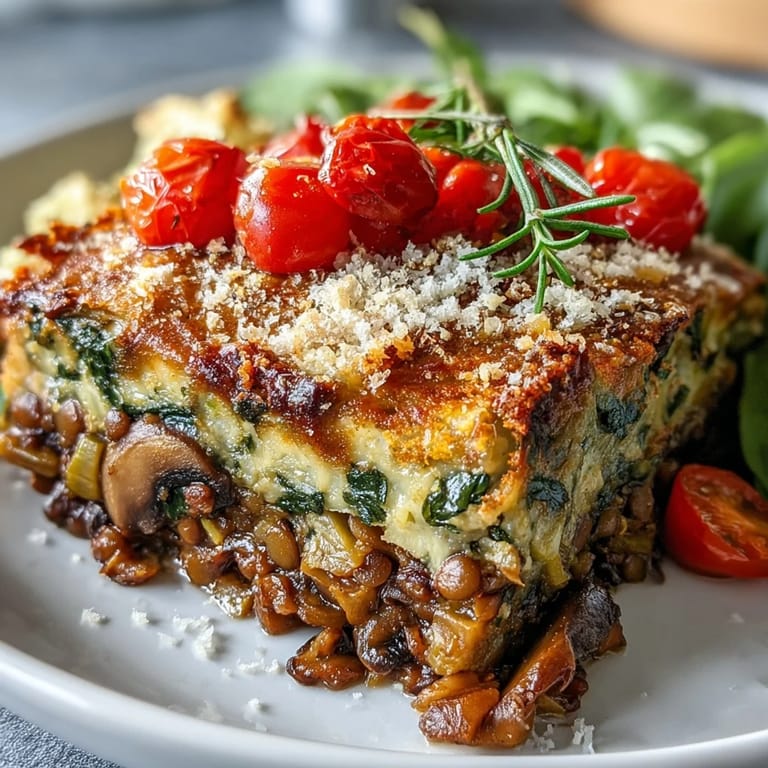
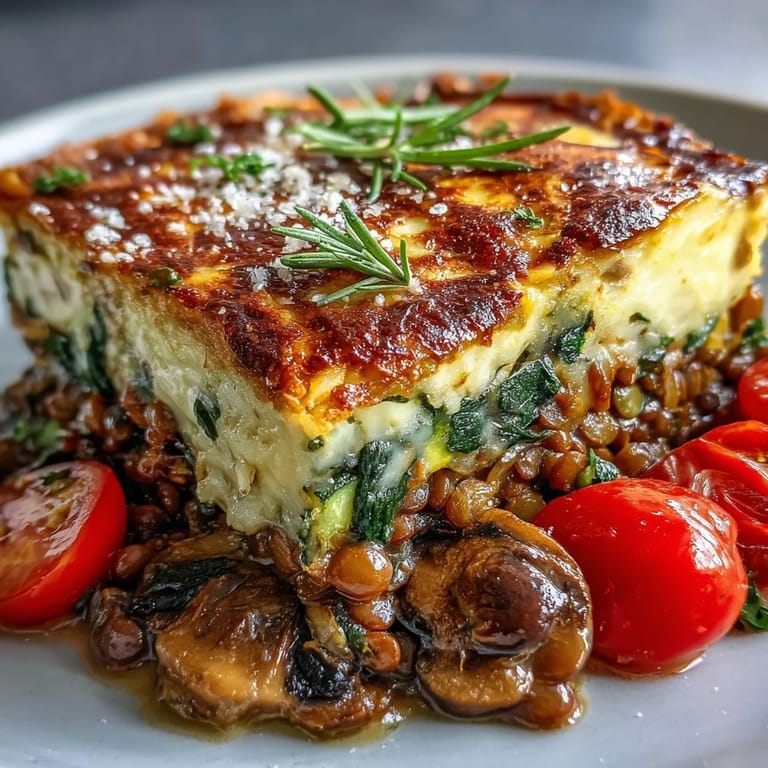
- Sprinkle grated Parmesan and breadcrumbs across the top if you're using them, then slide into the oven for 20 to 25 minutes until the top turns golden and the edges bubble gently. You'll know it's ready when you can't resist looking anymore.
- Rest before serving:
- Let the casserole sit for 5 minutes—this gives everything a chance to settle and makes serving cleaner. This small pause also brings the temperature down just enough to enjoy it immediately.
 Pin Recipe
 I remember my daughter coming home from school mid-winter, cold and tired, and the smell of this casserole hit her the moment she opened the door—she dropped her backpack and asked if dinner was ready. That's when I realized this dish had become more than nutrition; it had become a signal that someone cared enough to spend an hour making something wholesome and warm.
How to Make This Your Own
The structure here is flexible by design, which is why this casserole has become part of my regular rotation. Seasonal vegetables work beautifully—in spring, I've used asparagus and peas; in summer, eggplant instead of zucchini; in fall, sweet potato slices replace some of the carrots. The lentils and broth stay constant because they're the backbone, but everything else bends to what's fresh or what's sitting in your crisper drawer. Once you make this once, you'll understand the rhythm, and you'll stop thinking of it as a recipe and start thinking of it as a framework.
Storage and Reheating
This casserole actually improves after a day in the refrigerator because the flavors settle into each other. Store it covered in an airtight container and it keeps for up to four days—reheat gently in a 350°F oven covered with foil until warmed through, or use the microwave in a pinch, adding a splash of broth to restore moisture. I've also frozen portions successfully, though the vegetables become slightly softer on thawing, which honestly doesn't bother me because the casserole becomes almost creamy.
Serving Suggestions and Pairings
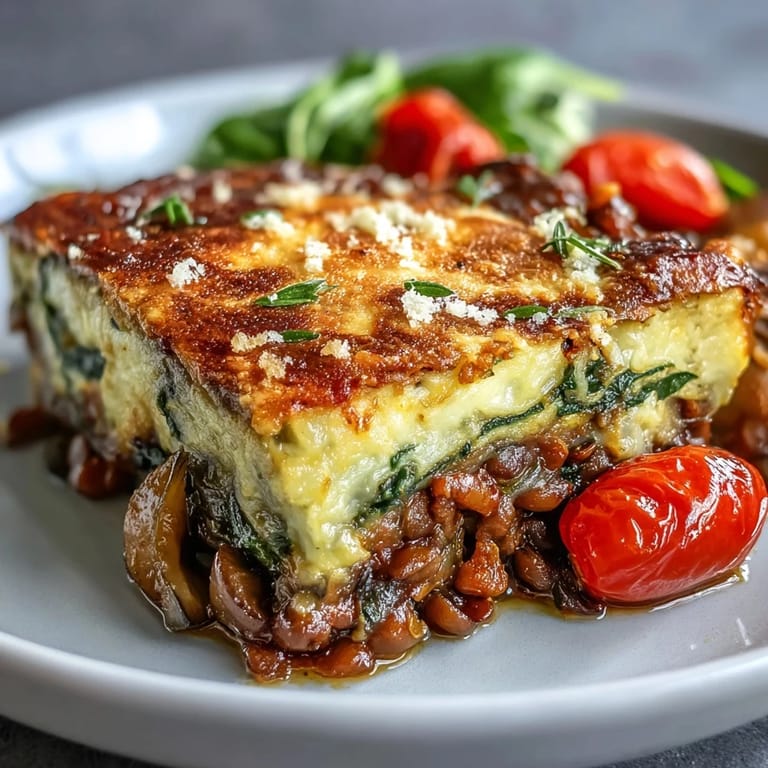
Serve this alongside something bright and fresh—a simple green salad with lemon vinaigrette cuts through the richness beautifully, or crusty bread for soaking up the savory juices at the bottom of your bowl. A light red wine like Pinot Noir works wonderfully if you're in the mood, but honestly, a cold glass of water or herbal tea pairs just as well. The casserole stands completely on its own, which is perhaps the greatest compliment I can give it.
- Top each serving with fresh herbs like parsley or chives for color and a peppery brightness.
- Crumble some feta cheese over the top if you want extra tanginess and aren't committed to the vegan version.
- Serve it warm straight from the oven, at room temperature for a casual lunch, or even chilled the next day if you're feeling adventurous.
 Pin Recipe
 This casserole has quietly become the dish I reach for when I want to cook something nourishing without overthinking it. Make it once and you'll understand why.
Recipe FAQs
- → Can I use canned lentils instead of dried?
Yes, you can substitute canned lentils to save time. Use about 2½ cans (15 oz each), rinsed and drained well. Reduce the baking time by about 10 minutes since the lentils are already cooked.
- → What other vegetables work well in this casserole?
Butternut squash, sweet potatoes, eggplant, kale, or Swiss chard all work beautifully. The dish is quite flexible—just aim for about 6 cups of chopped vegetables total and adjust cooking times as needed for harder varieties like squash.
- → How long does this keep in the refrigerator?
Stored in an airtight container, the casserole keeps well for 4-5 days. The flavors actually deepen and improve after a day or two. Reheat individual portions in the microwave or cover the dish with foil and warm at 350°F (175°C) for about 20 minutes.
- → Can I freeze this casserole?
Absolutely. Assemble the casserole but skip the cheese and breadcrumb topping. Wrap tightly and freeze for up to 3 months. Thaw overnight in the refrigerator, add the toppings, and bake as directed. You may need to add 5-10 minutes to the baking time.
- → What can I serve with this casserole?
A crisp green salad with vinaigrette balances the heartiness nicely. Crusty gluten-free bread, warm naan, or roasted potatoes also make excellent sides. For wine, try a light red like Pinot Noir or a crisp white such as Sauvignon Blanc.
- → How do I make this completely vegan?
Simply use nutritional yeast, vegan Parmesan, or omit the cheese topping entirely. You can also make a quick crumble from almonds, nutritional yeast, and herbs for extra savory flavor without dairy.