 Pin Recipe
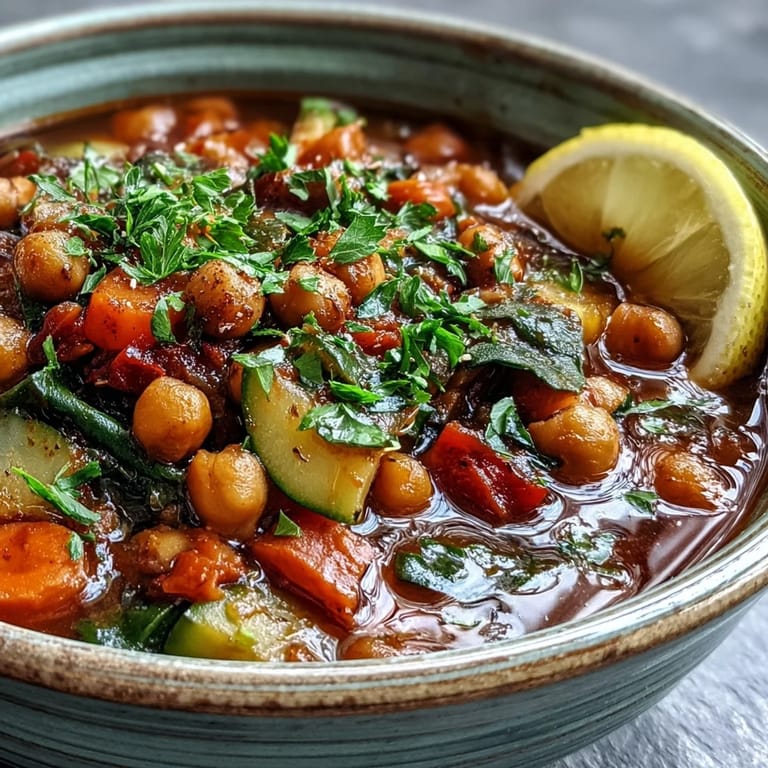
 There's something about a pot of simmering chickpea stew that fills a kitchen with the kind of warmth you can't fake. I discovered this one on a quiet Tuesday afternoon when my fridge was looking sparse and my body was asking for something grounding, something that wouldn't leave me feeling heavy but satisfied. The spices—turmeric, cumin, smoked paprika—create this complex, almost golden aroma that makes you want to slow down and actually pay attention to what you're eating. Within thirty minutes, I had a bowl of pure comfort that somehow felt both nourishing and exciting.
I made this for my partner one evening when they came home completely drained from work, and watching them take that first spoonful and actually pause was such a small but meaningful thing. They asked for seconds without me even offering, and we ended up sitting at the table longer than usual, just talking while the pot cooled on the stove. That's when I knew this recipe had staying power—it's not just food, it's the kind of meal that gives you permission to slow down.
What's for Dinner Tonight? 🤔
Stop stressing. Get 10 fast recipes that actually work on busy nights.
Free. No spam. Just easy meals.
Ingredients
- Chickpeas (2 cups cooked or 1 can): These are your protein powerhouse and fiber gold mine—if using canned, rinsing them well removes the excess sodium and weird starchy coating that nobody really wants anyway.
- Onion (1 medium, diced): The foundation of flavor; don't rush this step or skip it thinking garlic alone will do the work.
- Garlic (2 cloves, minced): Mince it right before adding so you get the full punch of freshness, not that tired pre-minced stuff sitting in your spice cabinet.
- Carrots (2, peeled and sliced): They soften beautifully during cooking and add natural sweetness that balances the earthiness of the spices.
- Celery (2 stalks, sliced): This is the secret ingredient that people never credit but absolutely makes the difference in depth.
- Red bell pepper (1, diced): Choose one that actually smells like something—a good bell pepper should have an almost fruity scent.
- Zucchini (1, diced): Add this later so it stays tender and doesn't turn into mush, which is the tragedy that happens when you're not paying attention.
- Fresh spinach (1 cup): Use actual leaves, not that pre-shredded stuff in the bag that wilts into sadness.
- Diced tomatoes (1 can, 400g): Quality matters here—San Marzano or anything labeled as whole peeled tomatoes that you crush yourself will change your life, but canned works perfectly fine.
- Vegetable broth (4 cups): Low-sodium lets you control the salt balance; check the label because some broths are basically just salt with water.
- Olive oil (2 tbsp): Not extra virgin for cooking at higher heat—save the fancy stuff for drizzling at the end.
- Ground cumin (1 tsp): This is what gives the stew its warm, slightly earthy character; smell it before adding because if it smells dusty, your cumin is too old.
- Smoked paprika (1 tsp): The smoky notes make it taste like you've been simmering this all day, even though you haven't.
- Ground turmeric (½ tsp): The anti-inflammatory star player—use the real thing, not turmeric that's been sitting open for years.
- Ground coriander (½ tsp): This adds a subtle citrusy undertone that most people can't identify but absolutely feel.
- Black pepper (½ tsp): Fresh cracked is always worth the extra second it takes.
- Salt (¾ tsp, or to taste): Start with this amount and taste your way to perfection—everyone's palate is different and everyone's broth is different.
- Bay leaf (1): Remove it before serving because nobody wants to bite into a bay leaf, and yes, I'm saying this because it happened once.
- Fresh parsley (optional, chopped): The brightness cuts through the earthiness and makes each bowl feel intentional rather than just functional.
- Lemon wedges (optional): A squeeze of fresh lemon at the end wakes everything up.
Instructions
- Warm your oil and soften the onions:
- Pour olive oil into a large pot over medium heat—you want it shimmering and just barely fragrant before adding diced onion. Let them sit and cook undisturbed for about three minutes, then stir and let them get that translucent, almost glassy look that means they're ready for the next phase.
- Build the flavor base:
- Add minced garlic along with carrots, celery, and red bell pepper to the softened onions, stirring occasionally as they all get to know each other for about five minutes. This is when your kitchen starts smelling like something real is happening—that's your signal you're doing it right.
- Bloom the spices:
- Sprinkle in cumin, smoked paprika, turmeric, coriander, black pepper, and salt, stirring constantly for about one minute until the mixture becomes incredibly fragrant. This brief cooking time releases all the essential oils and prevents that raw, powdery spice taste that ruins everything.
- Combine and bring to a simmer:
- Add the chickpeas, diced tomatoes (with their juice), vegetable broth, and bay leaf, then let it all come to a boil before immediately reducing to low heat. The transition from boiling to simmering is where you stop watching it like a hawk and let time do the work.
- Simmer gently:
- Leave the pot uncovered and let it bubble gently for twenty minutes, giving it an occasional stir so nothing sticks to the bottom. This is when you can step away and do something else—check your phone, prep a salad, breathe.
- Add the last-minute vegetables:
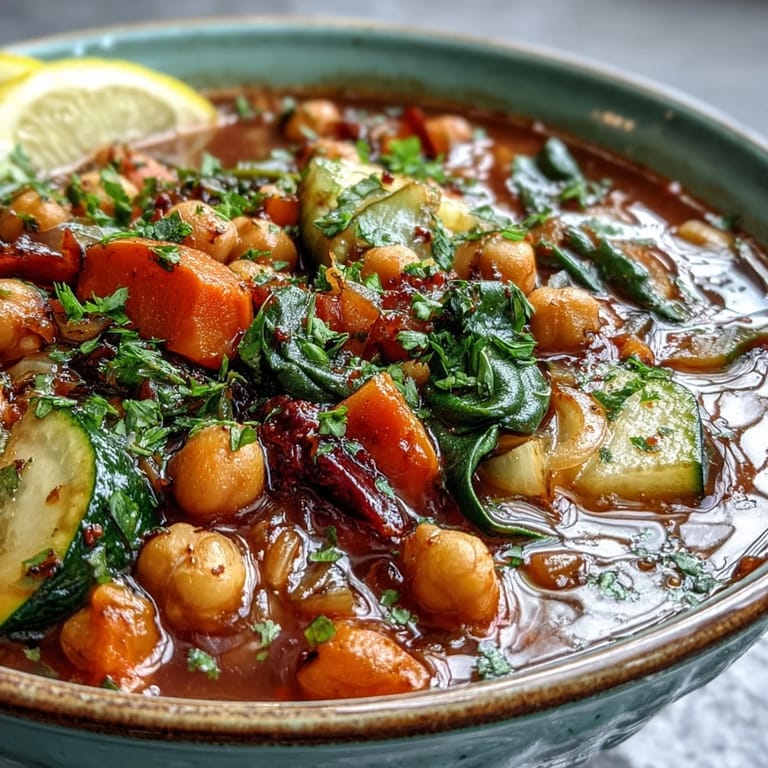
- Toss in diced zucchini and give it seven minutes to become tender but not mushy—you want it to have a little resistance when you bite it. The stew will deepen in color and the flavors will become even more integrated.
- Wilt in the spinach:
- Stir in fresh spinach and cook for just two minutes until it transforms from leafy to silky, then fish out the bay leaf with a spoon or small fork. At this point, your stew is essentially done—taste it and adjust salt and pepper as needed.
- Serve with intention:
- Ladle hot stew into bowls and top with fresh parsley if you have it, then squeeze a bit of lemon over the top and perhaps a tiny drizzle of good olive oil if you're feeling fancy. Everything comes together in that final moment.
 Pin Recipe
 My favorite thing about this stew is how it shifted my understanding of what plant-based cooking could be—it proved that you don't need fancy ingredients or hours of time, just intention and a willingness to let spices do what they're meant to do. Now I make it at least twice a month, and each time it becomes a small moment of care I'm giving myself.
The Secret of Layered Flavor
Most people approach vegetable stews by throwing everything in at once and hoping for the best, but this recipe works because it respects timing and sequencing. When you soften the onions first, then add the harder vegetables, then bloom the spices, and finally add delicate ones, you're creating different layers of flavor that work together instead of competing. It's the difference between a stew that tastes like vegetables in broth and a stew that tastes intentional, complete, and somehow more than the sum of its parts.
Make-Ahead Magic and Reheating
This stew genuinely improves after a night in the refrigerator—the flavors meld and deepen in ways that feel almost impossible when you first finish cooking. Reheat it gently over medium heat, adding a splash of water if it's gotten too thick, and you'll swear you spent hours on it when really you're just tapping into the power of patience and good ingredients.
Ways to Make It Your Own
The beautiful thing about this base recipe is that it's forgiving and adaptable to whatever your kitchen holds or your body is craving on any given day. Kale or chard will absolutely replace spinach with no complaints, a pinch of chili flakes adds heat for people who want that, and if you have mushrooms sitting in your crisper drawer, they'd be wonderful sautéed with the onions and other vegetables. Serve it with crusty bread, brown rice, or nothing at all—this stew is substantial enough to stand completely alone.
- Add a splash of red wine or balsamic vinegar at the end for unexpected richness.
- If you want it spicier, fresh chili flakes or a pinch of cayenne work beautifully.
- Leftovers actually taste better tomorrow, and they freeze brilliantly for up to three months.
 Pin Recipe
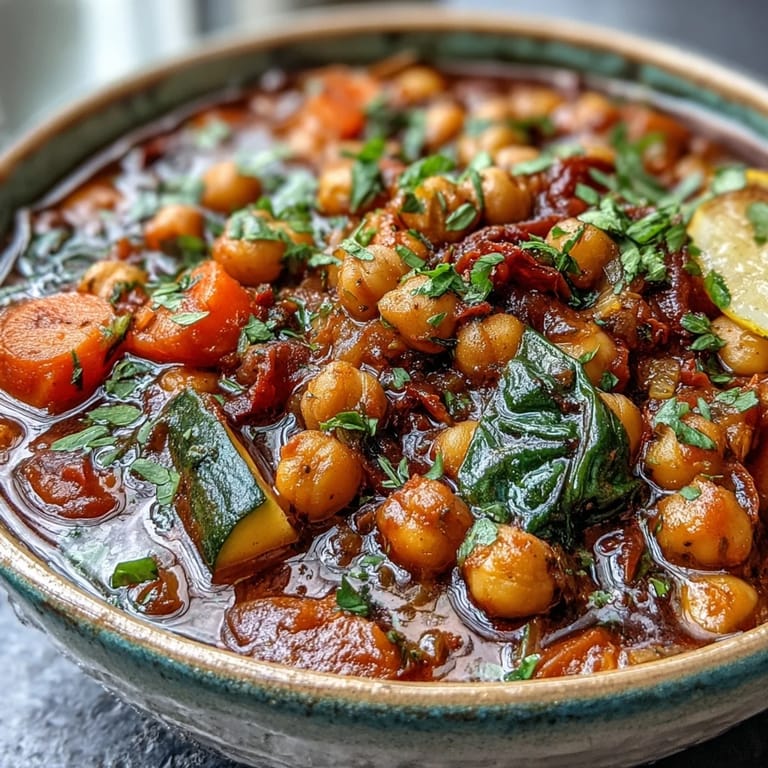
 This is the kind of meal that proves nourishing food doesn't have to be complicated or time-consuming. Make it once and it becomes part of your rotation forever.
Recipe FAQs
- → Can I use dried chickpeas instead of canned?
Yes, soak 1 cup dried chickpeas overnight, then cook for 1-1.5 hours until tender before adding to the stew. You'll need about 2 cups cooked chickpeas total.
- → How long does this chickpea stew keep in the refrigerator?
Store in an airtight container for up to 4-5 days. The flavors continue to develop, making it an excellent meal prep option.
- → Can I freeze this stew?
Absolutely. Cool completely, then freeze in portions for up to 3 months. Thaw overnight in the refrigerator and reheat gently on the stovetop.
- → What can I serve with this stew?
Pair with crusty whole grain bread, quinoa, brown rice, or a simple green salad. A dollop of yogurt or drizzle of olive oil adds richness before serving.
- → How can I make this stew more protein-rich?
Add lentils during simmering, stir in white beans, or serve with a side of quinoa. A sprinkle of hemp seeds or nutritional yeast also boosts protein content.
- → Can I make this in a slow cooker?
Sauté onions and spices first, then transfer all ingredients to a slow cooker. Cook on low for 6-7 hours or high for 3-4 hours, adding zucchini and spinach during the last 30 minutes.