 Pin Recipe
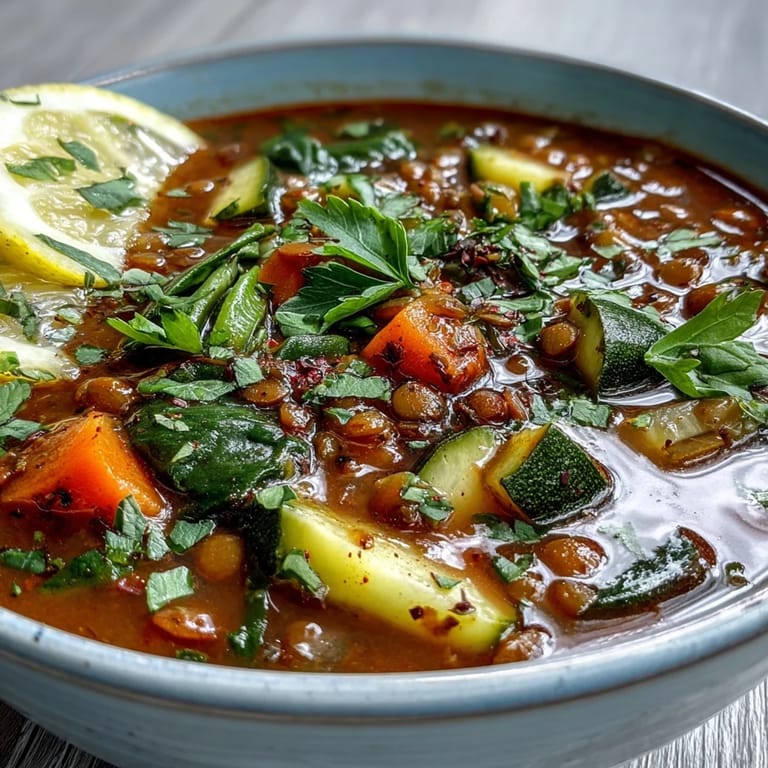
 There's something almost meditative about watching lentils soften in a pot, their earthy flavor deepening as the kitchen fills with the scent of cumin and smoked paprika. I stumbled into making this soup on a Tuesday afternoon when the farmers market had an overwhelming bounty of carrots and celery, and I needed something to do with them besides the usual stir-fry. What started as an improvisation became my go-to weeknight anchor, the kind of meal that asks very little but gives back warmth and substance in equal measure.
My neighbor once asked what smelled so good drifting from my kitchen, and I ladled her a bowl right there at the doorway. She came back three days later asking for the recipe, which is how I knew this soup had crossed some invisible threshold from personal favorite to something worth sharing. That moment made me realize it wasn't the fancy ingredients or complicated technique that mattered, but rather how it made people feel when they sat down to eat it.
What's for Dinner Tonight? 🤔
Stop stressing. Get 10 fast recipes that actually work on busy nights.
Free. No spam. Just easy meals.
Ingredients
- Brown or green lentils: These sturdy little legumes hold their shape beautifully while cooking, unlike red lentils which can dissolve into mush. Rinsing them first removes any dust and helps them cook more evenly.
- Onion, carrots, and celery: This aromatic base is where the soup finds its backbone, and taking five minutes to sauté them properly makes an enormous difference in flavor development.
- Garlic: Added after the softer vegetables so it doesn't burn and turn bitter, just one minute of cooking releases its pungent magic.
- Zucchini: Goes in later than the other vegetables because it cooks faster and can turn to mush if given too much time.
- Tomatoes: Whether fresh or canned, they bring acidity that brightens the entire pot and prevents the soup from feeling heavy.
- Spinach or kale: Added at the very end to preserve its vibrant color and slight bitterness that cuts through the richness.
- Vegetable broth: This is your liquid foundation, so choose one you'd actually drink on its own rather than defaulting to whatever's on sale.
- Olive oil: A good quality oil makes itself known, especially when you taste it at the end.
- Cumin and smoked paprika: These two work together like old friends, the paprika bringing a subtle smokiness while cumin adds warmth and earthiness that complements lentils perfectly.
- Thyme and bay leaf: Thyme is dried here because fresh would lose its delicate quality during cooking, while the bay leaf flavors the entire pot but should always be removed before serving.
Instructions
- Build your aromatic base:
- Heat the olive oil in a large pot over medium heat, then add your diced onion, carrots, and celery. You're aiming for a gentle sizzle, not a furious sear. Five minutes is enough time for them to soften around the edges and release their natural sweetness.
- Add the garlic and spices:
- Once your vegetables are softened, add the minced garlic and cook for just one minute until fragrant. Immediately follow with the cumin, paprika, and thyme, stirring constantly for about thirty seconds so the spices bloom in the hot oil before they burn.
- Layer in the lentils and liquid:
- Add your rinsed lentils, chopped tomatoes, and vegetable broth along with the bay leaf. Stir everything together, then bring the whole pot to a boil before reducing heat and covering with a lid.
- First simmer:
- Let it bubble gently for twenty minutes, resisting the urge to stir constantly. This allows the lentils to cook evenly and the flavors to meld together rather than staying separate.
- Add the zucchini:
- After twenty minutes, add your diced zucchini and continue simmering for another ten minutes. The lentils should be creamy but not falling apart, and the vegetables should be tender.
- Finish with greens:
- Stir in your spinach or kale and cook for just two to three minutes until it wilts into the soup. Any longer and it loses its vibrant color and slight texture.
- Taste and adjust:
- Remove the bay leaf first, then taste and add salt and pepper gradually until the flavor feels balanced. Remember that salt does more than add saltiness, it actually makes all the other flavors pop.
 Pin Recipe
 I made this soup on a gray Saturday when my partner was under the weather, and watching them eat it with genuine appetite felt like a small victory. Sometimes the most nourishing thing isn't just the food itself, but the care that goes into choosing the right meal for the moment.
The Beauty of Seasonal Swaps
One of my favorite aspects of this soup is how naturally it adapts to whatever season you're cooking in or whatever your market happens to offer. Winter calls for heartier root vegetables like sweet potatoes, parsnips, or even diced butternut squash instead of zucchini. Spring begs for fresh peas and asparagus added near the end, while summer practically demands you throw in whatever colorful bell peppers caught your eye. I've made this soup forty different ways and it's never disappointed me once, which is the hallmark of a truly versatile recipe.
Texture and Creaminess
If you find yourself wanting a creamier, more velvety soup without adding cream, an immersion blender becomes your secret weapon. Blend about half the soup before adding the greens to create a hybrid texture that's smooth but still has some substance and chunks of vegetables. Some people prefer it completely smooth, others like it chunky, and there's honestly no wrong answer here since this is your bowl to make exactly as you like it.
Serving and Pairing Suggestions
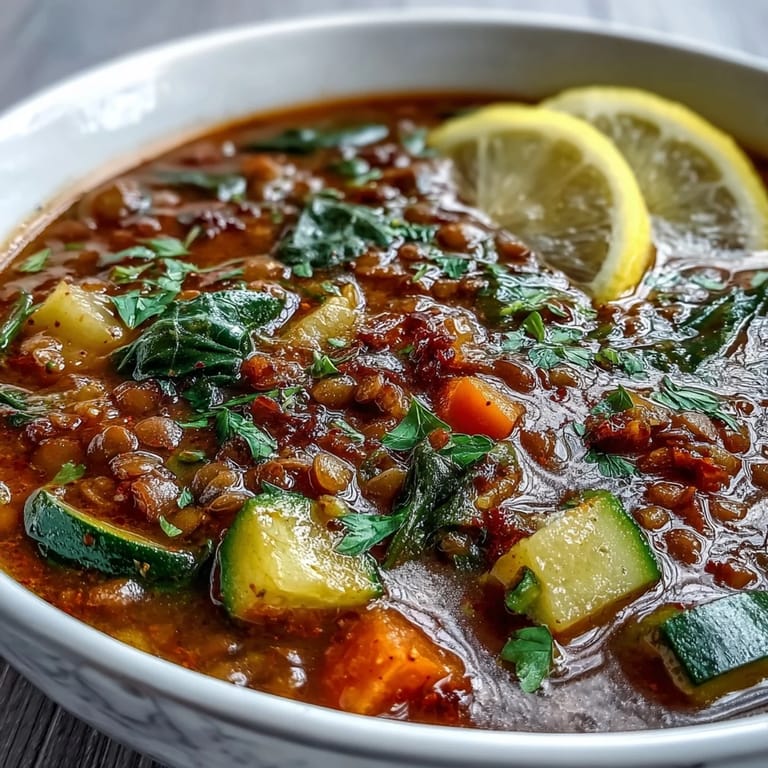
This soup feels at home in a bowl with crusty bread for soaking up every last drop, or alongside a simple green salad if you're looking for something lighter. A squeeze of fresh lemon just before eating brightens everything and adds a lift that makes you taste all the individual flavors more clearly. I've served it to strict vegans and determined meat-eaters alike, and everyone seems to find something satisfying in it.
- Fresh parsley scattered on top adds a peppery note and makes the soup look intentional and restaurant-quality.
- A crisp white wine like Sauvignon Blanc pairs beautifully because its acidity echoes the tomatoes and lemon in the soup.
- Keep lemon wedges at the table so people can adjust the brightness to their own preference.
 Pin Recipe
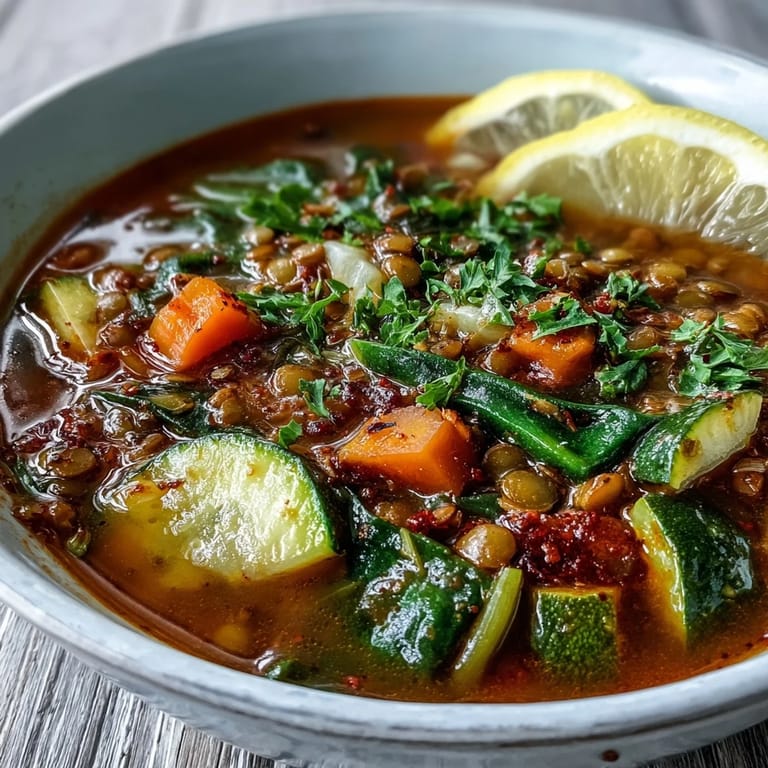
 This soup has become my answer to almost any cooking question, a reliable friend in the kitchen that never lets me down. Whether you're cooking for yourself or feeding a crowd, it's the kind of meal that nourishes not just your body but something quieter inside you too.
Recipe FAQs
- → Can I use red lentils instead of brown or green?
Red lentils cook faster and break down more, creating a creamier consistency. If using red lentils, reduce cooking time to about 15-20 minutes total and expect a thicker, less textured result.
- → How long does this keep in the refrigerator?
Stored in an airtight container, this keeps well for 4-5 days. The flavors actually develop and improve after a day or two. Reheat gently on the stove, adding a splash of broth or water if needed.
- → Can I freeze this for later?
Absolutely. Portion into freezer-safe containers, leaving some space for expansion. It freezes well for up to 3 months. Thaw overnight in the refrigerator before reheating.
- → What vegetables work best as substitutions?
Sweet potatoes, butternut squash, parsnips, or bell peppers all work beautifully. Root vegetables add natural sweetness, while peppers contribute a different flavor profile. Adjust cooking times accordingly.
- → How can I make this more protein-rich?
Add a can of drained chickpeas or white beans during the last 10 minutes of simmering. Alternatively, serve with a dollop of Greek yogurt or sprinkle nutritional yeast on top before serving.
- → Is this suitable for meal prep?
Perfect for meal prep. Make a batch on Sunday and portion into containers for the week. The texture holds up well, and it reheats beautifully in the microwave or on the stovetop.