
 Pin Recipe
 The first time I made paella, I stood in front of the stove convinced something had gone terribly wrong—the rice wasn't swimming in liquid like risotto, and I kept reaching for a spoon to stir it. My Spanish neighbor gently moved my hand away and told me the magic happens when you stop interfering, when you let the rice find its own rhythm against the heat. That lesson, paired with the nutty aroma of saffron blooming in the stock, changed how I approach cooking. Now, whenever I make this dish, I'm transported to that kitchen moment, waiting for the moment the rice becomes impossibly tender and the seafood opens like tiny treasures.
I remember hosting a dinner where one guest asked if we could make it paella night, and suddenly the meal became the entertainment. Everyone gathered around the pan while it rested, the steam rising and carrying that distinctive golden saffron scent through the apartment. The sound of shells cracking open, the shimmer of olive oil catching the light—it transformed a simple dinner into something people still talk about.
What's for Dinner Tonight? 🤔
Stop stressing. Get 10 fast recipes that actually work on busy nights.
Free. No spam. Just easy meals.
Ingredients
- Large shrimp: Peeling them yourself means better flavor than pre-peeled, and you'll feel the satisfying snap as you devein each one.
- Mussels and clams: Buy them the day of, keep them on ice, and discard any that don't close when tapped—they're telling you something important.
- Short-grain paella rice (Bomba or Arborio): This isn't regular rice; it absorbs liquid while keeping its structure, which is why it creates that perfect tender bite.
- Saffron threads: Yes, they're expensive, but a quarter teaspoon blooms into pure gold, literally and figuratively—don't skip this or use powder.
- Fish or seafood stock: Homemade is better, but good quality boxed stock won't disappoint if that's what you have.
- Smoked paprika: The smoke adds depth that you can't replicate; it's the unsung hero of paella flavor.
- Bell peppers, onion, garlic, tomato: These aromatics create the foundation—don't rush them, let them soften and sweeten in the oil.
- Olive oil: Use good oil here; it coats every grain of rice and carries flavor throughout the entire dish.
Instructions
- Awaken the saffron:
- Pour warm stock over saffron threads in a saucepan and let it sit over low heat. Watch as the liquid transforms into liquid amber—this is saffron doing its job, infusing every drop with its distinctive earthy perfume.
- Build the flavor foundation:
- Heat olive oil in your paella pan until it shimmers, then sauté onion until translucent and fragrant. Add garlic and cook just until the raw edge disappears, about 30 seconds—you want that sweet, roasted quality without bitterness.
- Soften the vegetables:
- Add bell peppers and cook until they collapse slightly into the oil, then stir in grated tomato and let it cook down. You're looking for the raw tomato flavor to mellow and the moisture to evaporate, creating a concentrated base.
- Toast the rice:
- Pour in rice and stir constantly for 2-3 minutes, coating each grain with oil and vegetables. You'll hear a subtle crackling sound—this toasting step locks in flavor and helps each grain stay separate.
- Add the saffron stock:
- Sprinkle salt, pepper, and paprika over the rice, then pour in the golden stock and distribute the rice evenly. This is where the magic rule begins: don't stir again from this moment forward.
- Arrange the seafood:
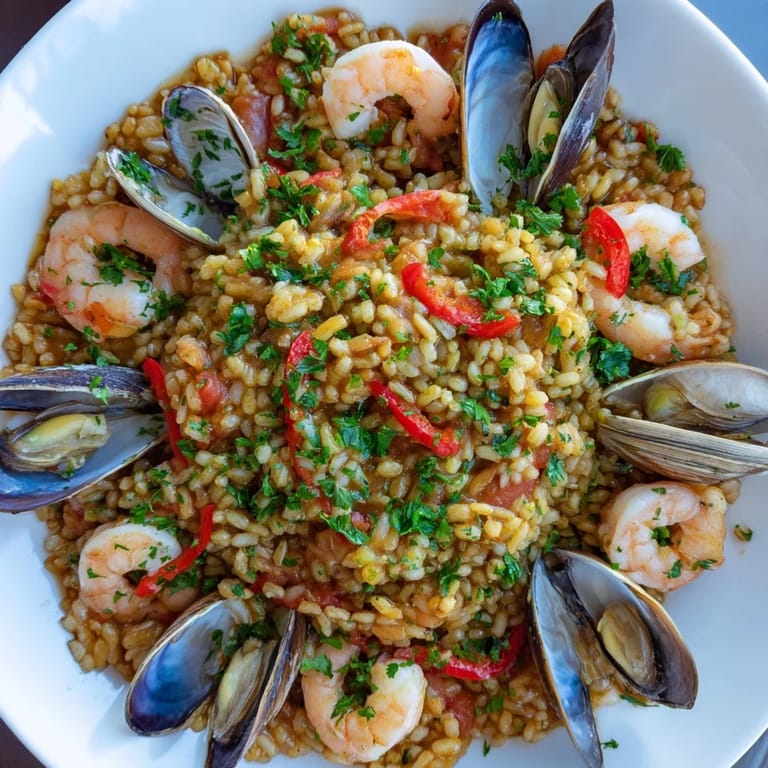
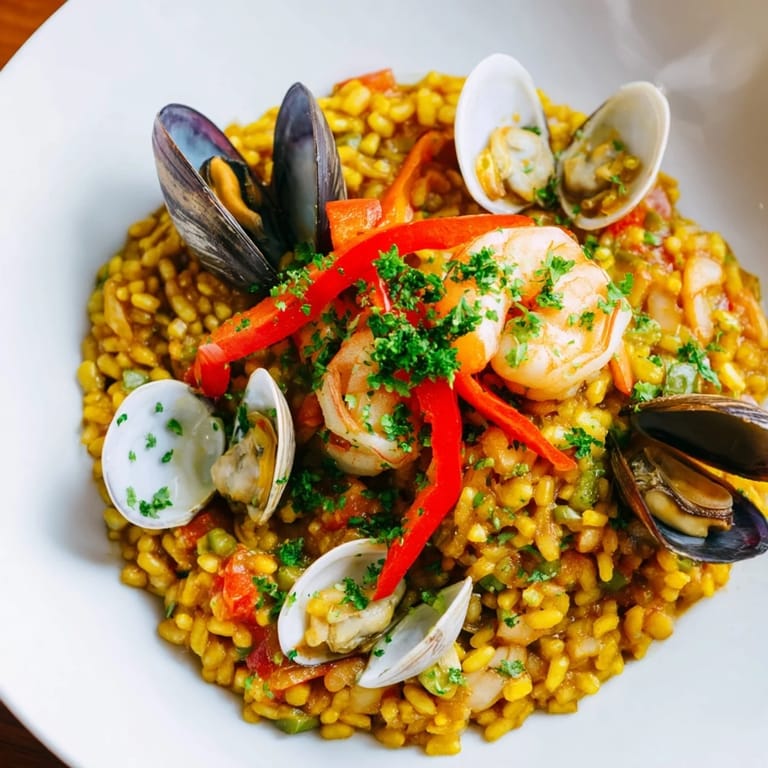
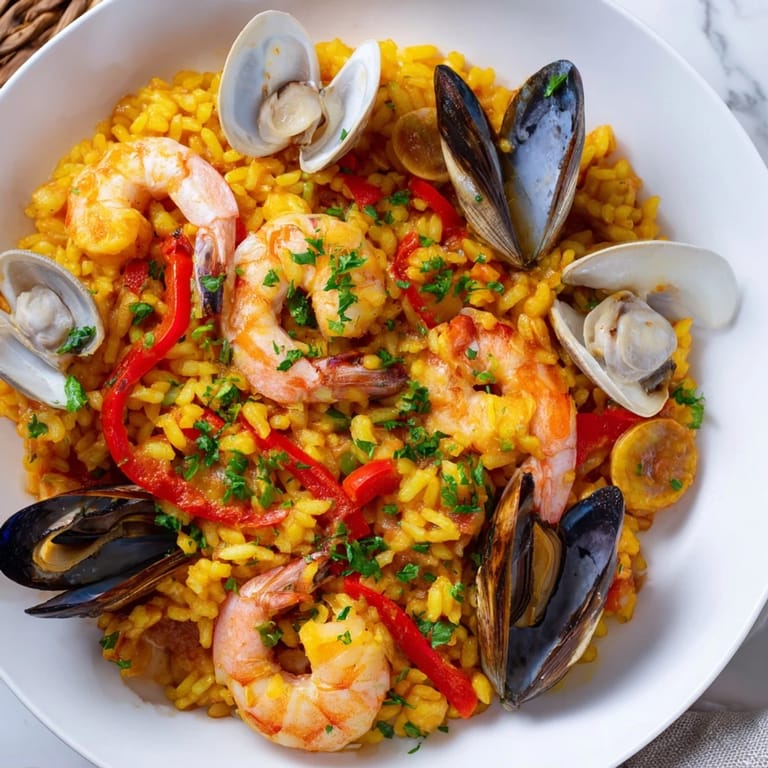
- Scatter shrimp, mussels, and clams across the surface of the rice, nestle them in gently, then cover loosely with foil. The seafood will cook gently in the steam, releasing its briny sweetness into the rice underneath.
- Let it rest and finish:
- Remove from heat and let the paella sit covered for 5 minutes while the rice continues to absorb any remaining liquid and the seafood fully cooks through. This resting period makes all the difference between good paella and the kind people remember.
 Pin Recipe
 There's a moment, right when you uncover the paella and the steam billows up carrying that saffron perfume mixed with brine from the seafood, where cooking feels like sharing something sacred. Your guests lean in closer, their conversations quiet, and everyone's attention narrows to this one golden pan.
Timing and Preparation
Start by preparing everything before you turn on the heat—chop your vegetables, peel your shrimp, and have your stock warming on another burner. I learned to do this after realizing mid-cooking that I was chopping garlic while my onions were browning too fast. The preparation rhythm matters more than speed; it lets you move through cooking with confidence instead of scrambling.
Choosing Your Seafood
The quality of your seafood determines the quality of your paella more than any other single ingredient. Fresh shrimp should smell like the ocean, not fishy; mussels and clams should feel heavy in your hand and close immediately if you tap them. If your fishmonger knows you're making paella, ask for their recommendation—they'll steer you toward what's best that day, and you'll taste the difference.
Variations and Substitutions
Paella is forgiving in some ways and strict in others. The saffron and the no-stirring rule are non-negotiable, but the seafood is flexible. I've added peas, swapped in calamari, or included chunks of white fish, and each version told its own story. Your paella should reflect what's available to you, what you love, and who you're cooking for.
- Add a handful of frozen peas in the final few minutes if you want color and a subtle sweetness.
- Substitute half the shellfish with firm white fish like halibut or sea bass for a different texture.
- Finish with a squeeze of fresh lemon to brighten everything and cut through the richness.
 Pin Recipe
 Paella taught me that some dishes are more than recipes—they're invitations to slow down and share something real with people you care about. Make this when you want to feed more than just hunger.
Recipe FAQs
- → What type of rice is best for this dish?
Short-grain paella rice such as Bomba or Arborio is ideal because it absorbs liquid well while staying firm.
- → Can I substitute the seafood with other ingredients?
Yes, calamari or firm white fish can replace some seafood for variation, keeping the dish flavorful.
- → Why is saffron used in this dish?
Saffron imparts a distinctive golden color and a subtle floral aroma that defines the classic flavor profile.
- → How do I know when the shellfish are cooked properly?
Shellfish are done when their shells open; any that remain closed should be discarded for safety.
- → What cooking tools are recommended?
A large paella pan or wide skillet is best for even cooking; a medium saucepan is used to keep broth warm.
- → Can this dish be made gluten-free?
Yes, as long as gluten-free seafood stock is used and cross-contamination is avoided, it remains gluten-free.