 Pin Recipe
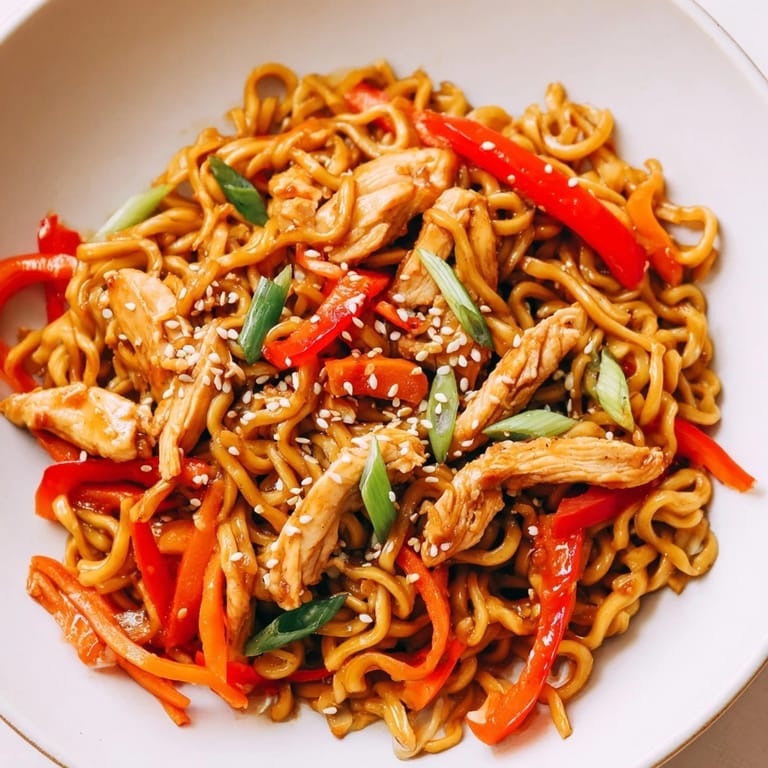
 My kitchen was a wreck that Tuesday night, and I was staring at two packs of instant ramen like they held the answer to dinner. I had chicken thawing, a drawer full of half-wilted vegetables, and zero patience for a long recipe. What started as desperation turned into one of those accidental wins—noodles tossed in a screaming-hot wok with whatever I could chop fast, drenched in a sauce I mixed without measuring. The smell alone made my roommate wander in asking what restaurant I ordered from.
I made this for my brother once when he showed up unannounced, claiming he was starving and too broke for takeout. He stood by the stove, stealing bites of chicken straight from the wok while I tried to plate everything. By the time I turned around with the finished dish, he'd already eaten half his portion standing up. He still texts me asking when I'm making that spicy noodle thing again, which I think means I won that night.
What's for Dinner Tonight? 🤔
Stop stressing. Get 10 fast recipes that actually work on busy nights.
Free. No spam. Just easy meals.
Ingredients
- 2 boneless, skinless chicken breasts, thinly sliced: Slicing them thin means they cook fast and soak up the sauce better, plus you avoid that rubbery texture that happens when you rush thick pieces.
- 2 packs instant ramen noodles, seasoning packets discarded: Yes, you toss the flavor packets—this dish makes its own sauce, and those little foil pouches are way too salty for what we're building here.
- 1 red bell pepper, thinly sliced: Red peppers stay crisp and add a sweet crunch that balances the heat, plus they look gorgeous against the noodles.
- 1 cup broccoli florets: These little trees soak up sauce like sponges and give you that satisfying bite, just don't overcook them into mush.
- 1 carrot, julienned: Thin strips cook quickly and add color and a hint of sweetness that plays nicely with the spice.
- 2 green onions, sliced: They go in at the end for a fresh, sharp bite that cuts through all the richness.
- 2 cloves garlic, minced: The base of everything aromatic here, and you want it minced fine so it blooms fast in the hot oil.
- 1 tablespoon fresh ginger, grated: Fresh ginger is non-negotiable, the powdered stuff just doesn't have that bright, zingy kick.
- 3 tablespoons soy sauce: This is your salt and umami backbone, and it coats the noodles with that deep, savory gloss.
- 1 tablespoon sriracha or chili garlic sauce: Adjust this to your heat tolerance, but don't skip it entirely or the dish loses its edge.
- 1 tablespoon oyster sauce: It adds a subtle sweetness and thick, glossy body to the sauce that makes everything cling together.
- 1 tablespoon sesame oil: A little goes a long way, it's the nutty, toasty finish that makes the whole dish smell like a street market.
- 2 teaspoons brown sugar: Just enough to balance the heat and salt, it rounds out the sauce without making it sweet.
- 2 tablespoons water: This thins the sauce just enough to coat the noodles without turning into a puddle.
- 1 tablespoon toasted sesame seeds, optional: They add crunch and a little visual polish, plus they taste amazing when you bite into one.
- Fresh cilantro or extra green onion slices, optional: A handful of fresh herbs at the end makes it feel finished and restaurant-worthy.
Instructions
- Boil the Noodles:
- Cook the ramen according to the package directions, then drain and rinse them quickly under cold water to stop the cooking. This keeps them from turning into a gummy clump while you prep everything else.
- Mix the Sauce:
- In a small bowl, whisk together the soy sauce, sriracha, oyster sauce, sesame oil, brown sugar, and water until the sugar dissolves. Set it within arm's reach because things move fast once the wok heats up.
- Sear the Chicken:
- Heat a tablespoon of vegetable oil in your wok or largest skillet over medium-high heat until it shimmers. Add the sliced chicken in a single layer and let it sear without moving it for a minute, then stir-fry until just cooked through, about four to five minutes total, then transfer it to a plate.
- Bloom the Aromatics:
- In the same hot pan, toss in the minced garlic and grated ginger, stirring constantly for about thirty seconds until the smell hits you and makes your mouth water. Don't let them burn or they'll turn bitter.
- Stir-Fry the Vegetables:
- Add the bell pepper, broccoli, and carrot to the wok and keep everything moving with a spatula or tongs. Cook for three to four minutes until the vegetables are tender but still have a crisp bite, you want color and texture, not mush.
- Bring It All Together:
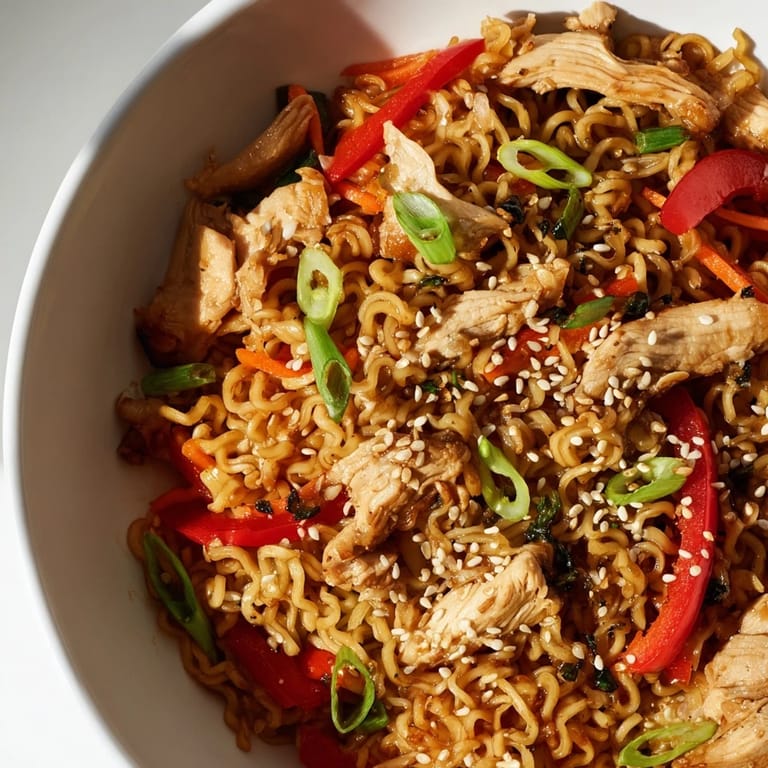
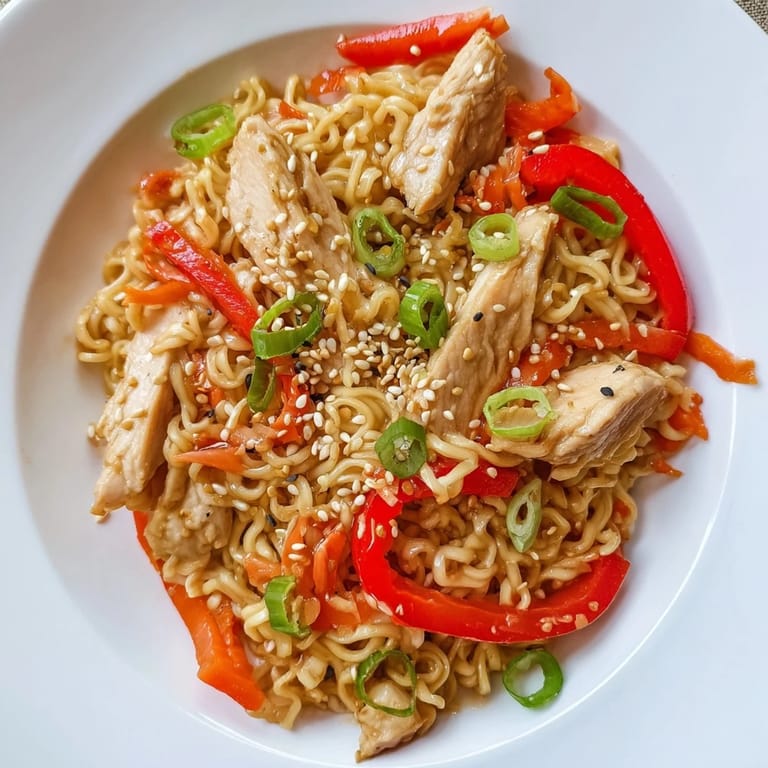
- Return the chicken to the pan, add the cooked noodles, and pour the sauce over everything. Toss it all together with confidence, making sure every noodle gets coated, and let it heat through for two to three minutes.
- Finish and Taste:
- Stir in the sliced green onions, then taste a forkful and adjust the heat or salt if needed. If it feels too thick, splash in a tiny bit of water; if it needs more kick, drizzle in extra sriracha.
- Serve Hot:
- Divide the stir-fry into bowls and sprinkle with toasted sesame seeds and fresh cilantro if you have them. Serve immediately while the noodles are glossy and the vegetables still have that satisfying crunch.
 Pin Recipe
 There was this one night when I made this for a friend going through a brutal breakup, and we sat on the kitchen floor eating straight from the wok because neither of us felt like doing dishes. She laughed for the first time in days when a noodle slipped off her fork and left a sriracha streak on her shirt. Sometimes food isn't about perfection, it's just about showing up with something warm and a little bit spicy.
Swapping the Protein
If chicken isn't your thing or you're cooking for someone who doesn't eat meat, this dish is wildly flexible. I've used firm tofu pressed and cubed, shrimp that I toss in at the last second, even leftover steak sliced thin. The sauce is strong enough to carry whatever protein you throw at it, and the cooking method stays exactly the same. Just match your cooking time to whatever you're using so nothing gets tough or rubbery.
Vegetable Variations
I've made this recipe with whatever was hiding in my crisper drawer, and it's never disappointed. Snap peas add a sweet crunch, mushrooms soak up the sauce like little sponges, and baby corn gives it that fun takeout vibe. Zucchini works if you slice it thin and add it toward the end so it doesn't turn to mush. The key is cutting everything into similar-sized pieces so they cook evenly and you're not fishing out raw carrots or overcooked peppers.
Storing and Reheating
Leftovers keep in an airtight container in the fridge for up to three days, and they're one of those rare dishes that actually tastes better the next day after the noodles soak up more sauce. When you reheat, add a splash of water or a drizzle of sesame oil to loosen things up, and use a hot skillet instead of the microwave if you can. The microwave works in a pinch, but the skillet brings back that crispy-edged texture that makes this dish so good.
- Store in a sealed container and keep it cold, the noodles will firm up but they'll come back to life with a little heat and moisture.
- Reheat in a skillet over medium heat with a tablespoon of water, tossing frequently until everything is hot and glossy again.
- Don't reheat more than once or the vegetables will lose their bite and the chicken can get tough.
 Pin Recipe
 This dish has pulled me out of more dinner ruts than I can count, and it never feels like I'm settling for something quick. Keep those instant ramen packs in your pantry and you'll always have a backup plan that tastes like you tried way harder than you did.
Recipe FAQs
- → Can I make this vegetarian?
Yes, substitute the chicken with firm tofu or tempeh. Cut into bite-sized pieces and stir-fry until golden before adding vegetables. The cooking time remains similar.
- → How do I adjust the spice level?
Start with 1 tablespoon sriracha and add more gradually to taste. You can also include red pepper flakes or use a milder chili sauce. Taste as you go to reach your preferred heat level.
- → What vegetables work best?
Bell peppers, broccoli, carrots, and snap peas work excellently. You can also add mushrooms, baby corn, or bok choy. Keep pieces uniform for even cooking and maintain some crispness by not overcooking.
- → Can I prepare components ahead?
Yes, slice vegetables and prepare the sauce the night before. Store in separate containers. Cook noodles fresh just before cooking to maintain texture. This reduces active cooking time to about 15 minutes.
- → What's the best pan for stir-frying?
A large wok with sloped sides is ideal for quick cooking and easy tossing. A large skillet works well too. Use medium-high heat to maintain crispness while cooking proteins through quickly.
- → How do I store leftovers?
Keep noodles and sauce separate in airtight containers for up to 3 days. Reheat gently on the stovetop with a splash of water to restore moisture and prevent clumping.