 Pin Recipe
 My neighbor Maria taught me this soup on a rainy afternoon when I showed up at her door asking what smelled so incredible. She laughed and pulled me into her kitchen where a massive pot bubbled away, steam rising in thick clouds that fogged up her glasses. She'd been making minestrone since childhood, she said, and the secret was never rushing it—letting each vegetable soften into its own kind of sweetness before everything came together. That day, watching her move through the kitchen with such ease, I realized this wasn't just a recipe, it was a rhythm.
I made this for my sister during her first week at a new job, when she was exhausted and didn't believe in herself yet. She came over and I had bowls of minestrone waiting, steam still rising, with a hunk of crusty bread beside each one. She ate three bowls that night, and by the end she was talking about the project she'd been dreading. Food does that sometimes—it creates a little safety where you can breathe again.
What's for Dinner Tonight? 🤔
Stop stressing. Get 10 fast recipes that actually work on busy nights.
Free. No spam. Just easy meals.
Ingredients
- Olive oil: This is your foundation, so don't skimp—good olive oil tastes like something, and that something matters in every spoonful.
- Yellow onion, carrots, and celery: These three together form what Italians call soffritto, the holy trinity that gives minestrone its soul.
- Garlic: Fresh and minced, never from a jar—the smell when it hits hot oil tells you everything is starting right.
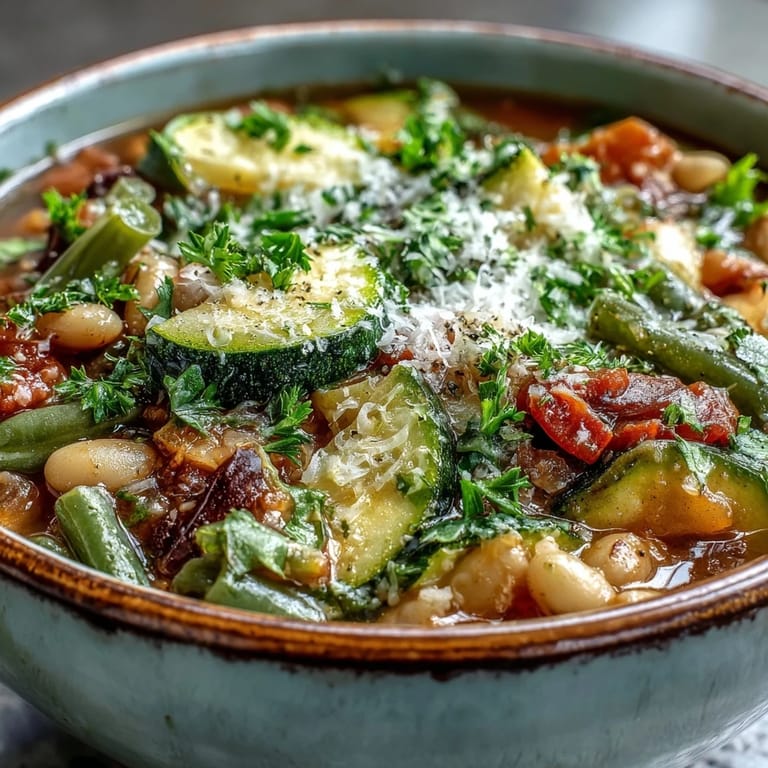
- Zucchini and potato: The potato adds body and slight sweetness, while zucchini keeps things light and bright.
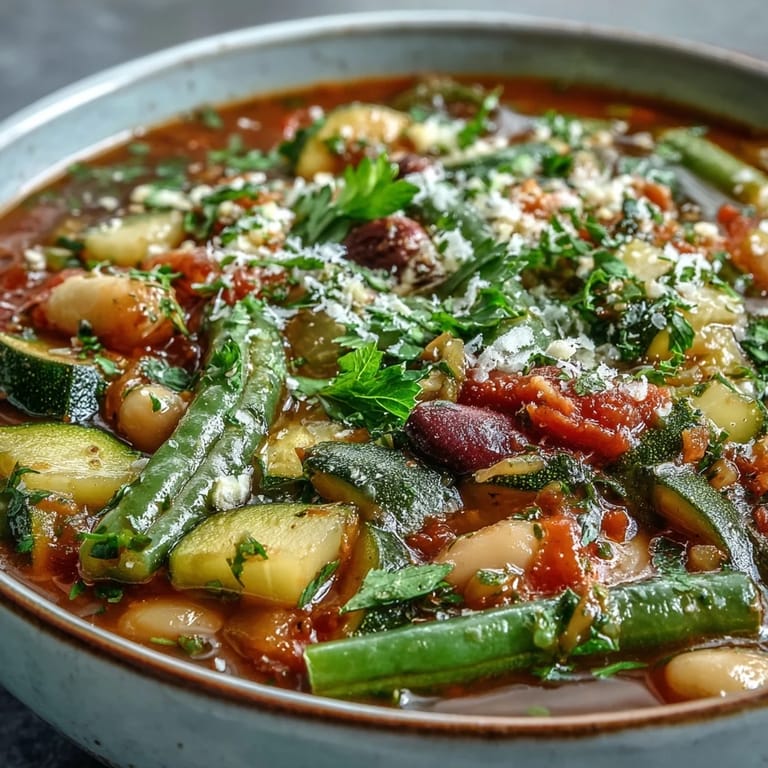
- Green beans: They stay a little firm even when fully cooked, giving you texture that matters.
- Diced tomatoes: Canned is perfect here—they're picked at peak ripeness and actually more consistent than fresh.
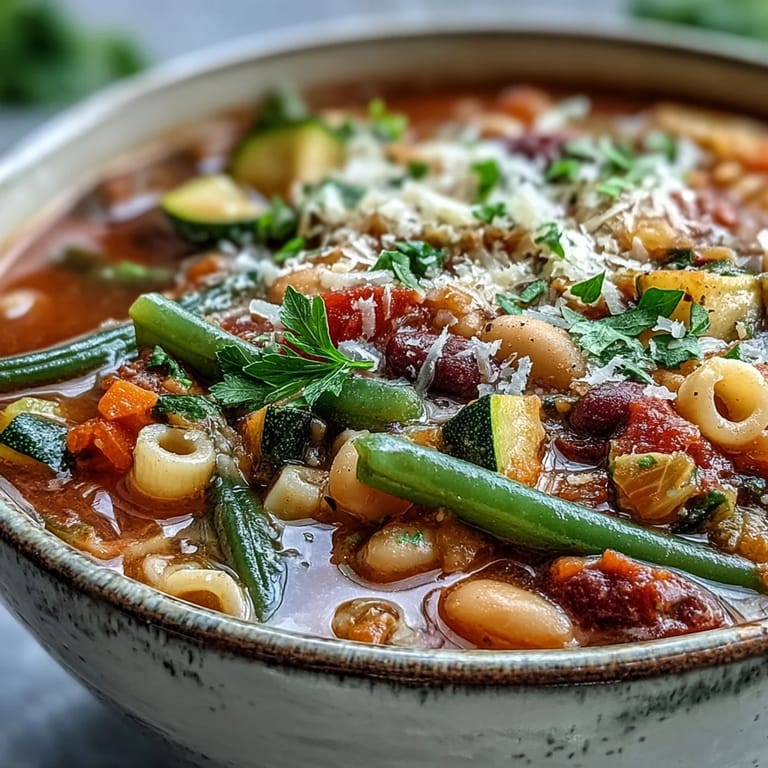
- Cannellini beans: Creamy and mild, they dissolve slightly into the broth and make the soup feel substantial without being heavy.
- Small pasta (ditalini or elbow): Small shapes trap broth and vegetables in every bite—this isn't the place for spaghetti.
- Vegetable broth: The quality of your broth is the quality of your soup, so choose one you'd actually drink on its own.
- Dried Italian herbs: A blend of oregano, basil, and thyme gives warmth without fresh herb fuss.
- Bay leaf: It sits quietly in the pot for 20 minutes, adding a subtle depth you won't identify but will absolutely notice if it's missing.
- Spinach or kale: Added at the very end to stay vibrant, kale holds its shape better if you're not eating this immediately.
- Fresh parsley: Bright, grassy, final garnish that reminds you this is alive and fresh.
- Parmesan cheese: Optional but not really—just a small handful makes this taste like someone who cares made it.
Instructions
- Start with heat and oil:
- Warm the olive oil in your large pot over medium heat until it shimmers slightly and smells warm and alive. Add the diced onion, carrots, and celery, then let them soften for five minutes, stirring occasionally—you want them to begin releasing their sweetness, not brown.
- Build the flavor:
- Add the minced garlic, diced zucchini, potato, and green beans, stirring everything together for about three minutes. The garlic will smell incredibly fragrant and you'll hear a gentle sizzle—that's how you know it's right.
- Add the soul of the soup:
- Pour in the diced tomatoes (with their juice), the drained cannellini beans, vegetable broth, dried herbs, and bay leaf. Stir once to combine, then turn the heat up until you see active bubbles breaking the surface.
- Let time do the work:
- Reduce heat to medium-low, cover the pot, and simmer for twenty minutes without peeking too much. The vegetables will soften, the flavors will begin to marry, and your kitchen will smell like an Italian grandmother's house.
- Add the pasta:
- Remove the lid and stir in your small pasta, then simmer uncovered for eight to ten minutes, stirring occasionally. The pasta will soften, and you'll notice the broth thickening slightly as the starch releases—this is normal and delicious.
- Finish with green:
- Fish out the bay leaf with a spoon, then add your spinach or kale and stir for about two minutes until it wilts and turns a darker, almost jewel-toned green. Taste the soup now—is it missing something? That's where salt and pepper come in.
- Season to taste:
- Add salt and freshly ground black pepper bit by bit, stirring and tasting between additions. Remember that Parmesan (if using) is salty, so go easy.
- Serve with intention:
- Ladle into bowls, garnish with fresh parsley that you've chopped just now, and let each person decide about the Parmesan cheese. Serve with crusty bread that's sturdy enough to soak up broth.
 Pin Recipe
 This soup stopped being just dinner one winter when a friend brought it to our table after a difficult day, and we sat in near silence for ten minutes, just eating. No one was performing or trying, we were just sustained. I think that's when I understood why minestrone has survived for centuries—it's not fancy, it's not trying to impress you, it's just genuinely nourishing in a way that goes beyond nutrition.
The Soffritto Secret
The foundation of this soup lives in those first five minutes when onion, carrot, and celery soften together. This combination is called soffritto in Italian cooking, and it's the reason your minestrone tastes like home even if you've never made it before. When these three vegetables break down into the oil, they create a base of sweetness and depth that no amount of herbs alone can accomplish. I once skipped this step, thinking I was being efficient, and the soup tasted flat and lifeless—now I consider those five minutes sacred.
Why Canned Tomatoes Win Here
Fresh tomatoes are beautiful in summer salads, but for minestrone, canned tomatoes are actually superior and I'm not shy about saying it. They're picked at peak ripeness and canned immediately, which means they're consistent, reliable, and packed with natural acidity that brightens the entire pot. When I tried making this with fresh tomatoes in winter—imported and expensive—the soup felt dull and the tomatoes tasted like water. Use good canned tomatoes, feel good about it, and let the myth of fresh-only cooking go.
Variations and Memories
This soup is forgiving in the best way—it welcomes whatever is in your crisper drawer and asks only that you respect the fundamentals. I've made it with cabbage when green beans weren't available, with peas when summer happened, with kale when spinach looked tired. My neighbor Maria once threw in a handful of fresh basil at the end, tearing it by hand, and that version sits in my memory as perfect. The beauty of minestrone is that it's never the same twice, yet always itself.
- Try adding a Parmesan rind to the broth while simmering for a depth that feels like a secret.
- Stir in a splash of good red wine after the tomatoes—it disappears into the broth and adds complexity.
- Make a double batch and freeze it; minestrone actually improves over a few days as flavors settle and deepen.
 Pin Recipe
 Make this soup when you want to feed someone—or yourself—with something that tastes like care and time, even though neither takes much. It's the kind of meal that reminds you why cooking matters.
Recipe FAQs
- → What vegetables go in minestrone?
Traditional minestrone includes onions, carrots, celery, zucchini, potatoes, and green beans. You can add seasonal vegetables like cabbage, peas, or Swiss chard based on preference and availability.
- → Can I make minestrone soup gluten-free?
Simply substitute regular pasta with gluten-free pasta varieties like rice-based corn pasta or quinoa pasta. All other ingredients naturally contain no gluten.
- → How long does minestrone soup last?
Stored in an airtight container, minestrone keeps for 4-5 days in the refrigerator. The flavors actually improve overnight. You can also freeze it for up to 3 months.
- → What type of pasta works best?
Small shapes like ditalini, elbow macaroni, or small shells work perfectly as they fit well on the spoon. Avoid larger pasta shapes that become unwieldy in soup.
- → Is minestrone soup healthy?
Absolutely. Packed with fiber-rich vegetables, protein from beans, and complex carbohydrates from pasta, each serving provides about 8 grams of protein and essential vitamins while remaining relatively low in fat.
- → Can I make minestrone vegan?
Yes, simply omit the Parmesan cheese garnish or use vegan cheese alternatives. The vegetable broth and all vegetables make it naturally plant-based and dairy-free.