 Pin Recipe
 The first time I understood what made a schnitzel truly Viennese was watching my neighbor's Austrian grandmother stand over a hot skillet, occasionally tilting it to bathe her golden cutlets in bubbling butter. She never rushed, never crowded the pan, and spoke about the sound—that specific sizzle—as if it were a language only she understood. That afternoon, tasting the result, I finally grasped why this simple dish has anchored Austrian tables for generations. It's not complicated, but it demands respect and attention.
I made this for a small dinner party last spring, and what surprised me most wasn't the compliments—it was watching my guests slow down while eating. No one rushed. They savored each bite with lemon, took time between forkfuls, and suddenly we weren't just eating; we were present together. That's the magic of a well-made schnitzel.
What's for Dinner Tonight? 🤔
Stop stressing. Get 10 fast recipes that actually work on busy nights.
Free. No spam. Just easy meals.
Ingredients
- Veal cutlets (4 pieces, about 150 g each): Thin, delicate meat that cooks quickly and stays tender when pounded properly; choose quality veal from a trusted butcher for the best flavor and texture.
- All-purpose flour (100 g): The first layer that helps the egg adhere; don't skip shaking off the excess or your coating will be thick and heavy.
- Eggs (2 large) and milk (4 tbsp): Together they create a binder that's silky, not thick; the milk keeps the egg from setting too fast during breading.
- Fine dry breadcrumbs (150 g): These must be fine and dry, not panko; they create that delicate, crisp shell that defines an authentic schnitzel.
- Clarified butter or neutral oil (250 ml): The fat is essential—it doesn't just fry, it steams the inside while crisping the outside, which is why you can't skimp on quantity or heat.
- Lemon wedges and fresh parsley: Brightness and freshness that cut through the richness; always serve both alongside.
Instructions
- Prepare your veal with gentle hands:
- Lay each cutlet between two sheets of plastic wrap and pound it with steady, even strokes until it's about 1/4 inch thick—you want it thin enough to cook quickly but not so thin it tears. Pat it dry afterward; moisture is the enemy of crispiness.
- Build your breading station like a mini assembly line:
- Three shallow dishes in a row: one with flour, one with beaten eggs mixed with milk, one with breadcrumbs. Having everything ready means you stay focused and your meat stays cold.
- Bread each cutlet with a light touch:
- Dredge in flour, shake off the excess, dip in egg, and coat with breadcrumbs—but don't press. A loose, feathery coating crisps beautifully; a packed one stays dense and heavy.
- Heat your fat until it's ready to work:
- Medium-high heat, and you'll know it's right when a breadcrumb sizzles immediately and dances on the surface. Too cool and you get oil absorption instead of crisping.
- Fry with confidence and a tilting hand:
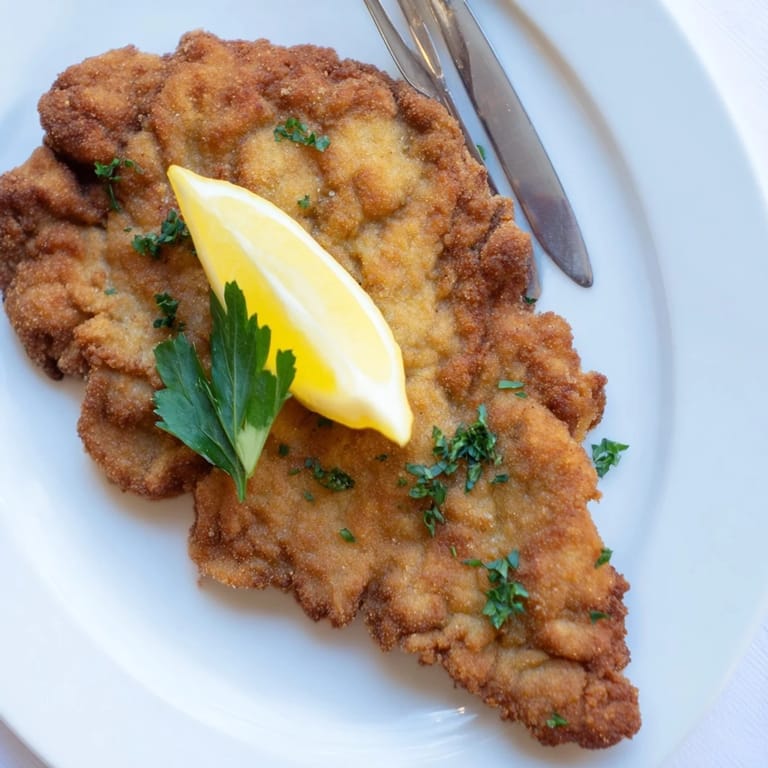
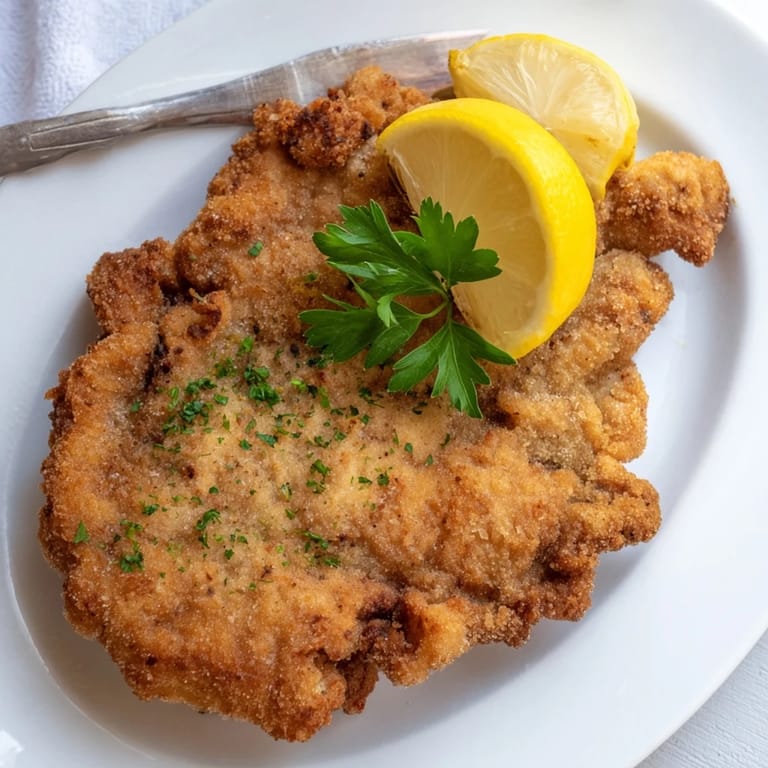
- One or two cutlets per pan depending on size—never crowd them—for 2 to 3 minutes per side until deep golden. That tilt of the pan, spooning hot fat over the top, matters; it browns the top evenly without flipping.
- Rest and serve while still singing:
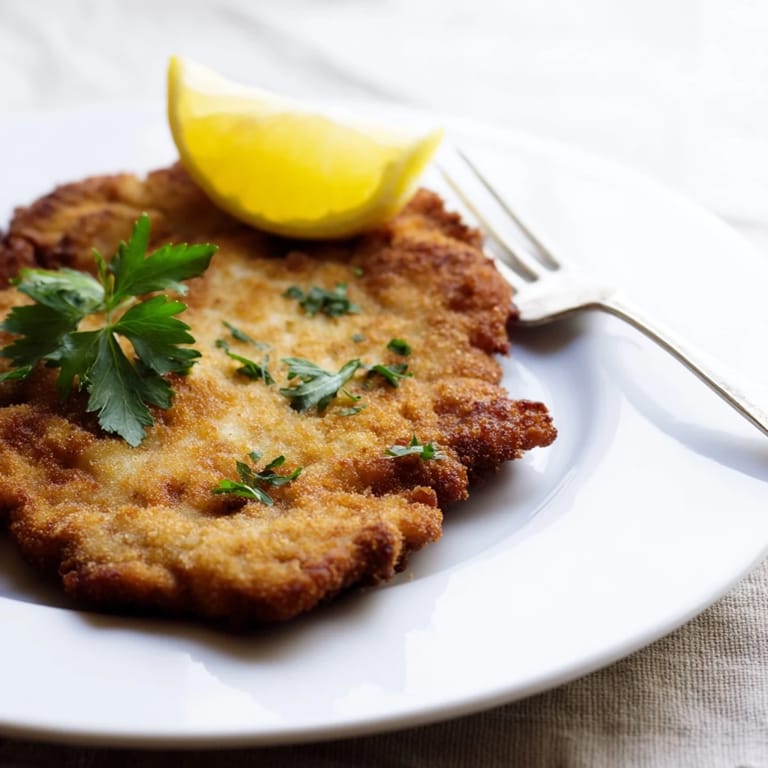
- A brief drain on paper towels removes excess fat but not the warmth. Serve immediately with lemon wedges and parsley while the crust is still crackling.
 Pin Recipe
 There was a moment, my first time making this, when I plated it and noticed the schnitzel was still crackling—you could actually hear it—and I realized that small sound meant everything was right. Golden, crisp, and impossibly juicy inside. That's when I understood this wasn't just technique; it was a conversation between heat, fat, and patience.
Choosing Your Cut
Veal is traditional, delicate, and absolutely worth seeking out from a good butcher, but I've learned that quality matters more than type. A thick-cut pork chop pounded thin works beautifully too—it's technically Schnitzel Wiener Art, but it's honest and delicious. Chicken is thinner already, so watch your timing closely so it doesn't dry out.
The Sides That Complete It
In Vienna, you'll never eat schnitzel alone; it arrives with potato salad (creamy and vinegared), cucumber salad (cool and refreshing), or sometimes a spoonful of lingonberry jam (which sounds odd until you taste how the tart fruit plays against the richness). A simple green salad works too, or just good bread to soak up any stray bits of golden crust that escaped onto the plate.
Making It Your Own
The beauty of schnitzel is its honesty—you're not hiding anything, so every choice shows. I've seen cooks add a whisper of nutmeg to the breadcrumb mixture, or a grating of Parmesan mixed in, or even a finely minced anchovy in the egg wash. The core never changes, but these small touches make it yours.
- Always use a meat mallet and let your hand feel the rhythm; you'll sense when the veal is ready.
- If you're nervous about splashing oil while tilting the pan, a long-handled spoon works just as well to baste the top.
- Day-old breadcrumbs work better than fresh because they're drier; if you only have fresh bread, toast it first and then pulse it into crumbs.
 Pin Recipe
 This is a dish that rewards attention but doesn't demand expertise, and that's perhaps its greatest gift. Make it once and the memory of that crackling sound stays with you.
Recipe FAQs
- → What cut of meat is best for this dish?
Veal cutlets about 150 grams each, pounded to 1/4 inch thickness, provide the ideal tenderness and texture.
- → How should the breading be applied?
First dredge in flour, then dip in an egg and milk mixture, followed by a light coating of fine dry breadcrumbs without pressing them in to keep a crisp crust.
- → What fat is recommended for frying?
Clarified butter is traditional for its rich flavor and high smoke point; neutral oil is a good alternative for frying.
- → How can I keep the coating crispy after frying?
Drain the schnitzels briefly on paper towels and avoid overcrowding the pan during frying to maintain crispiness.
- → What garnishes suit this dish?
Lemon wedges add a fresh citrus touch, and chopped parsley can provide a mild herbal accent.
- → Are there common side dishes served alongside?
This dish pairs well with potato salad, cucumber salad, or lingonberry jam for traditional flavor complements.