 Pin Recipe
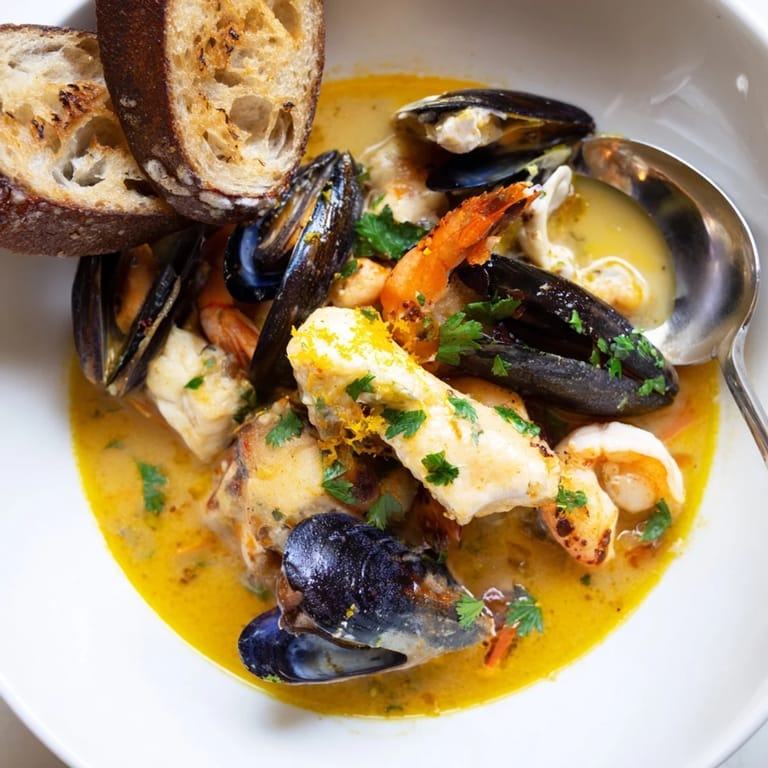
 The first time I tasted authentic bouillabaisse, I was standing in a tiny harbor restaurant in Marseille, watching fishing boats bob in the morning light while the chef ladled this golden, fragrant stew into a white bowl. What struck me wasn't just the complexity of flavors—the saffron, the fennel, the whisper of orange—but the fact that it tasted like the sea itself had been gently coaxed into a pot. Years later, I decided to recreate that moment in my own kitchen, and what started as an ambitious afternoon became a meditation on patience, good ingredients, and why this Provençal dish has been worth the effort for centuries.
I remember my neighbor peering over the garden fence at dusk, drawn by the unmistakable perfume of saffron and fennel wafting from my kitchen window. When I invited her in for a taste, she sat at my table with a spoon in one hand and her eyes closed, and didn't say anything for what felt like an eternity. That's when I understood—bouillabaisse isn't just dinner, it's an invitation to slow down, to share something that took real care to make.
What's for Dinner Tonight? 🤔
Stop stressing. Get 10 fast recipes that actually work on busy nights.
Free. No spam. Just easy meals.
Ingredients
- Firm white fish fillets (monkfish or sea bass), 400g: These carry the broth without falling apart and provide a delicate sweetness that balances the more assertive oily fish.
- Oily fish fillets (red mullet), 300g: This is where the soul of bouillabaisse lives—oily fish adds richness and body that ordinary white fish simply cannot match.
- Mussels, 300g: They release their own briny liquor into the stew and signal doneness by opening; discard any that refuse.
- Small shrimp, 200g: Quick-cooking and sweet, they add textural variety and a hint of ocean flavor without overwhelming.
- Sea scallops, 6 large: Optional, but they're a luxury touch that cooks in seconds and melts on the tongue.
- Olive oil, 2 tbsp: Use good oil here—it's the foundation of the soffritto and worth the splurge.
- Onion, leek, fennel, carrot, and garlic: These aromatic vegetables build a flavor base that's distinctly Provençal; the fennel is non-negotiable.
- Tomatoes, 4 ripe: Fresh, in-season tomatoes make an enormous difference; canned works in winter, but peel and seed them for a cleaner stew.
- Orange zest: A single strip brings brightness and cuts through the richness without tasting citrusy.
- Bay leaf, thyme, and parsley: Traditional herbs that have been simmered in bouillabaisse for generations.
- Saffron threads, 1/2 tsp: This is an investment, but a little goes far and it's what gives bouillabaisse its golden soul.
- Fennel seeds, 1 tsp: Toast them lightly in a dry pan first if you have a moment—it deepens their flavor considerably.
- Dry white wine, 200 ml: Something crisp and dry, nothing too oaky; it should taste good enough to sip while you cook.
- Fish stock or water, 1.5 liters: Homemade stock elevates this entirely, but good water works too if your other ingredients are stellar.
- For the rouille—egg yolk, garlic, chili, saffron, olive oil, mustard: This creamy, garlicky sauce is what transforms simple bread into something unforgettable.
- Baguette, sliced and toasted: The vehicle for the rouille and the perfect vessel to soak up every last drop.
Instructions
- Build your flavor base:
- Heat olive oil in a large heavy pot over medium heat and add onion, leek, fennel, carrot, and garlic. Let them soften for 8–10 minutes, stirring occasionally, until they're translucent and fragrant but not colored—rushing this step means you'll miss the sweet foundation that makes bouillabaisse sing. The vegetables should smell almost perfumy when they're ready.
- Wake up the aromatics:
- Stir in tomatoes, orange zest, bay leaf, thyme, parsley, saffron threads, fennel seeds, and peppercorns along with a generous pinch of salt and pepper. Let this cook for 5 minutes so the saffron begins to release its color and everything melds together into a cohesive mixture.
- Deglaze and build the broth:
- Pour in the white wine and let it simmer for 2 minutes so the alcohol cooks off and the wine's acidity sharpens the overall flavor. Add fish stock or water and bring to a gentle boil, then lower the heat and let it simmer uncovered for 25 minutes—this is where patience becomes your greatest ingredient.
- Strain and clarify:
- Pour the broth through a fine sieve, using the back of a spoon to press gently on the solids and coax out every last bit of flavor; this step is crucial for achieving that golden, refined broth that defines real bouillabaisse. Return the strained broth to a cleaned pot and taste it—it should taste full and savory, not thin.
- Add the seafood in stages:
- Bring the broth back to a gentle simmer and add the firm fish first, giving it a 5-minute head start. Then add the oily fish, mussels, shrimp, and scallops (if using) and simmer for another 5–6 minutes until everything is just barely cooked and the mussels have opened—overcooking even slightly will turn delicate seafood into rubber.
- Make the rouille:
- While the seafood cooks, combine egg yolk, minced garlic, chopped chili, saffron with its soaking water, and mustard in a bowl and whisk until smooth. Gradually drizzle in olive oil while whisking constantly, as if you're making mayonnaise, until the mixture becomes thick and creamy and holds its shape.
- Serve with ceremony:
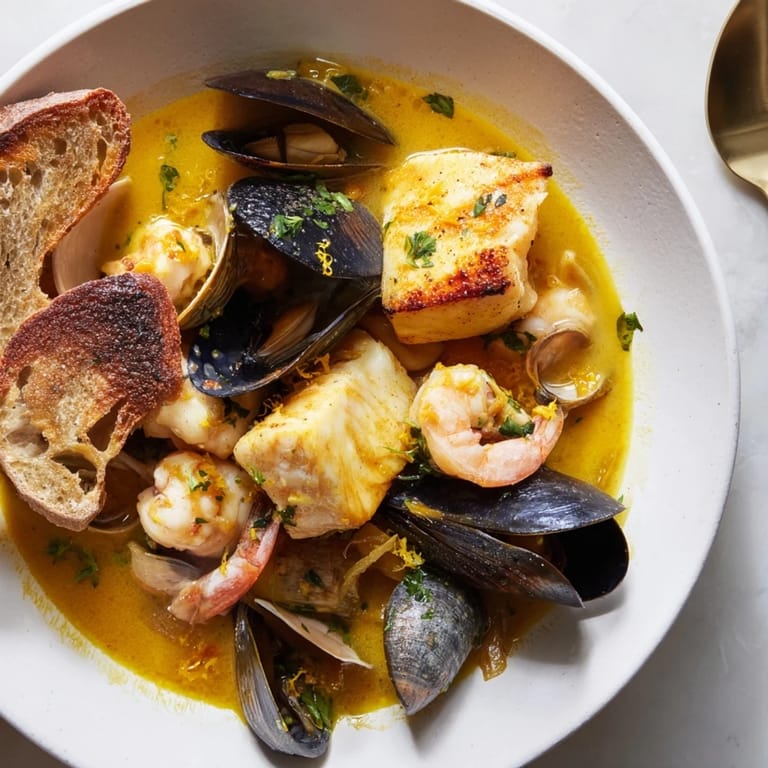
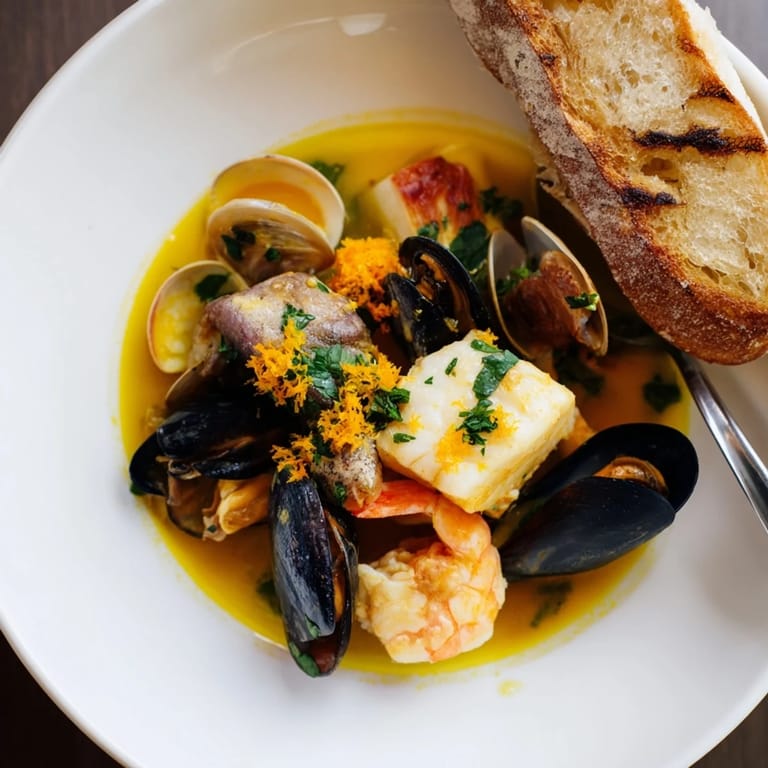
- Ladle the bouillabaisse into warm bowls, top with fresh parsley, and serve alongside toasted baguette slices brushed with olive oil and a generous spoonful of rouille on the side.
 Pin Recipe
 I'll never forget watching my father break a piece of toasted bread, spread it thickly with rouille, dip it into the stew, and then sit in complete silence for what felt like minutes. When he finally looked up, he had tears in his eyes—not sadness, but that kind of joy that comes from tasting something so alive, so complete, that it stops time for a moment.
The Soul of Provençal Seafood
Bouillabaisse exists because of a place—Provence, where the Mediterranean offers up its treasures to fishermen who know how to listen. The vegetables used here (fennel, leek, garlic, tomato) grow in that same soil, and the saffron that colors the broth comes from regions with equally strong sunshine and patience. When you make bouillabaisse, you're not just following a recipe; you're participating in a conversation between the sea and the land that's been happening for centuries. The flavors aren't complicated by accident—they're the result of understanding that certain ingredients belong together because they come from the same place and the same time of year.
About the Rouille
The rouille is what transforms this dish from excellent to transcendent. It's essentially a saffron-infused, garlicky mayonnaise that sits on the side, and you can add as much or as little as you like to each spoonful. The red chili gives it a gentle warmth that doesn't overwhelm, and the saffron ties it visually and flavor-wise to the broth. The best part? You can make it hours ahead, and it will actually taste better as the flavors meld. If you're nervous about making mayonnaise, don't be—the egg yolk and oil will emulsify as long as you add the oil slowly and whisk constantly, almost like you're coaxing them to become friends.
Timing and Flexibility
Bouillabaisse respects the seasons. In summer, when tomatoes are at their peak, use them fresh and ripe; in winter, a good-quality canned tomato is honest and better than a mealy fresh one. The same goes for the seafood—buy what's fresh and local, what the fishmonger is excited about. The dish is flexible enough to use what's in front of you while staying true to its spirit. The only non-negotiables are good olive oil, saffron, fennel, and the freshest seafood you can find.
- Make the broth up to a day ahead and reheat it gently before adding seafood—this actually helps the flavors deepen.
- Add seafood no more than 20 minutes before serving, as it cooks so quickly that timing is everything.
- Toast the baguette slices just before serving so they're still warm and crispy when they meet the stew.
 Pin Recipe
 There's something about making bouillabaisse that slows you down and teaches you to cook with intention. The first time you make it, treat it as an experience rather than a task—taste the broth at each stage, admire the color the saffron brings, and understand why this dish has lived through centuries.
Recipe FAQs
- → What types of fish are best for bouillabaisse?
Firm white fish like monkfish or sea bass combined with oily fish such as red mullet create the perfect balance of texture and flavor.
- → How is the saffron used in the stew?
Saffron threads are added to the broth to impart a delicate aroma and a subtle golden hue to the stew.
- → What is rouille and how is it made?
Rouille is a creamy, garlicky sauce made by whisking egg yolk, garlic, chili, saffron, mustard, and olive oil into a thick emulsion.
- → Can I prepare the stew in advance?
The broth can be prepared ahead and refrigerated; add seafood and finish cooking just before serving for best freshness.
- → Is there a suggested wine pairing?
A chilled Provençal rosé or a crisp dry white wine complements the seafood and herbs beautifully.