 Pin Recipe
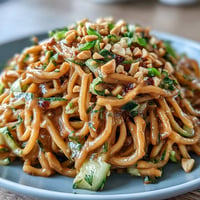
 I discovered the magic of cabbage cores quite by accident, honestly. I was about to toss them after making soup, when my mom mentioned she used to save hers for exactly this reason. That afternoon, I shredded them into something close to confetti, tossed them with a sesame dressing that smelled like toasted warmth and ginger, and suddenly had this surprisingly addictive slaw that my partner couldn't stop picking at straight from the bowl.
I made this for a potluck where everyone brought the same mayonnaise-heavy salads, and watching people's faces light up when they tried something bright and crunchy was worth every minute of shredding. One friend asked for the recipe while eating it, which pretty much never happens.
What's for Dinner Tonight? 🤔
Stop stressing. Get 10 fast recipes that actually work on busy nights.
Free. No spam. Just easy meals.
Ingredients
- Cabbage cores, finely shredded: These dense, fibrous centers are what most people throw away, but they're actually the most nutrient-packed part and they hold their crunch beautifully in dressing.
- Green cabbage leaves: They add bulk and a softer texture that balances the cores, plus a bit of visual sweetness.
- Carrot, julienned: The orange threads catch light and add natural sweetness that rounds out the earthiness of the cabbage.
- Green onions: They bring a gentle bite that wakes everything up without being aggressive.
- Toasted sesame oil: This is non-negotiable, the entire soul of the dressing lives here, so don't skip the toasting step on the bottle.
- Rice vinegar: Gentler than regular vinegar, it adds brightness without harsh acidity.
- Soy sauce or tamari: A small amount brings umami depth that makes everything taste more intentional.
- Maple syrup or honey: Just enough to balance the vinegar's edge and round out the flavors.
- Fresh ginger and garlic: These create the aromatic backbone that makes the whole thing smell like you know what you're doing.
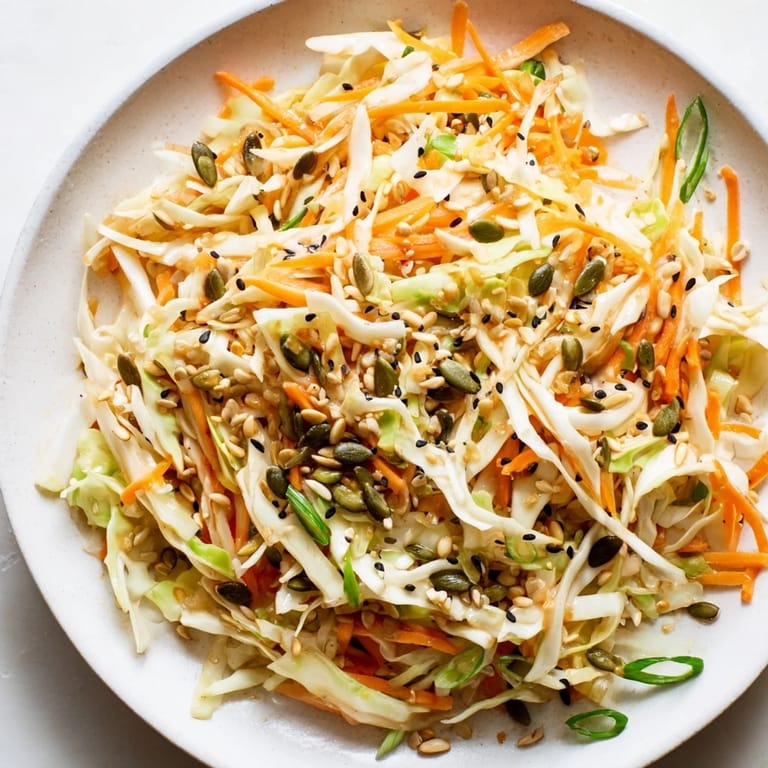
- Toasted sesame seeds: They add nuttiness and a satisfying crunch that keeps the slaw interesting through every bite.
- Pumpkin and sunflower seeds: Extra texture and a bit of earthiness that feels more substantial than just sesame alone.
Instructions
- Gather and prep your vegetables:
- Shred the cabbage cores first on the finer side of a box grater or with a knife, then add the leaves, carrots, and green onions to a large bowl. Take your time here, the texture matters.
- Build the dressing:
- In a small bowl, whisk sesame oil, rice vinegar, soy sauce, maple syrup, minced ginger, and garlic until they look emulsified and smell incredible. You'll know it's right when it smells warm and nutty.
- Bring it all together:
- Pour the dressing over your vegetables and toss thoroughly, making sure every bit of cabbage gets coated. Don't be shy, this is where the magic happens.
- Add the seeds and let it rest:
- Sprinkle most of your toasted seeds over the top and toss gently, or reserve some for garnish if you like. Let everything sit together for about 10 minutes so the flavors actually get to know each other.
- Serve and enjoy:
- Eat it chilled, at room temperature, or even slightly warm if you forgot about it. It's forgiving like that.
 Pin Recipe
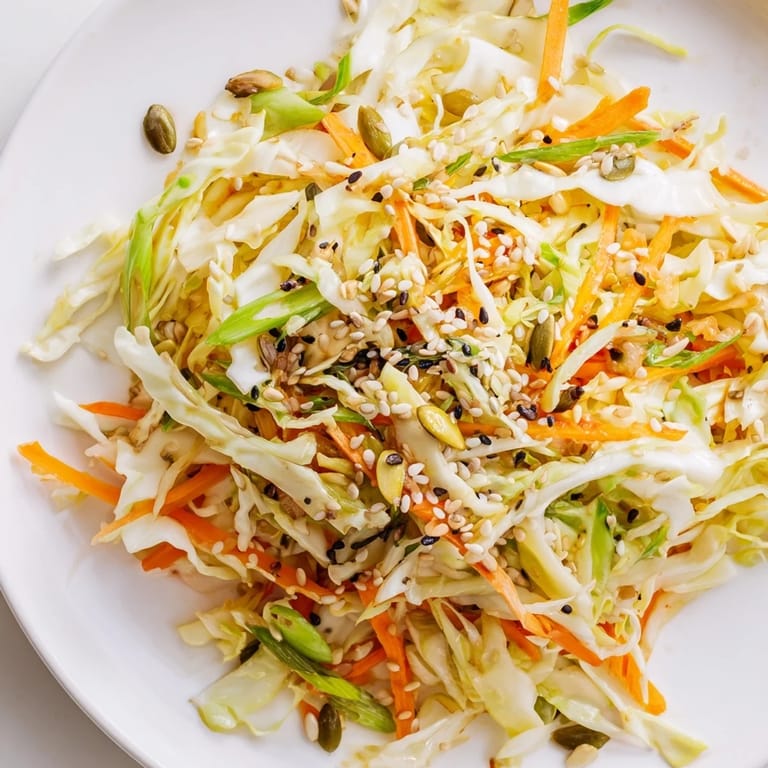
 This became the salad I make when I'm cooking for people who think they don't like salad, because it tastes more like a choice than an obligation. There's something about eating something this crunchy and vibrant that feels celebratory, even when it's just a Tuesday.
Why Cabbage Cores Are Your Secret Weapon
Most home cooks don't realize that the core is where all the nutrition hides, dense with fiber and nutrients that the outer leaves have already given away. When you shred them fine enough, they become almost delicate despite their tough exterior, absorbing dressing while still maintaining that satisfying snap. It's also practical, honestly, because you're using something you'd normally compost, which feels resourceful in a way that matters.
The Sesame Oil Factor
Toasted sesame oil is the difference between a salad and an experience, but it's potent enough that you don't need much. I learned this the hard way after using too much and making everything taste like I'd coated it in pure oil, when really three tablespoons across four servings is perfect. The warmth of the oil carries the ginger and garlic into every corner of the slaw, creating a base flavor that feels complete without being heavy.
Customizing Without Losing Your Way
This slaw is sturdy enough to take additions without falling apart, which means you can make it your own without needing permission. If heat calls to you, slice some red chili or drizzle chili oil across the top for warmth that builds as you eat. Fresh cilantro or mint scattered on top brings brightness that some days feels exactly right, and some days feels like too much, which is why you should add it only when you want it. You can swap the maple syrup for honey if you're not vegan, and honestly either one works beautifully.
- Fresh herbs like cilantro, mint, or basil transform it into something completely different.
- A dash of chili oil or sliced red chili brings heat that makes it feel dangerous.
- Coconut aminos work as a direct soy sauce swap if allergies matter.
 Pin Recipe
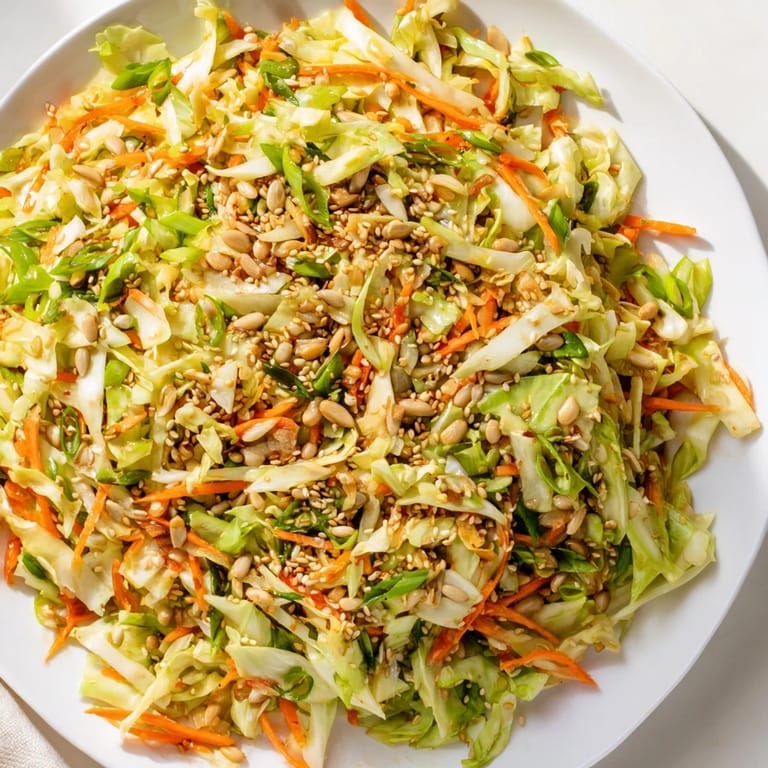
 This salad has quietly become the thing I reach for when I want something that tastes like it took thought but didn't actually steal my time. It's the kind of side dish that makes other things better, or the kind of lunch that stands completely on its own.
Recipe FAQs
- → Can I make this slaw ahead of time?
Yes, allowing it to sit for 10 minutes to meld flavors is ideal. For best texture, toss again before serving.
- → What can I substitute for soy sauce to avoid soy allergens?
Coconut aminos work well as a soy-free alternative and maintain the savory taste in the dressing.
- → How do toasted seeds enhance the slaw?
Toasting seeds brings out their nutty aroma and adds a crunchy texture, enriching each bite.
- → Is this slaw suitable for a vegan diet?
Yes, using maple syrup instead of honey keeps the dressing fully vegan-friendly.
- → Can I add spice to this slaw?
Adding sliced red chili or a dash of chili oil provides a pleasant heat without overpowering the flavors.