 Pin Recipe
 I started making this soup during a particularly rough winter when my entire household came down with the flu one after another. I was desperate for something that would actually help us feel better, not just taste good. After some trial and error, I landed on this combination of ginger, garlic, and turmeric simmered into a chicken broth that felt like medicine you actually want to eat. The ditalini pasta was a last-minute addition when I realized we needed something more substantial than plain broth. Now it's the first thing I make at the slightest sniffle.
The first time I made a big batch of this, I brought some over to my neighbor who had been sick for days. She called me that evening just to say it was the first thing she'd been able to finish in three days. That's when I knew this wasn't just another chicken soup recipe. There's something about the brightness from the lemon and the warmth from the fresh ginger that makes it feel restorative in a way canned soup never could. I've made it for friends, family, and myself more times than I can count since then.
What's for Dinner Tonight? 🤔
Stop stressing. Get 10 fast recipes that actually work on busy nights.
Free. No spam. Just easy meals.
Ingredients
- Boneless, skinless chicken breasts: I use these because they cook quickly and shred easily, but thighs work too if you prefer darker meat with more flavor.
- Olive oil: Just enough to get a light sear on the chicken and sauté the vegetables without making the soup greasy.
- Onion, carrots, and celery: The classic soup base that adds natural sweetness and depth, I've learned not to skip the step of letting them soften properly.
- Garlic cloves: Four cloves might seem like a lot, but when you're fighting off a cold, more garlic is always better.
- Fresh ginger: This is non-negotiable for me, the fresh stuff has a brightness and heat that ground ginger just can't match.
- Fresh turmeric: I grate it fresh when I can find it, but ground works in a pinch and still gives that golden color and earthy flavor.
- Low-sodium chicken broth: Using low-sodium lets you control the salt level, especially important since you'll be reducing the liquid as it cooks.
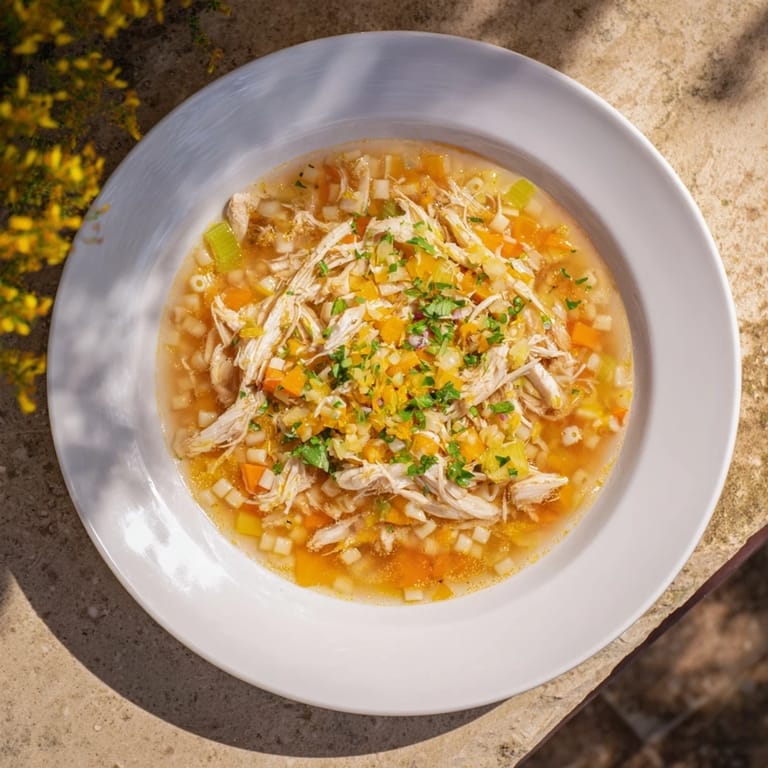
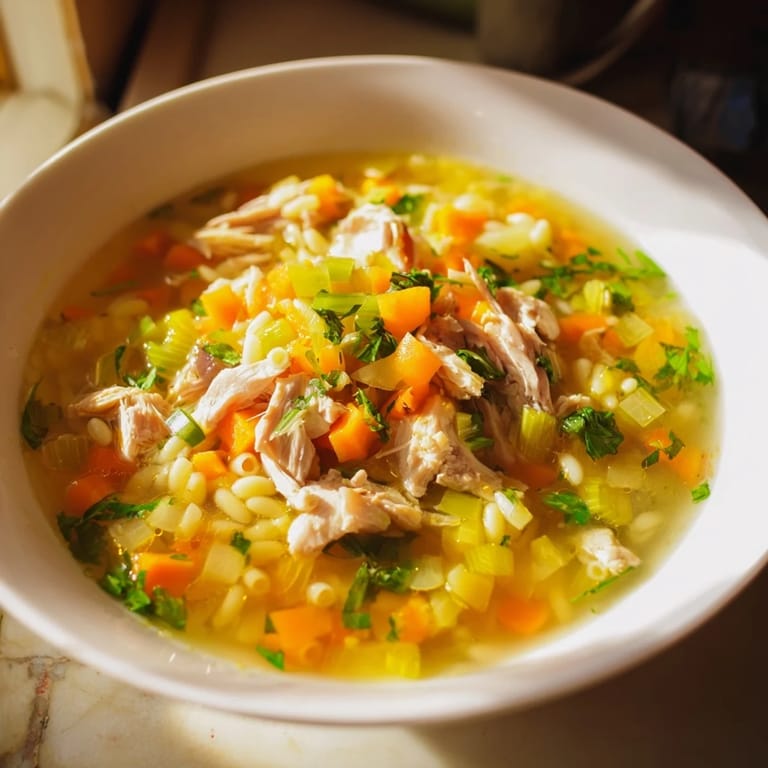
- Ditalini pasta: These little tubes are perfect for soup because they're easy to scoop up and cook quickly, though orzo or small shells work just as well.
- Bay leaf: One leaf adds a subtle herbal note that rounds out the broth without overpowering it.
- Salt and black pepper: Always taste before serving, everyone's preference is different and the broth's saltiness can vary.
- Fresh parsley: The fresh green flavor brightens everything up at the end, don't skip this step.
- Lemon juice: Just half a lemon is enough to add a little acidity that makes all the other flavors pop.
Instructions
- Sear the chicken:
- Heat the olive oil over medium heat and sear the chicken breasts for 2 to 3 minutes on each side until they get a light golden crust. You're not cooking them through yet, just adding a little color and flavor before they simmer in the broth.
- Sauté the vegetables:
- Toss in the onion, carrots, and celery, and let them cook for about 5 minutes, stirring occasionally until they start to soften and the onion turns translucent. This is where the soup base really starts to build.
- Add the aromatics:
- Stir in the garlic, ginger, and turmeric, and cook for just a minute until your kitchen smells amazing and you can see the garlic start to turn golden. Don't let it burn or it'll turn bitter.
- Simmer with broth:
- Return the seared chicken to the pot, pour in all the chicken broth, and drop in the bay leaf. Bring it to a boil, then lower the heat, cover it, and let it simmer gently for 20 minutes so the chicken cooks through and the flavors start to marry.
- Shred the chicken:
- Carefully remove the chicken breasts and use two forks to shred them into bite-sized pieces. Then return all that shredded chicken back into the pot.
- Cook the pasta:
- Add the ditalini, salt, and pepper, and let it cook uncovered for 8 to 10 minutes, stirring now and then until the pasta is al dente. Keep an eye on it so it doesn't overcook and get mushy.
- Finish and serve:
- Stir in the fresh parsley and lemon juice, taste it, and add more salt or pepper if you need to. Fish out the bay leaf, ladle the soup into bowls, and serve it hot with extra parsley on top if you like.
 Pin Recipe
 One evening last fall, I was making this soup for myself after a long day, and my daughter wandered into the kitchen asking what smelled so good. She's usually picky about soup, but she ended up eating two bowls and asking me to pack some for her lunch the next day. That's when I realized this recipe had become more than just my go-to sick day meal. It's the kind of soup that brings people to the table even when they're not sick, and that's the best compliment any recipe can get.
Storage and Reheating
This soup keeps beautifully in the fridge for up to four days in an airtight container. When you reheat it, you might need to add a splash of water or broth because the pasta will continue to absorb liquid as it sits. I usually warm it gently on the stove over medium-low heat, stirring occasionally, though the microwave works in a pinch. Just know that the pasta will soften a bit more each time you reheat it, so if you're planning to make it ahead, consider cooking the pasta separately and adding it fresh when you serve.
Customizations and Swaps
If you want to pack in even more vegetables, throw in a handful of chopped spinach or kale right at the end, they'll wilt in seconds. For a spicier kick, add a pinch of cayenne pepper or red pepper flakes along with the ginger and garlic. I've also made this with chicken thighs instead of breasts when that's what I had on hand, and it turned out even richer and more flavorful. If you're gluten-free, just swap the ditalini for a gluten-free small pasta or even rice, and make sure your broth is certified gluten-free too.
Serving Suggestions
I almost always serve this with a hunk of crusty bread for dipping, something with a good chew that can soak up all that flavorful broth. A light side salad with a lemon vinaigrette complements it nicely without making the meal feel too heavy. If you want to make it a little fancier for guests, a glass of dry white wine like Sauvignon Blanc or Pinot Grigio pairs beautifully and echoes the brightness of the lemon in the soup.
- Serve with crusty bread or garlic toast for dipping.
- Pair with a simple green salad dressed in lemon and olive oil.
- Garnish with extra fresh parsley, a crack of black pepper, or even a thin lemon slice for presentation.
 Pin Recipe
 This soup has pulled me and the people I love through more colds and rough days than I can count. I hope it does the same for you.
Recipe FAQs
- → What pasta can I use instead of ditalini?
Orzo or small shell pasta are excellent substitutes and maintain a similar texture.
- → How do ginger and turmeric enhance this dish?
They add warm, earthy flavors and subtle spiciness, contributing to the broth's comforting qualities.
- → Can I prepare the chicken differently?
Searing the chicken first seals in flavor before simmering, but poaching directly in broth works well too.
- → What are good seasoning adjustments for personal taste?
Adjust salt, pepper, or add a pinch of cayenne for gentle heat; fresh parsley and lemon juice brighten the flavors.
- → How long should I cook the pasta in the broth?
Cook uncovered for about 8–10 minutes until the pasta is al dente, ensuring it absorbs flavors without over-softening.