 Pin Recipe
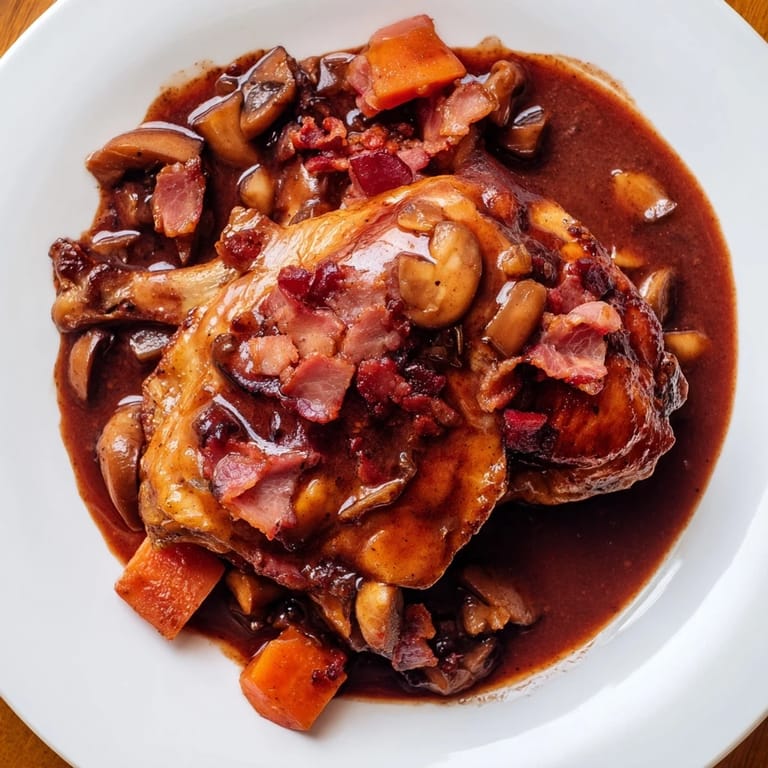
 There's something about the aroma of red wine reducing in a hot pot that stops you mid-conversation. My first coq au vin happened almost by accident—a winter evening when I'd invited friends over and realized I had chicken, wine, and not much else in the kitchen. What started as improvisation became the dish I'd make again and again, each time discovering something new in those dark, glossy layers of flavor.
I made this for my neighbor who'd helped me move, and the smell filled my entire apartment building—she later told me she followed her nose to my door wondering what she was missing. That's when I understood this dish isn't just dinner; it's an invitation wrapped in steam and wine.
What's for Dinner Tonight? 🤔
Stop stressing. Get 10 fast recipes that actually work on busy nights.
Free. No spam. Just easy meals.
Ingredients
- 1 whole chicken (about 1.5 kg), cut into 8 pieces: Cutting it yourself means you control the size; bigger pieces stay juicier during the long braise.
- 150 g smoked bacon or pancetta, diced: Pancetta is traditional, but good smoky bacon adds depth that carries through the whole dish.
- 200 g pearl onions, peeled: They look delicate but hold their shape beautifully and turn sweet as the braise progresses.
- 250 g cremini or button mushrooms, cleaned and quartered: Don't wash them under running water; brush them clean with your thumb, they'll brown better.
- 2 medium carrots, sliced: Cut them thick enough that they won't disappear into the sauce.
- 2 garlic cloves, minced: Fresh garlic matters here more than you'd think; it adds brightness against all that wine.
- 750 ml dry red wine (e.g., Burgundy or Pinot Noir): Use a wine you'd actually drink—cheap wine makes cheap-tasting stew.
- 250 ml chicken stock: Homemade is better, but good store-bought keeps the dish honest.
- 2 tbsp tomato paste: This is your secret depth; it rounds out the wine's acidity.
- 2 tbsp all-purpose flour: It thickens gently without needing cream, just stir it in with the tomato paste.
- 2 tbsp olive oil: You'll use this in two stages, so don't skimp.
- 2 tbsp unsalted butter: For the mushrooms later; it lets them brown instead of steam.
- 2 bay leaves and 4 sprigs fresh thyme: These are your backbone; dried herbs won't give you the same brightness.
- Salt and freshly ground black pepper: Taste at the end; the sauce concentrates, so you'll need more seasoning than you'd expect.
Instructions
- Prepare and Season Your Chicken:
- Pat each piece dry with paper towels, then season generously. Wet chicken won't brown; it'll steam.
- Render the Bacon:
- Heat 1 tbsp olive oil in your Dutch oven over medium heat and cook the diced bacon until the edges curl and crisp. Listen for the sound to tell you when it's done—it gets quieter as the fat renders.
- Brown the Chicken in Batches:
- Don't crowd the pot. Each piece needs space to touch the hot surface and turn golden brown on both sides. Work in two batches if needed; patience here pays off in flavor.
- Build the Aromatics:
- Add carrots, pearl onions, and garlic to the pot where the chicken was, stirring until they soften and the onions start to turn translucent. This takes about 5 minutes.
- Deglaze with Tomato and Flour:
- Stir in tomato paste and flour, let it cook for exactly 1 minute so the raw flour taste disappears. You'll see the mixture darken slightly.
- Bring Everything Together:
- Return the chicken and bacon, pour in the wine and stock, add bay leaves and thyme, and scrape the bottom with your wooden spoon to lift up all those caramelized bits. That's where all the flavor lives.
- Braise Low and Slow:
- Bring to a simmer, cover, and move to low heat or a 325°F oven for 1.5 hours. The chicken should be fork-tender, the house smelling like a wine bar.
- Sauté the Mushrooms Separately:
- While the chicken braises, heat 1 tbsp butter and 1 tbsp olive oil in a skillet and cook the mushrooms until they're dark brown, about 5 minutes. Set aside and don't wash the pan—that fond is flavor.
- Finish and Reduce:
- Remove the Dutch oven's lid for the last 15 minutes so the sauce reduces and thickens slightly. Stir in the browned mushrooms, taste, and adjust salt and pepper—the sauce will be saltier than you expect.
- Serve:
- Remove bay leaves and thyme sprigs, then serve hot with crusty bread, mashed potatoes, or buttered noodles.
 Pin Recipe
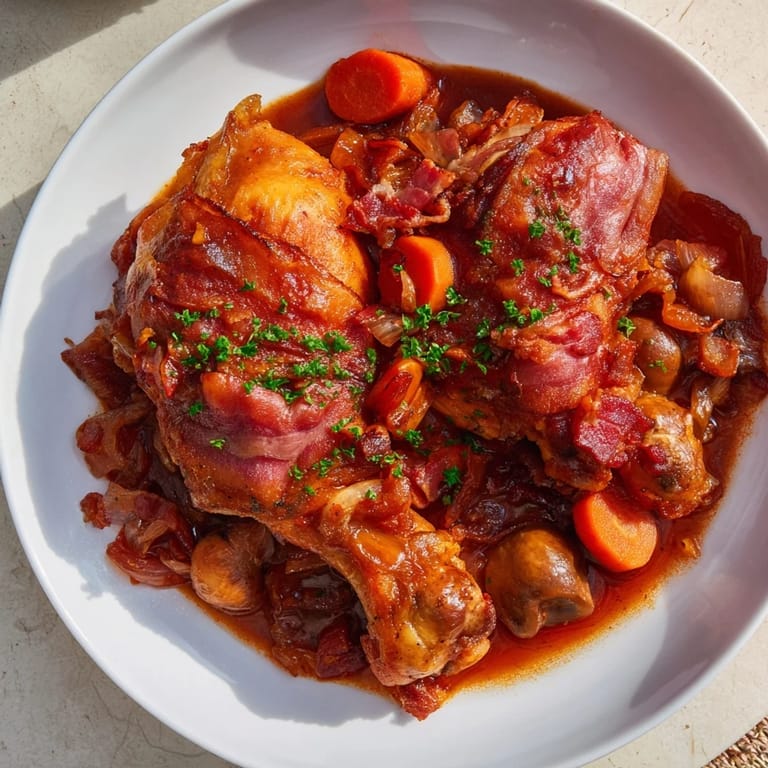
 Last winter, I made this for my mother the day after she'd been in the hospital, and watching her sit down to a bowl of it—steam rising, meat falling off the bone—felt like saying something I didn't have words for. Food does that sometimes; it says what you can't quite speak out loud.
Why This Dish Rewards Patience
Coq au vin isn't fast, and that's the whole point. The time in the pot doesn't just cook the chicken; it transforms the wine from sharp and simple into something round and deep. The longer you let it sit, the more the flavors talk to each other. I used to think I needed to rush through cooking, but this dish taught me that the waiting is part of what makes it taste like more than the sum of its parts.
Playing with the Recipe
Some nights I add a splash of brandy when the mushrooms hit the pan, and the kitchen fills with a warmth that wine alone doesn't quite give. Other times I use chicken thighs instead of a whole bird—they're harder to overcook, more forgiving if you lose track of time. The recipe is sturdy enough to bend a little without breaking; that's what makes it feel like cooking instead of following instructions.
Serving and Keeping
Crusty French bread, mashed potatoes, or buttered noodles—any of these will soak up the sauce like they were made for it. The stew actually tastes better the next day, when the flavors have had time to settle and deepen in the fridge. I often make it a day ahead on purpose, then reheat it gently on the stove, tasting as I go.
- If you add a splash of good brandy to the mushrooms, the whole dish shifts into something richer and more elegant.
- Leftovers freeze beautifully for up to three months, though honestly they rarely last that long.
- The sauce should coat the back of a spoon when you're done; if it's too thin, let it reduce uncovered for another 10 minutes.
 Pin Recipe
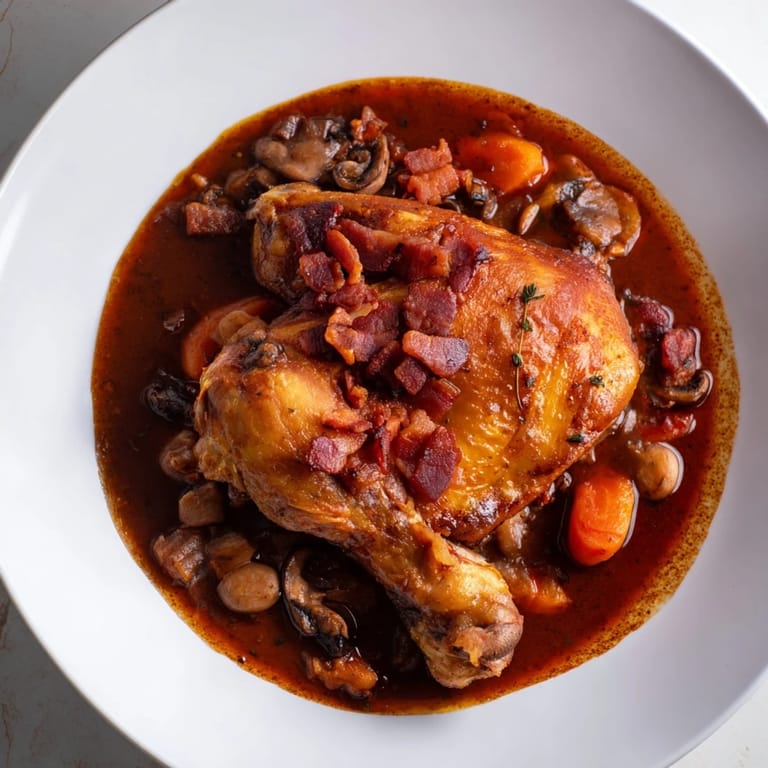
 This is the kind of dish that asks you to slow down, to trust the process, and to remember that the best meals aren't about speed. Make it once and it becomes yours.
Recipe FAQs
- → What wine works best for braising?
Dry red wines like Burgundy or Pinot Noir complement the dish well, enriching the sauce without overpowering the flavors.
- → Can I use chicken thighs instead of whole chicken?
Yes, chicken thighs provide excellent tenderness and flavor when braised similarly to the original method.
- → How should mushrooms be prepared?
Sauté cleaned and quartered cremini or button mushrooms in butter and olive oil until browned before adding to the stew for added depth.
- → What sides pair well with this dish?
Crusty French bread, mashed potatoes, or buttered noodles make ideal accompaniments to soak up the rich sauce.
- → Is it necessary to remove bay leaves and thyme before serving?
Yes, removing these herbs ensures a pleasant texture and avoids overpowering herbal notes on the palate.