 Pin Recipe
 I discovered this dish on a Tuesday night when I was standing in front of my fridge with absolutely nothing appealing to cook. There was a tub of cottage cheese that I'd bought with good intentions, some pasta, and a vague memory of someone mentioning that blended cottage cheese could taste like ricotta. I was skeptical, but twenty minutes later I was eating something so creamy and satisfying that I couldn't believe how simple it was. Now it's become my go-to when I want something that feels indulgent but actually nourishes me.
Last winter, I made this for my friend who was training for a marathon and constantly fretting about protein intake. She was expecting something boring and gym-bag-like, but when she tasted it, she got genuinely quiet. That's when I knew the recipe had something special—not just the nutrition, but the fact that it tasted like comfort food, not a chore.
What's for Dinner Tonight? 🤔
Stop stressing. Get 10 fast recipes that actually work on busy nights.
Free. No spam. Just easy meals.
Ingredients
- Whole wheat or regular pasta (12 oz): Choose whatever shape you love, but I've found that curly shapes like fusilli hold onto the sauce better than straight ones.
- Low-fat cottage cheese (1 1/2 cups): This is the hero ingredient—make sure it's smooth, not chunky, otherwise your blender will work overtime.
- Milk (1/2 cup): Dairy or plant-based both work; this is what transforms cottage cheese into something that pours like sauce.
- Grated Parmesan cheese (1/4 cup): Don't skip this—it adds a sharpness that makes people ask what your secret ingredient is.
- Garlic (2 cloves): Fresh garlic blends smoothly and gives the sauce a gentle savory note without overwhelming it.
- Extra-virgin olive oil (2 tbsp): This adds richness and helps create that velvety texture people expect from cream-based pasta.
- Salt and pepper to taste: Start conservative and taste as you go—Parmesan is salty, so you might need less than you think.
- Red pepper flakes (pinch): Optional, but a whisper of heat makes the whole dish feel more interesting.
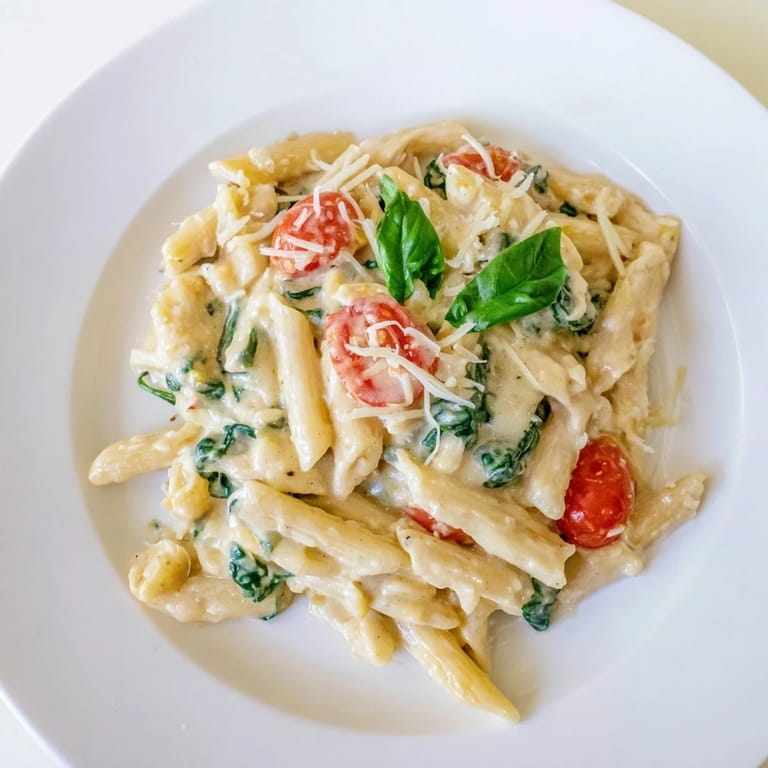
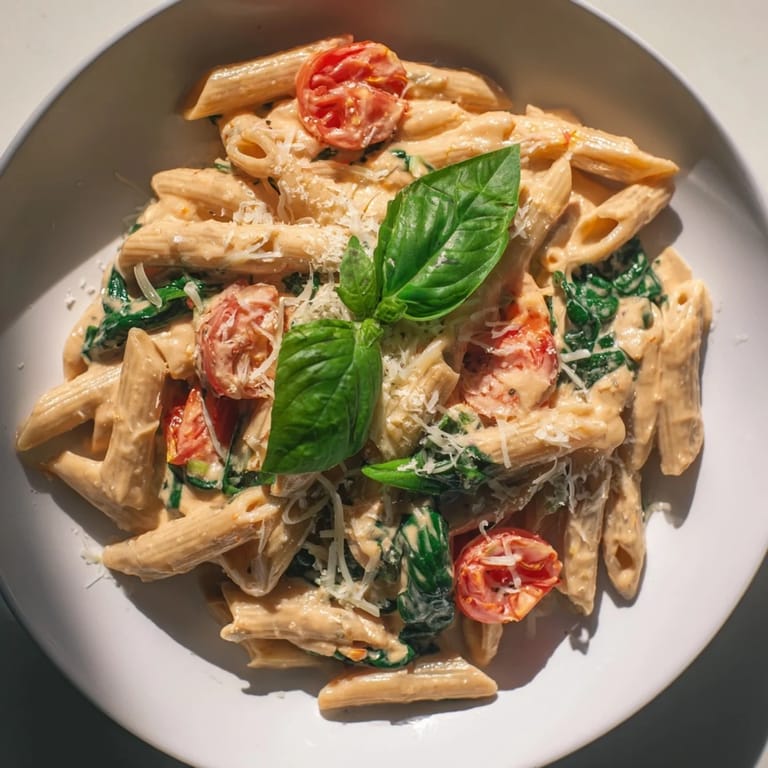
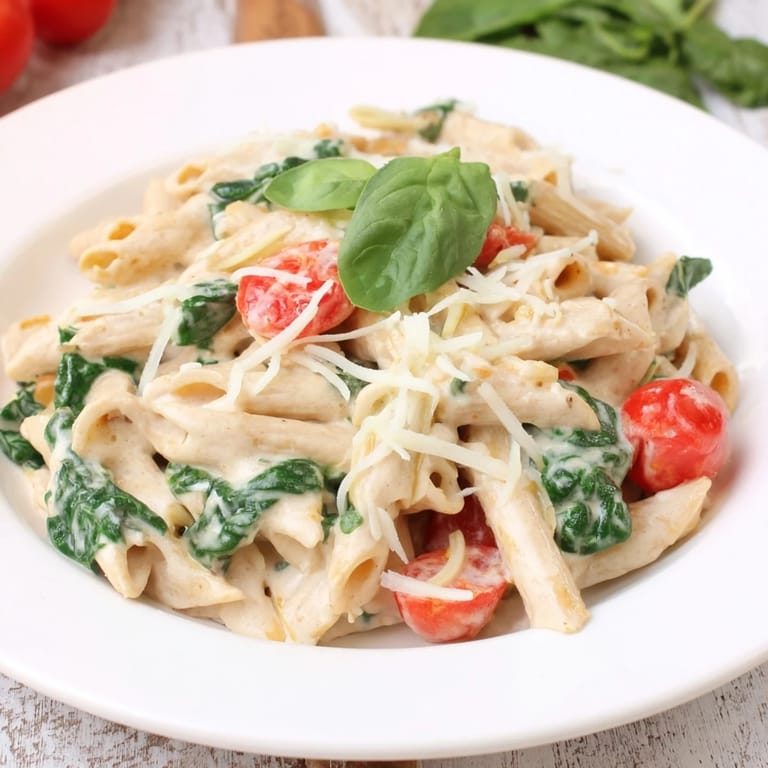
- Baby spinach (2 cups) and cherry tomatoes (1/2 cup): These add color, nutrition, and brightness that balances the richness of the sauce.
- Fresh basil and extra Parmesan for garnish: These final touches transform it from weeknight dinner to something worth photographing.
Instructions
- Get your pasta cooking:
- Bring a large pot of salted water to a rolling boil and add your pasta, stirring occasionally so nothing sticks together. Set a timer and actually pay attention to the package instructions—this is not the time to guess. When it's done, scoop out 1/2 cup of that starchy water before you drain everything, because you'll need it in a moment.
- Blend your sauce into existence:
- While the pasta is cooking, dump the cottage cheese, milk, Parmesan, garlic, olive oil, salt, pepper, and red pepper flakes into a blender. Blend until it's completely smooth—this usually takes about a minute, and there should be no little cottage cheese lumps hiding anywhere. Taste it and adjust the seasoning if needed.
- Toss it all together:
- Return your drained pasta to the pot on low heat and pour in that silky sauce. Toss gently and continuously, adding splashes of reserved pasta water until the sauce coats every strand and flows like it should. This is where the starchy pasta water is magic—it helps the sauce cling and creates a finished dish that's creamy without being heavy.
- Finish with the vegetables:
- Fold in the spinach and cherry tomatoes and let them warm through for just a minute or two. The spinach will wilt down and the tomatoes will soften slightly, but you want them to still have a little texture.
- Serve it while it's hot:
- Divide into bowls, tear some fresh basil over the top, and shower it with more Parmesan. Eat it immediately while the warmth and creaminess are at their peak.
 Pin Recipe
 There was a moment during testing when someone's five-year-old nephew asked for seconds without being asked, and their sister looked genuinely shocked. That's when I realized this wasn't just a clever protein hack—it was actual comfort food that made people happy, regardless of why they were eating it.
Why This Became a Kitchen Staple
This recipe sits in that sweet spot where it's healthy enough to eat without guilt but tastes indulgent enough that you don't feel like you're being virtuous. I've made it for people who are counting macros and people who just want dinner that tastes good, and everyone comes back for it. The fact that your grocery list doesn't include heavy cream or butter somehow makes it feel fresher than a traditional pasta sauce, even though it's just as satisfying.
Ingredient Flexibility Without Losing the Plot
The beauty of this dish is that you can swap almost everything except the cottage cheese base and still land in delicious territory. One night I had no spinach so I used kale, and it was wonderful. Another time I added sun-dried tomatoes and fresh peas, and suddenly it felt like spring dinner. The base is sturdy enough that your kitchen creativity actually enhances it rather than derailing it.
Making It Your Own
Some of my favorite versions have included sautéed mushrooms, roasted red peppers, or even a handful of torn mozzarella stirred in at the very end. The sauce is forgiving and plays well with others, which means you can treat it as a starting point rather than a rigid rule. This is the kind of recipe that teaches you to trust your instincts, because most of the time your instincts are going to be delicious.
- If you want extra protein, crumbled tofu or shredded chicken breast goes in unnoticed and adds substance without changing the flavor profile.
- A squeeze of fresh lemon juice at the end brightens everything up and makes the sauce taste less heavy.
- This keeps well in the refrigerator for three days, and reheats gently on the stovetop with a splash of milk to restore the sauce to its original silky self.
 Pin Recipe
 This dish taught me that simple ingredients in the right combination can taste like someone spent all day on it, and that's the kind of magic worth keeping close. Make it when you need comfort, when you need nutrition, or when you just want to eat something that makes you happy.
Recipe FAQs
- → What pasta works best with creamy sauces?
Pasta shapes like penne, fusilli, or other ridged varieties hold creamy sauces well, ensuring each bite is flavorful.
- → How can I make the sauce smoother?
Blending the cottage cheese with milk and Parmesan until silky creates a velvety sauce that coats pasta perfectly.
- → Can I add vegetables to this dish?
Yes, ingredients like spinach and cherry tomatoes add freshness and color, gently cooked with the sauce for balanced flavors.
- → Is this dish suitable for a high-protein diet?
Absolutely, cottage cheese and Parmesan provide ample protein, and adding chicken or tofu can boost protein content further.
- → How do I adjust the sauce consistency?
Slowly adding reserved pasta cooking water while tossing the pasta allows control over the sauce’s thickness and creaminess.
- → What garnishes complement this pasta?
Fresh basil leaves and additional grated Parmesan enhance aroma and add a burst of savory flavor to the finished dish.