 Pin Recipe
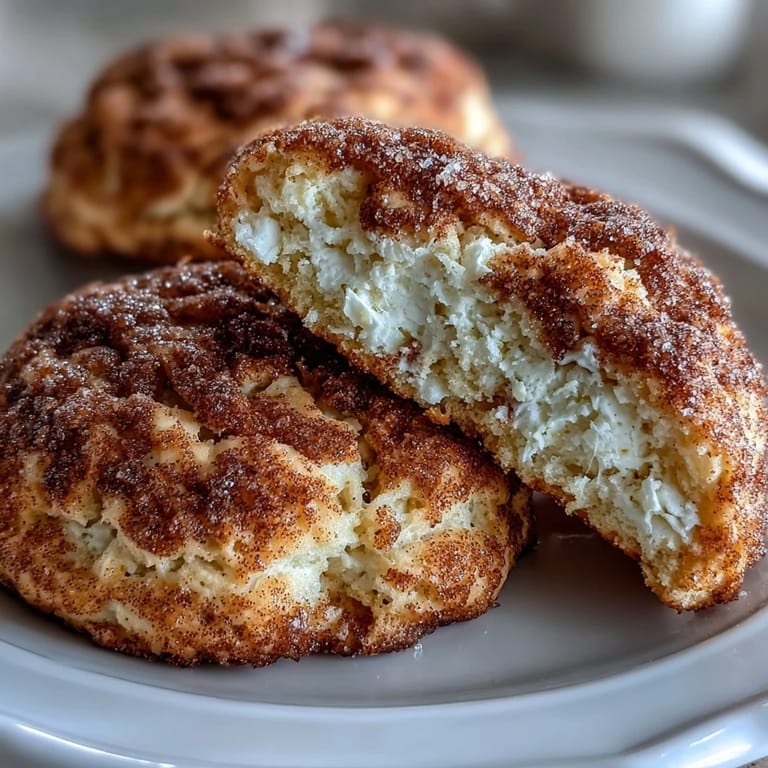
 My neighbor Sarah showed up at my door one Tuesday afternoon with a container of cottage cheese she'd overbought, and somehow that led to me experimenting with it in cookies. I'd always thought cottage cheese belonged strictly to savory dishes, but there was something about the tang it promised that felt like it might play beautifully with cinnamon sugar. Three batches later, I had these pillowy, unexpectedly tender snickerdoodles that tasted nothing like the dense cookies I'd expected. They became the reason she started stopping by more often.
I brought a batch to a book club meeting last spring, nervous about how they'd be received since the ingredient seemed so unconventional. Within minutes, three people were asking for the recipe, and one woman mentioned they reminded her of a cookie her grandmother used to make but she could never quite recreate it. That moment felt like I'd stumbled onto something real, something that connected to people's actual kitchen memories rather than just looking pretty on Instagram.
What's for Dinner Tonight? 🤔
Stop stressing. Get 10 fast recipes that actually work on busy nights.
Free. No spam. Just easy meals.
Ingredients
- Cottage cheese (1 cup full-fat or low-fat): This is your secret weapon for moisture and that signature subtle tang, and full-fat versions create a richer crumb than low-fat.
- Unsalted butter (1/2 cup softened): Let it sit on the counter for 20 minutes before you start, because cold butter won't incorporate smoothly and you'll end up with a gritty texture.
- Granulated sugar (1 cup plus 1/4 cup for coating): The sugar creams with the butter to build structure, so don't skip the creaming step even though it feels tedious.
- Large egg: This binds everything together and adds richness that most snickerdoodle recipes rely on butter alone to provide.
- Vanilla extract (2 tsp): Use real vanilla if you have it, as the depth matters more in a cookie with such a subtle flavor profile.
- All-purpose flour (2 1/4 cups): Measure by spooning into your measuring cup and leveling off, not by scooping directly from the bag, which packs it down and makes cookies dense.
- Cream of tartar (1 1/2 tsp): This is what makes snickerdoodles snickerdoodles, reacting with baking soda to give them that distinctive slightly chewy center.
- Baking soda (1/2 tsp) and baking powder (1/2 tsp): Together these create gentle lift without making cookies cakey, and the combination matters more than either ingredient alone.
- Salt (1/2 tsp): A small amount amplifies the cinnamon flavor and balances the sweetness.
- Ground cinnamon (2 tsp for coating): Buy it fresh if possible, as cinnamon loses its punch after about six months sitting in your spice cabinet.
Instructions
- Heat your oven and prep your workspace:
- Get your oven to 350°F and line two baking sheets with parchment paper so you're not rushing later. This also gives your oven time to reach the exact temperature, which matters more than people think for even baking.
- Cream the wet base:
- Beat the cottage cheese, softened butter, and 1 cup sugar together in a large bowl until everything looks smooth and pale, about two to three minutes. You'll notice the mixture transforms from looking slightly separated to completely cohesive, and that's when you know the butter and cottage cheese have truly incorporated.
- Add the egg and vanilla:
- Mix in the egg and vanilla extract until you don't see any streaks of egg white, which usually takes about a minute of stirring. The mixture will look slightly curdled at first, but keep going and it'll come together into something creamy.
- Combine your dry ingredients:
- In a separate bowl, whisk together the flour, cream of tartar, baking soda, baking powder, and salt. Taking this step prevents lumps and distributes the leavening agents evenly throughout the dough.
- Bring wet and dry together:
- Gradually add the dry mixture to the wet mixture while stirring gently, stopping as soon as you don't see any streaks of flour. Overmixing develops gluten and turns these cookies tough, so resist the urge to keep stirring once everything looks combined.
- Make your coating:
- Stir together the 1/4 cup sugar and 2 tsp cinnamon in a small bowl. Use a fork to break up any lumps so the coating is even and you don't end up with cinnamon-heavy or sugar-heavy bites.
- Shape and coat:
- Scoop tablespoon-sized portions of dough and roll them into balls between your palms, then roll each ball in the cinnamon sugar until it's completely coated. Work gently because the dough is delicate, and you want enough coating to be visible but not so much that it slides off in the oven.
- Space on baking sheets:
- Place cookies about 2 inches apart because they'll spread slightly as they bake. Don't crowd them or they'll bake unevenly and some edges will brown too much.
- Bake with attention:
- Bake for 11 to 13 minutes, checking around minute 10 by looking at the edges—they should look set and dry while the tops still look slightly soft. The cookies continue cooking on the hot pan after you pull them out, so pulling them out a minute early is smarter than baking them a minute too long.
- Cool properly:
- Leave cookies on the baking sheet for 5 minutes so they firm up enough to move, then transfer them to a wire rack to cool completely. This prevents the bottoms from getting soggy from trapped steam while they also prevents them from cracking apart when you move them.
 Pin Recipe
 My teenage daughter, who claims to dislike most of my baking experiments, actually asked me to make these for her to bring to school for some project I've forgotten about. Watching her pack them in a container felt like some kind of quiet victory, the kind that doesn't announce itself but means everything.
The Cottage Cheese Secret
Cottage cheese seems weird in baking until you think about it as a replacement for some of the liquid and fat in a recipe. It adds moisture without making cookies greasy, which is why these stay tender even days later in an airtight container. The protein also helps create structure, so you get that perfect balance between cakey and chewy that's surprisingly hard to achieve.
Why Cream of Tartar Matters
Snickerdoodles need cream of tartar because it reacts with baking soda to create that slightly chewy, almost tangy edge that distinguishes them from regular sugar cookies. Without it, you'd just have regular cookies rolled in cinnamon sugar, which is nice but not the same thing at all. Think of it as the ingredient that gives snickerdoodles their personality.
Storage and Serving Ideas
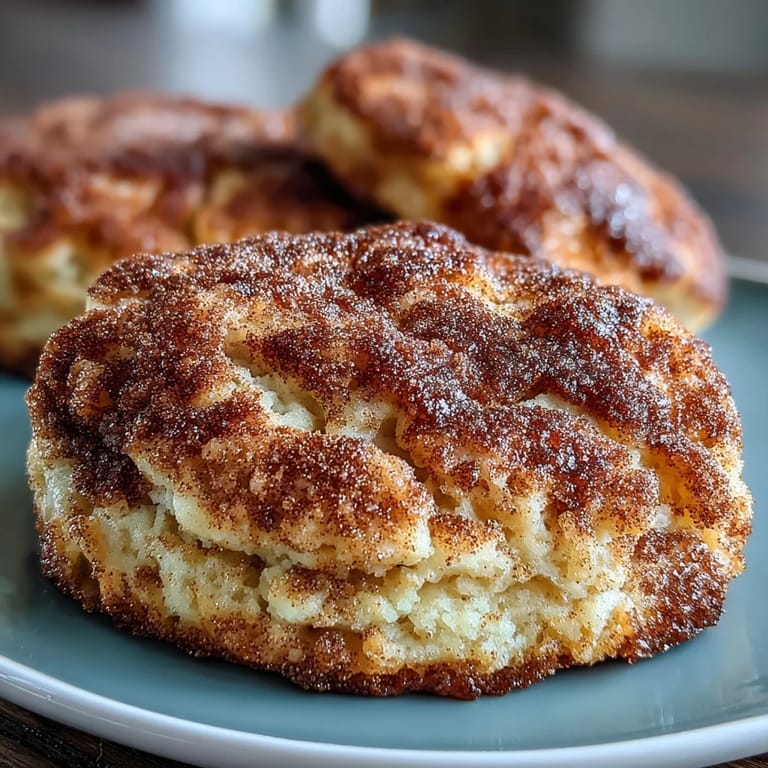
These cookies stay soft for almost a week if you store them in an airtight container at room temperature, which is generous for homemade cookies. I like them slightly warm with a cup of strong black coffee in the morning, or dunked briefly in chai, though honestly they're good at any time you find one hiding in the pantry.
- Store them in an airtight container with a piece of bread to keep them from drying out, and the bread will harden while the cookies stay soft.
- If they somehow do dry out, a few seconds in the microwave wrapped in a damp paper towel brings them back to life.
- These freeze beautifully for up to three months, so you can bake them ahead and have homemade cookies ready whenever you need them.
 Pin Recipe
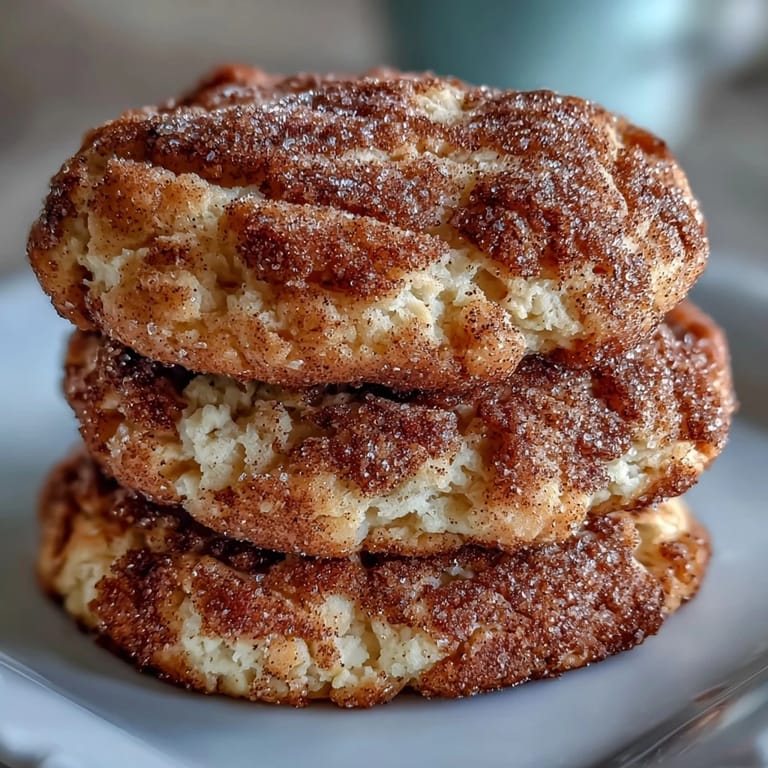
 These cookies remind me that the best recipes come from working with what you have on hand rather than following someone else's exact blueprint. They've become the cookies I make when I want something familiar but with a little twist, the kind of treat that tastes like home but also feels like you tried.
Recipe FAQs
- → What does the cottage cheese add to the cookies?
Cottage cheese adds moisture and a slight tang, creating a soft, tender texture with a rich flavor.
- → Can I use a substitute for cottage cheese?
Yes, ricotta can be used instead for a milder, creamier taste while maintaining softness.
- → How do I achieve the classic cinnamon sugar coating?
Roll each dough ball in a mixture of granulated sugar and ground cinnamon before baking to get the signature coating.
- → What baking temperature and time are recommended?
Bake at 350°F (175°C) for 11 to 13 minutes until edges are set and tops appear dry.
- → Any tips for softer cookies?
Avoid overbaking and consider adding a pinch of nutmeg to the cinnamon sugar for added warmth and flavor.