 Pin Recipe
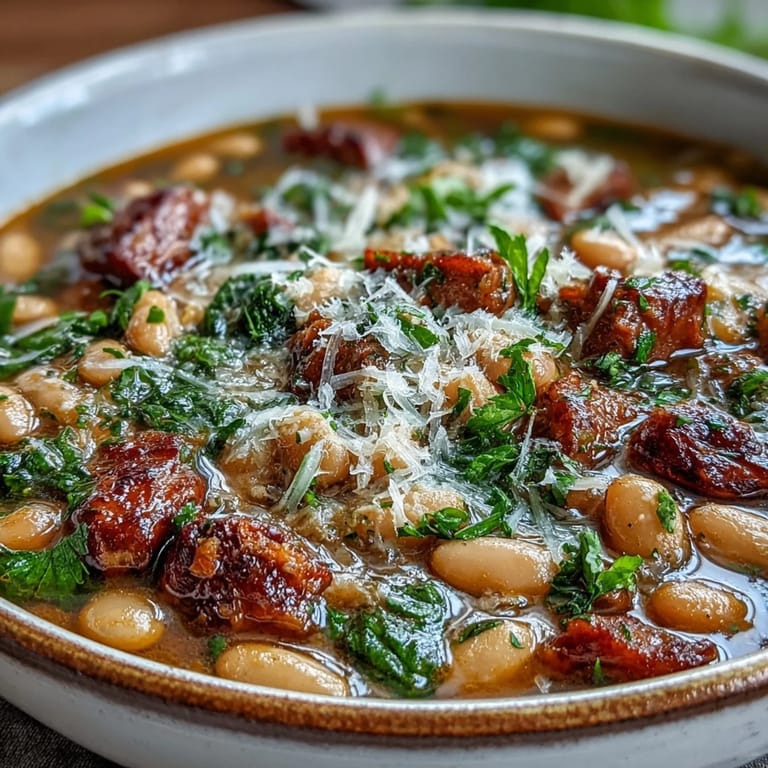
 There's something about a pot of simmering stew that makes a kitchen feel like home, even on the darkest winter afternoons. My neighbor Maria handed me a container of this ham and cannellini bean stew one January when the roads were icy and I wasn't planning to cook, and I've been making it ever since—not because the recipe is complicated, but because it tastes like someone who genuinely cares about feeding you well took the time. The way the broth deepens as it simmers, how the beans become impossibly creamy without any cream at all, the ham adding that salty umami backbone—it all comes together so naturally you'd think it was magic.
I made this for my sister's book club gathering on a February evening, and what struck me wasn't the compliments (though there were plenty)—it was watching people slow down while eating it, actually tasting each spoonful instead of rushing through dinner. One guest asked if I'd been simmering it all day, and when I said just over an hour, she looked genuinely surprised. That's when I understood: this stew has the soul of a long-cooked meal without demanding your entire afternoon.
What's for Dinner Tonight? 🤔
Stop stressing. Get 10 fast recipes that actually work on busy nights.
Free. No spam. Just easy meals.
Ingredients
- Cooked ham, diced (400 g): The backbone of this stew—use good quality ham with real flavor, not the thin deli stuff, because it's doing the heavy lifting here.
- Cannellini beans (2 cans, 400 g each): Always drain and rinse these; it removes the starchy liquid that would muddy your broth and makes the beans themselves cleaner tasting.
- Carrots and celery (2 medium carrots, 2 stalks): This is your aromatic base, the holy trinity alongside onion—don't skip the dicing step because size matters for even cooking.
- Onion, finely chopped (1 large): The sweetness here balances the salty ham and tomatoes, so don't rush through chopping it.
- Garlic, minced (3 cloves): Fresh garlic only; jarred will turn bitter and thin during the long simmer.
- Canned diced tomatoes (400 g): San Marzano if you can find them, as they have fewer seeds and a brighter flavor.
- Tomato paste (2 tbsp): This is your umami amplifier—cooking it briefly in the pan before adding liquid deepens everything.
- Fresh spinach or kale (2 handfuls, optional): Add in the last minutes if you want it; kale holds its shape better than spinach, which almost disappears.
- Broth (1 L low-sodium chicken or vegetable): Low-sodium because the ham adds plenty of salt, and you want to season thoughtfully as you go.
- Bay leaf (1): Don't skip this or forget to remove it—it adds a subtle woodsy note that rounds everything out.
- Oregano and thyme (1 tsp each, dried): Dried herbs work beautifully here because they have time to bloom in the broth; fresh would turn to mush.
- Red pepper flakes (1/2 tsp, optional): A gentle warmth rather than heat—add it if you like your stew with a whisper of spice.
- Olive oil (2 tbsp): Use something you actually enjoy tasting, not the cheapest bottle.
- Fresh parsley and Parmesan cheese (garnish): The parsley adds brightness at the end; the cheese adds a creamy saltiness that makes people want another bowl.
Instructions
- Sauté your vegetables:
- Heat the olive oil over medium heat in a large pot until it shimmers slightly, then add the onions, carrots, and celery. You'll know they're ready when the onions turn translucent and the kitchen smells sweet—about 8 minutes, though don't watch the clock too closely.
- Toast the aromatics:
- Add the garlic, tomato paste, oregano, and thyme, stirring constantly for just about a minute. You want the tomato paste to caramelize slightly against the hot pot, deepening its color and flavor.
- Introduce the ham:
- Stir in the diced ham and let it warm through for a couple of minutes, which allows its flavors to start releasing into the oil.
- Build your broth:
- Pour in the canned tomatoes and broth, add the bay leaf, and bring everything to a boil. Don't walk away—you want to see the moment it bubbles up so you can adjust the heat.
- Simmer with the beans:
- Reduce the heat to low, add your drained cannellini beans, and partially cover the pot. Simmer for about 50 minutes, stirring occasionally so nothing sticks to the bottom—this is when the flavors really marry together.
- Finish with greens:
- If you're using spinach or kale, add it in the last 5 minutes; it will wilt right into the stew, adding nutrition and a pleasant slight bitterness that contrasts with the sweetness of the ham.
- Taste and season:
- Remove that bay leaf, then taste carefully before adding salt—the ham and broth may already have enough. Adjust with pepper and red pepper flakes to your preference.
- Serve with care:
- Ladle into bowls and finish with fresh parsley and a shower of Parmesan cheese, which should hit the warm stew and just barely melt.
 Pin Recipe
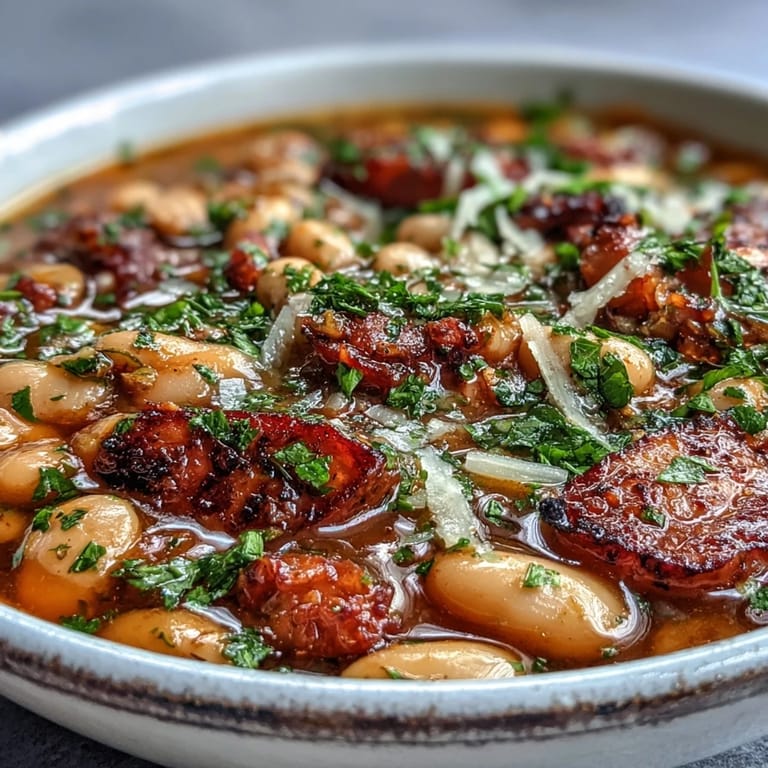
 There was a moment while ladling this stew into bowls for my friend who'd just had a difficult week when she looked up and said, "This tastes like someone is taking care of me." That's when I realized the real magic isn't in any single ingredient—it's in the decision to make something warm and nourishing for people you care about, and this stew makes that gesture feel effortless and genuine.
Why Ham and Beans Matter
The partnership between ham and cannellini beans is one of those quiet culinary truths that doesn't get enough attention. The beans are mild and creamy, almost neutral, while the ham brings salt, smokiness, and depth—together they create something neither could achieve alone. I learned this by accident when I once tried making a bean stew without meat and found it tasted flat despite all my seasoning tricks; the ham doesn't just add flavor, it adds dimension.
The Broth Is Everything
I used to think stew broth was just a vehicle for everything else floating in it, but making this recipe taught me to listen to what the broth is telling me. After those first 50 minutes of simmering, the broth should taste rich and slightly complex, picking up notes from the tomato paste, the herbs, and the ham without any single flavor shouting over the others. This is why you taste it carefully before adding more seasoning—you might think it needs salt when really it just needs a minute more on the heat.
Serving and Pairing
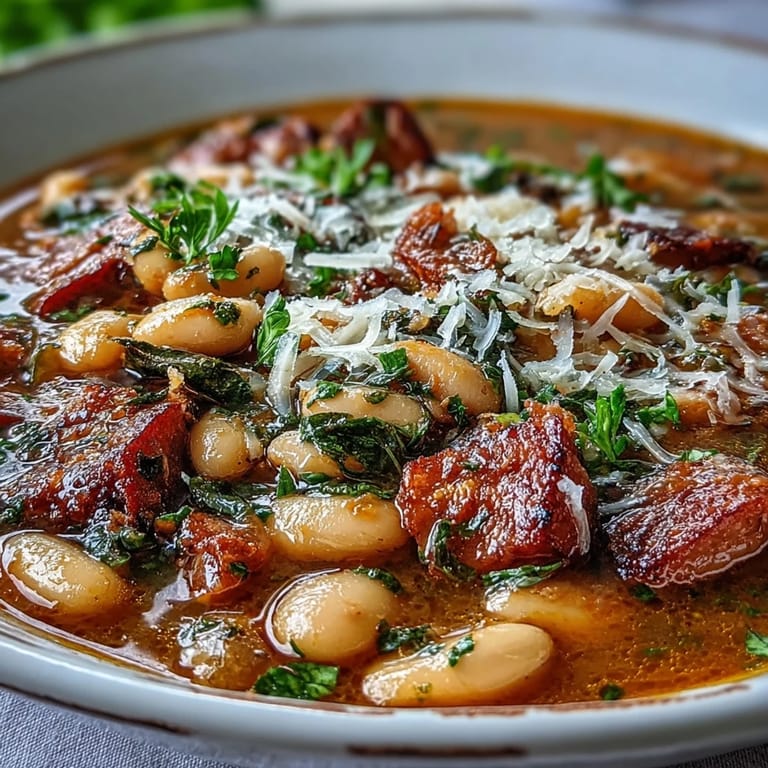
This stew stops feeling like winter food the moment you serve it with intention. A crusty piece of bread isn't just practical for soaking up broth; it's an invitation to slow down and actually enjoy what's in front of you. The Parmesan cheese isn't decoration—it adds a sharp, creamy note that makes each spoonful taste like you're eating something special rather than just dinner.
- Pair it with a robust red wine like Chianti, which has enough acidity to cut through the richness without competing with the ham.
- If you don't have crusty bread, even simple toast works because you want something to anchor the warm, brothy spoons.
- Leftovers reheat beautifully and often taste even better the next day when the flavors have settled together overnight.
 Pin Recipe
 This is the kind of recipe that becomes part of your kitchen rhythm, the one you make when you want to feel competent and generous at the same time. It's proof that sometimes the best dishes aren't complicated—they're just thoughtfully put together, given time, and served with care.
Recipe FAQs
- → Can I use smoked ham for a stronger flavor?
Yes, smoked ham or a ham hock can be used to enrich the stew with deeper smoky notes. Remove any bones before serving.
- → How long should the stew simmer for best results?
Simmer the stew uncovered for about 50 minutes to meld flavors and soften the beans and vegetables.
- → Can I substitute cannellini beans with other beans?
White beans like Great Northern or navy beans work well as substitutes, maintaining a creamy texture.
- → Are there vegetable-based broth options?
Yes, low-sodium vegetable broth can be used instead of chicken broth for a lighter base.
- → When should I add greens like spinach or kale?
Add chopped spinach or kale during the last 5 minutes of cooking to keep them tender but vibrant.