 Pin Recipe
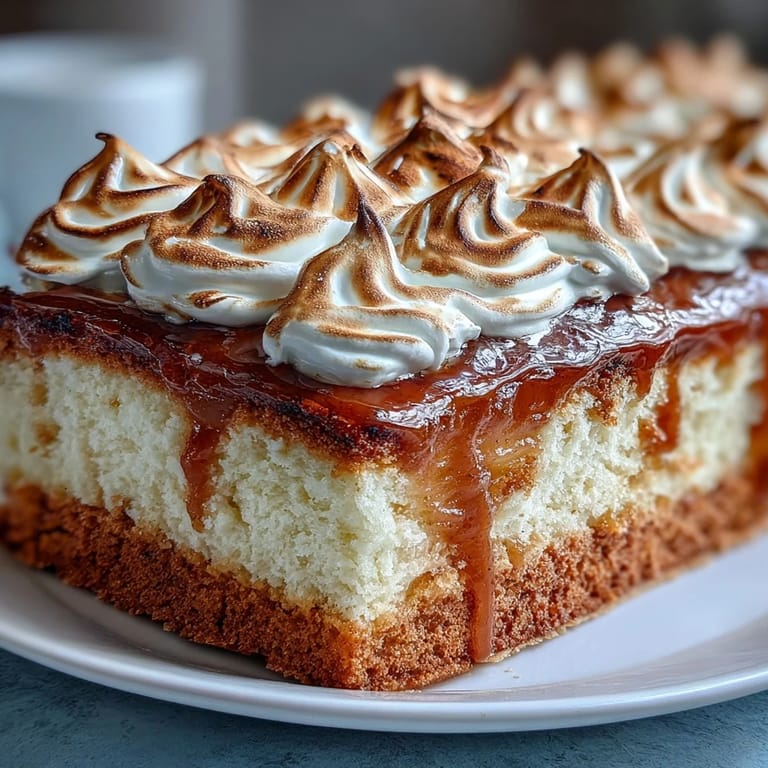
 My tía pulled this golden roll from her oven one Christmas, and the kitchen filled with this sweet guava perfume that made everyone stop talking. She'd learned to make Brazo Gitano from her mother, and watching her roll that delicate cake with practiced hands while steam rose from the towel beneath it—that's when I understood why this dessert meant celebration in our family. The meringue peaks she piped looked like clouds, and she torched them until they turned the color of caramel. It wasn't just a dessert; it was proof that something this elegant could come from a home kitchen.
I made this for my neighbor's birthday party last spring, and three people asked for the recipe before they'd even finished their first slice. There was something about how the cake gave way to that glossy guava center, then the marshmallow-like meringue on top—it felt indulgent but not exhausting, which is what made people reach for seconds.
What's for Dinner Tonight? 🤔
Stop stressing. Get 10 fast recipes that actually work on busy nights.
Free. No spam. Just easy meals.
Ingredients
- Egg yolks (4): These create richness and help the cake stay moist; make sure they're at room temperature so they whip up properly and incorporate air.
- Granulated sugar (250 g total): Divided between the yolks and whites, this sweetens the cake while helping the meringue hold its shape.
- Vanilla extract (1 tsp): Just a whisper of vanilla enhances everything without overwhelming the delicate cake flavor.
- All-purpose flour (120 g): Sifting it keeps the cake tender; don't skip this step or you'll end up with a dense result.
- Salt (1/4 tsp): A tiny pinch brightens the sweetness and stabilizes the egg whites.
- Egg whites (7 total—4 from the separated eggs plus 3 more): These create both the tender crumb and the fluffy topping, so whip them to stiff, glossy peaks without any yolk sneaking in.
- Guava paste (225 g): The heart of this dessert; warm it gently with water until it spreads like a dream, and choose a quality paste that tastes like actual guava.
- Water (2 tbsp): Just enough to loosen the guava paste without making it runny.
- Cream of tartar (1/2 tsp): Optional but helpful—it stabilizes the meringue and prevents grittiness from overbeating.
Instructions
- Set your oven and prep your pan:
- Preheat to 180°C (350°F) and line a 10x15 inch jelly roll pan with parchment paper, then give it a light grease so nothing sticks. Having everything ready before you start beating eggs saves you from disaster.
- Create the yolk base:
- Beat the 4 egg yolks with half the sugar (75 g) and vanilla extract until the mixture turns pale and thick, about 3 minutes. You'll see the color lighten and the texture become ribbon-like—that's when you know air has been incorporated.
- Whip the egg whites to stiff peaks:
- In a spotlessly clean bowl, beat the 7 egg whites with the remaining sugar, salt, and cream of tartar (if using) until glossy, stiff peaks form. This takes patience; rushing it means the meringue won't support the cake properly.
- Fold everything together gently:
- Pour the yolk mixture into the whites and fold carefully with a spatula—about 4 to 6 folds—then sift the flour over top and continue folding just until no flour streaks remain. Overmixing deflates all that beautiful air you just created.
- Bake until golden:
- Spread the batter evenly into the pan and bake for 12 to 15 minutes, until the cake springs back when you touch the center lightly. The top should be pale golden, not dark.
- Roll while warm:
- Invert the warm cake onto a kitchen towel dusted with sugar, peel off the parchment paper carefully, then roll it up with the towel from one short end. The warmth makes it flexible; if it cracks, don't panic—the filling will hide small imperfections.
- Prepare the guava filling:
- Melt the guava paste with water in a small saucepan over low heat, stirring until it reaches a smooth, spreadable consistency. Let it cool to room temperature so you don't melt the cake when you apply it.
- Unroll and fill:
- Once the cake is completely cool, gently unroll it, spread the guava filling evenly across the surface, then roll it back up tightly without the towel this time. Transfer seam-side down to a serving platter.
- Make the meringue topping:
- Beat the 3 egg whites in a clean bowl until soft peaks form, then gradually add the sugar while beating until stiff, glossy peaks form. The meringue should look smooth and shiny, never grainy.
- Crown the roll:
- Spread or pipe the meringue over the top and sides of the cake roll, making it as rustic or decorated as you like. If you want peaks and swirls, use the back of a spoon to create them.
- Toast the meringue (optional):
- Use a kitchen torch to lightly brown the meringue peaks until golden, or place the whole platter under a broiler for 2 to 3 minutes—watch it closely so it doesn't burn. Either way gives you that restaurant-quality finish.
- Chill and serve:
- Refrigerate for at least 30 minutes before slicing to let everything set and flavors meld. Use a sharp, warm knife dipped in hot water between slices for clean cuts.
 Pin Recipe
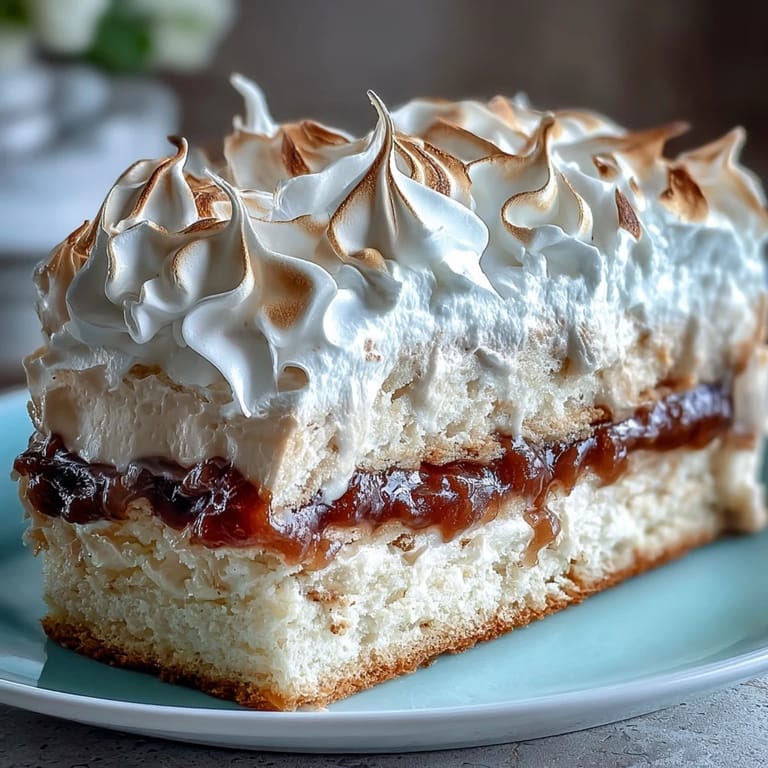
 My cousin served this at her wedding last year, and I watched people's faces light up when they bit through the crisp meringue into that tender cake and sweet guava center. It became the dessert people talked about for months afterward, and she told me that day that making something that brought that kind of joy to a table meant more than she'd ever expected.
Why the Towel Matters
The kitchen towel isn't just for rolling the cake—it's what keeps the cake from cracking as it cools into its new shape. I learned this the hard way when I tried rolling it on a cutting board, and it snapped in three places. The towel provides just enough give and cushion, plus the sugar dusted on it prevents sticking without adding extra flour that would toughen the crumb.
The Guava Paste Question
Finding quality guava paste makes the difference between good and unforgettable. I've used jarred versions from the Latin foods aisle, and the best ones taste like actual guava fruit—smooth, jammy, not overly artificial. If your paste seems too thick or stiff, warming it with water and a tiny bit of butter makes it silky and easier to spread without tearing the delicate cake underneath.
Meringue Mastery and Final Touches
Meringue seems intimidating until you realize it's just egg whites and sugar beaten to clouds. The key is cleanliness—one speck of grease in your bowl and the whites won't whip. Room temperature eggs whip faster and fuller, and adding the sugar gradually helps it dissolve completely so you avoid grittiness. The torch finish feels fancy and takes seconds, but if you don't have one, a quick trip under a hot broiler works just as well.
- Use a sharp knife dipped in hot water and wiped clean between each slice for beautiful, neat cuts.
- This dessert is best served the day it's made but keeps refrigerated for up to two days before the meringue begins to weep.
- Pair it with strong coffee or sweet wine to balance the richness and let each element shine.
 Pin Recipe
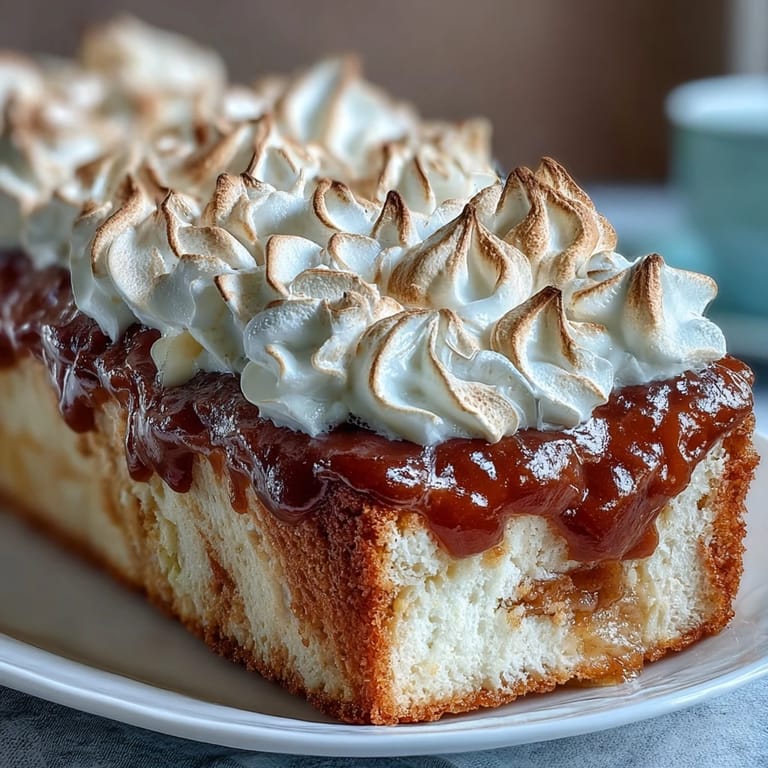
 This dessert teaches you that elegance doesn't require complexity, just care and attention. Once you've made it once, you'll find yourself reaching for it whenever you want something that feels special without the stress.
Recipe FAQs
- → What does Brazo Gitano mean?
Brazo Gitano translates to "gypsy's arm" in Spanish, referring to the rolled shape that resembles a sleeve. This classic dessert appears throughout Latin America with regional variations in filling and topping.
- → Can I make this dessert ahead of time?
Yes, prepare the rolled cake up to 24 hours in advance. Store it covered in the refrigerator. Add the meringue topping and torch just before serving for the best texture and appearance.
- → What can I use instead of guava paste?
Mango paste, membrillo (quince paste), or even thick fruit preserves work well as alternatives. These substitutes maintain the sweet, fruity filling that balances the vanilla sponge and meringue.
- → Why does my cake crack when rolling?
Cracking usually happens when the cake cools completely before rolling. Rolling while still warm and using a sugar-dusted towel helps prevent cracks. If cracks occur, the meringue topping will hide them beautifully.
- → Is a kitchen torch necessary for this dessert?
A torch creates those lovely golden peaks on the meringue, but it's optional. You can also place the rolled cake under the broiler for 1-2 minutes, watching closely to avoid burning. Alternatively, skip the torching step entirely.
- → How should I store leftovers?
Wrap the rolled cake loosely in plastic wrap or place in an airtight container. Refrigerate for up to 3 days. Note that the meringue may weep slightly but will still taste delicious.