 Pin Recipe
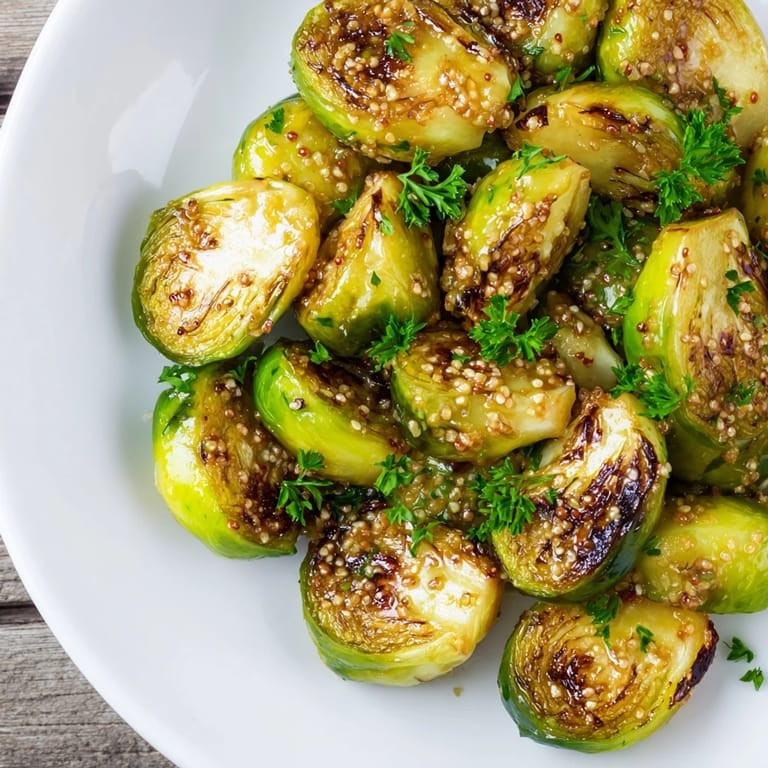
 There's a moment every fall when I realize I've been roasting Brussels sprouts the same boring way for years—just salt, oil, and heat until they're crispy. Then my neighbor brought over a mason jar of something golden and tangy, drizzled it over a test batch, and suddenly these little green orbs tasted like the best decision I'd never made. That glaze—a whisper of honey with sharp mustard backbone—changed everything about how I approach this vegetable. Now when people ask what makes my Brussels sprouts different, I just smile and hand them a spoonful.
I made this for a potluck last November and brought the empty baking sheet home—which never happens at these things. A coworker actually asked for the recipe, which felt like winning something. What got me was how people who claim to hate Brussels sprouts kept reaching for more, not because they're "healthy" but because they're genuinely delicious. It's one of those dishes that proves vegetables don't need to apologize for themselves.
What's for Dinner Tonight? 🤔
Stop stressing. Get 10 fast recipes that actually work on busy nights.
Free. No spam. Just easy meals.
Ingredients
- Brussels sprouts: Look for ones that are tight and dense, about the same size so they roast evenly; halving them creates flat surfaces that caramelize into golden-brown treasure.
- Olive oil: Good quality matters here since there aren't many ingredients to hide behind; it helps everything roast instead of steam.
- Honey: The sweetness balances the mustard's bite and caramelizes under heat, creating those addictive sticky edges.
- Dijon mustard: Sharp and sophisticated, it's the backbone of the whole glaze.
- Whole-grain mustard: Adds texture and a slightly milder, nuttier mustard flavor that smooths out the harshness.
- Garlic powder: Saves you from mincing fresh garlic and distributes more evenly throughout the glaze.
- Apple cider vinegar: The secret brightness that keeps everything from being one-note sweet; a tiny bit goes a long way.
- Salt and black pepper: Season the glaze itself, not just the vegetables, so every layer tastes intentional.
- Fresh parsley: Optional but worth the extra color and a peppery green note at the end.
Instructions
- Heat your pan and prep:
- Get your oven roaring to 425°F and line a baking sheet with parchment paper so nothing sticks and cleanup is almost laughable.
- Make the magic glaze:
- Whisk the olive oil, honey, both mustards, garlic powder, apple cider vinegar, salt, and pepper together in a large bowl until the mixture is smooth and no streaks of honey remain—this takes maybe a minute of attention.
- Coat everything evenly:
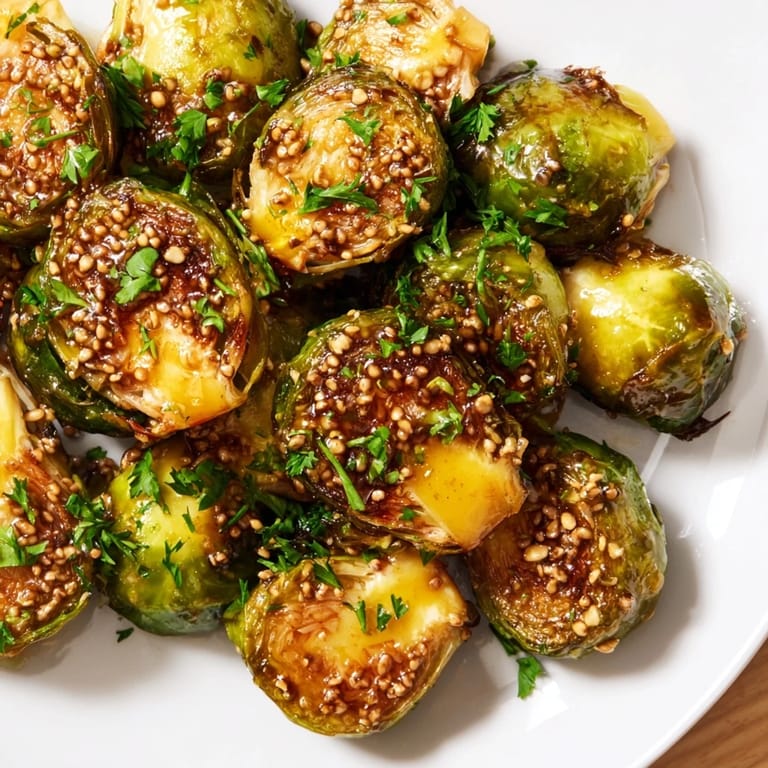
- Toss your halved Brussels sprouts in the glaze, making sure each piece gets a proper bath; I use a sturdy spoon to turn them a few times so nothing's left naked.
- Arrange for caramelization:
- Spread the Brussels sprouts cut-side down on the sheet so those flat surfaces kiss the hot pan and develop that beautiful browning you're after.
- Roast and flip:
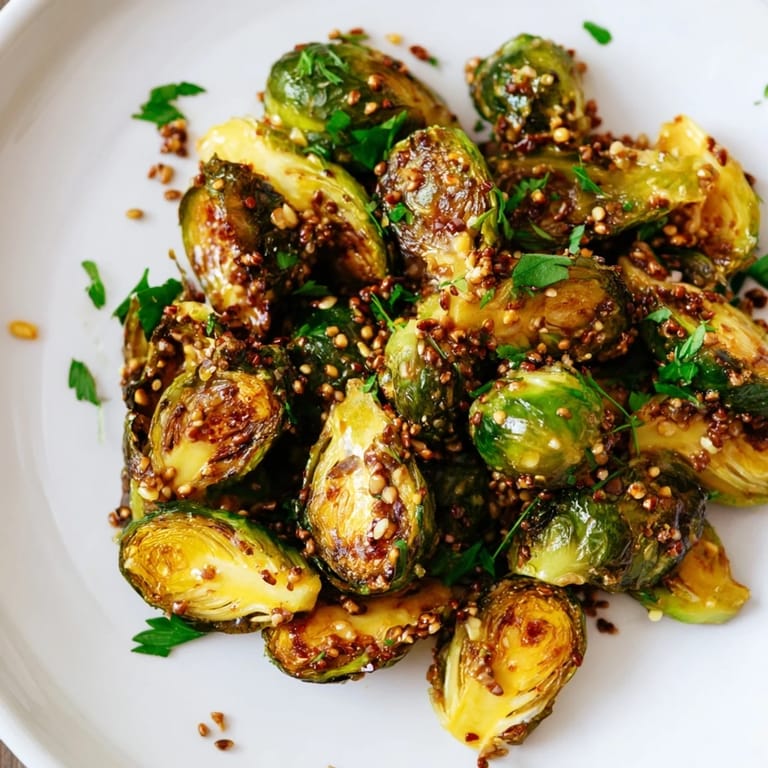
- Let them sit for about 12 minutes undisturbed, then flip everything and roast another 8–13 minutes until the cut sides are golden and crispy, the outer leaves are getting dark and crispy, and a fork slides through the centers easily.
- Finish and serve:
- Sprinkle fresh parsley over the warm sprouts if you have it, taste for salt since ovens vary, and get them to the table while they're still steaming.
 Pin Recipe
 My eight-year-old actually chose these over the mashed potatoes last Sunday, which felt like some kind of parenting milestone. It's funny how a little sweetness and tang can transform something kids usually push to the edge of their plate into the thing they remember eating.
Why This Glaze Works So Well
The combination of Dijon and whole-grain mustard creates layers—the sharp bite you expect plus a softer, almost grainy depth that feels more sophisticated than straight mustard alone. Honey brings sweetness without making this taste like a dessert vegetable, and the apple cider vinegar is the hero nobody talks about, brightening everything so your palate doesn't get tired by the third bite. When these three work together in the oven's heat, they don't just coat the Brussels sprouts; they become part of the final flavor, sticky and concentrated.
Timing and Temperature Matter
425°F is hot enough to caramelize without burning, but every oven runs different—if yours tends toward aggressive heating, start checking at the 18-minute mark. If you notice things browning too fast, you can tent them loosely with foil for the second half of cooking. The flip halfway through isn't just for looks; it ensures both the cut side and the rounded side get that golden treatment, so you get texture variation in every bite.
Ways to Make It Your Own
This recipe is forgiving and wants to be played with, so don't hesitate to adjust it to your mood. The base is rock-solid, but the details are flexible enough that you can dress it up or down depending on what you have and what sounds good. Think of it as a template rather than a rulebook—the glaze holds up to experimentation better than you'd expect.
- Toasted pecans or walnuts add crunch and richness, especially if you toss them in at the very end so they don't soften.
- A tiny pinch of chili flakes brings gentle heat that makes the sweetness pop even more, or go bolder if your crowd likes spice.
- Maple syrup swaps one-to-one for honey if you want an earthier sweetness or need to keep things vegan.
 Pin Recipe
 These feel special enough to serve when people come over, but they're simple enough to make on a random Tuesday when you want dinner to taste a little less ordinary. Once you've made them once, you'll find yourself reaching for this recipe again and again.
Recipe FAQs
- → What is the best way to trim Brussels sprouts?
Trim the stems and remove any yellow or damaged leaves before halving the sprouts for even cooking and caramelization.
- → How can I achieve a caramelized finish on the sprouts?
Roast the sprouts cut side down on a baking sheet at high heat (425°F) until golden brown, usually about 20-25 minutes.
- → Can I substitute honey in the glaze?
Yes, maple syrup works well as a vegan-friendly alternative, maintaining the glaze's sweetness.
- → What optional ingredients enhance the flavor of this dish?
Adding toasted pecans or walnuts adds crunch, while a pinch of chili flakes can provide mild heat.
- → Is this dish suitable for gluten-free diets?
Yes, as long as the mustard used does not contain gluten additives, this dish is gluten-free.