 Pin Recipe
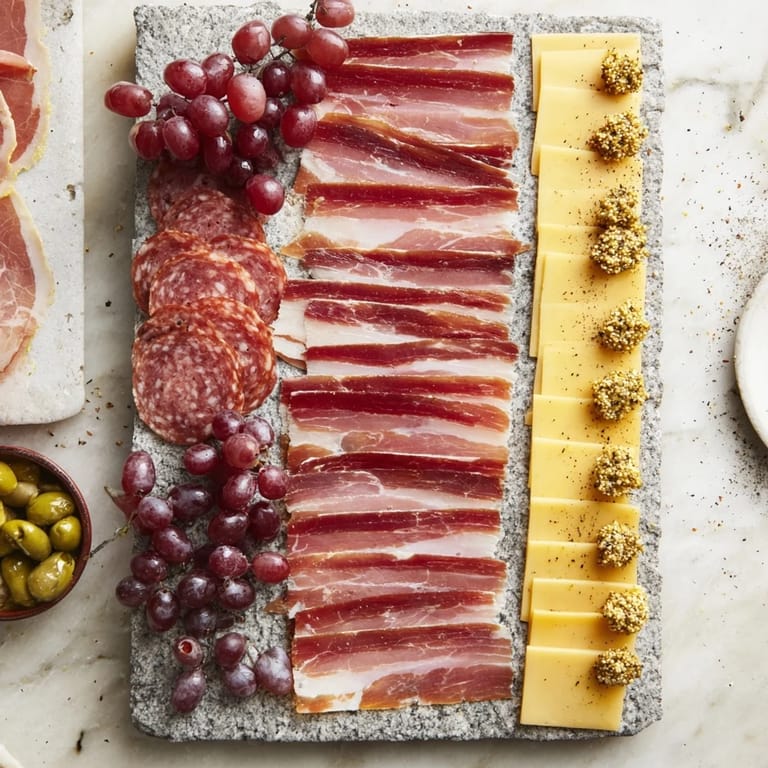
 There's something about arranging food on a slate board that makes you slow down. I was prepping for a dinner party, and instead of the usual scattered platter, I decided to treat the presentation like a grid—clean lines, no fuss, just pure contrast between the cured meats and aged cheeses. The slate itself became the main character, that rough stone catching the light just right. My guests walked in, saw this industrial arrangement waiting on the table, and everyone seemed to understand immediately: this wasn't about abundance or comfort, it was about precision and presence.
I remember standing in my kitchen watching my sister trace her finger along the lines of cheese, hesitating before choosing which slice to try first—the platter had this weird effect on people, making them think more deliberately about what they wanted to eat. That moment told me something: the way we arrange food changes how people experience it.
What's for Dinner Tonight? 🤔
Stop stressing. Get 10 fast recipes that actually work on busy nights.
Free. No spam. Just easy meals.
Ingredients
- Smoked prosciutto: Buy it sliced from a good counter, or slice it yourself just before serving so it stays tender and doesn't curl.
- Soppressata: This Italian cured sausage holds its shape and has a gentle pepper bite that balances the sharp cheeses beautifully.
- Coppa: The swirls of fat through this meat are what make it special—look for marbling when you choose your slice.
- Mortadella: Often overlooked, but its subtle spice and silky texture deserve a line of their own.
- Aged cheddar: Go for something that's been aged at least twelve months; the crystals will catch the light and add texture.
- Manchego: Its nutty, slightly salty edge is the backbone of this platter—it's what people keep coming back for.
- Gruyère: This one's a wild card that makes everything taste a little richer and more sophisticated.
- Blue cheese: Don't be timid with this; the boldness is the point, and crumbles scatter light differently than slices.
- Seedless red grapes: They act like punctuation marks, breaking up the savory lines with something bright and refreshing.
- Cornichons: These tiny pickles cut through the richness with their sharp bite—essential for balance.
- Whole grain mustard: Apply it in small lines or keep it in a tiny ramekin so guests control how much tangy edge they add.
- Mixed olives: The color variation between green and black creates visual rhythm on the stone.
- Freshly cracked black pepper: Grind it just before serving so the aroma hits first and the oils are still alive.
Instructions
- Set your stage with stone:
- Place your heavy, unpolished slate board flat on the table where you'll serve it. If it's warm from handling, let it cool for a moment—that rough surface will grip the meat and cheese as you arrange it.
- Line up the cold meats:
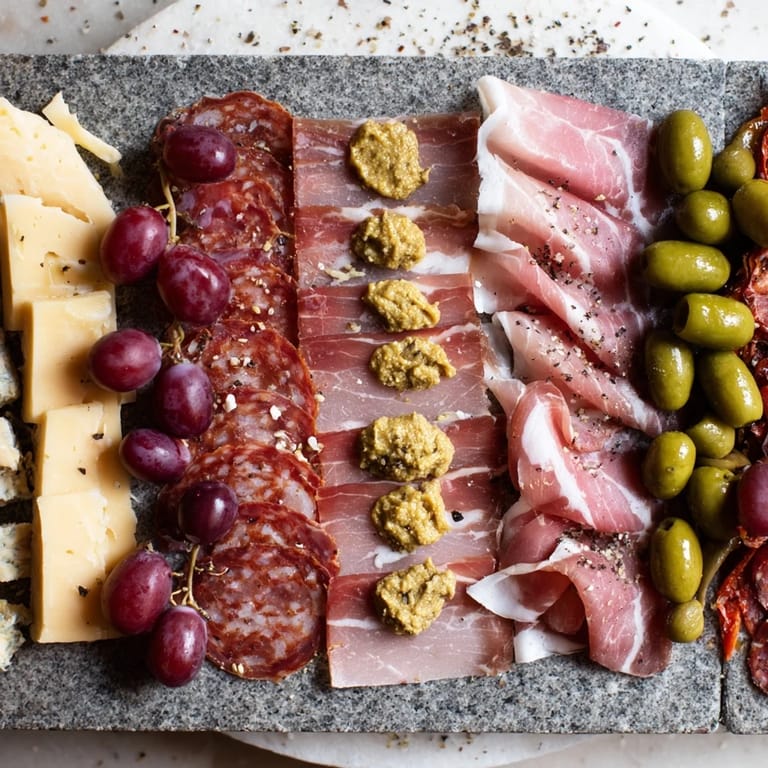
- Start on one side of the board and lay each type of meat in its own parallel line, keeping each slice slightly overlapping the next so they fan out without gaps. You're creating visual separation, not a chaotic pile.
- Mirror with cheese on the opposite side:
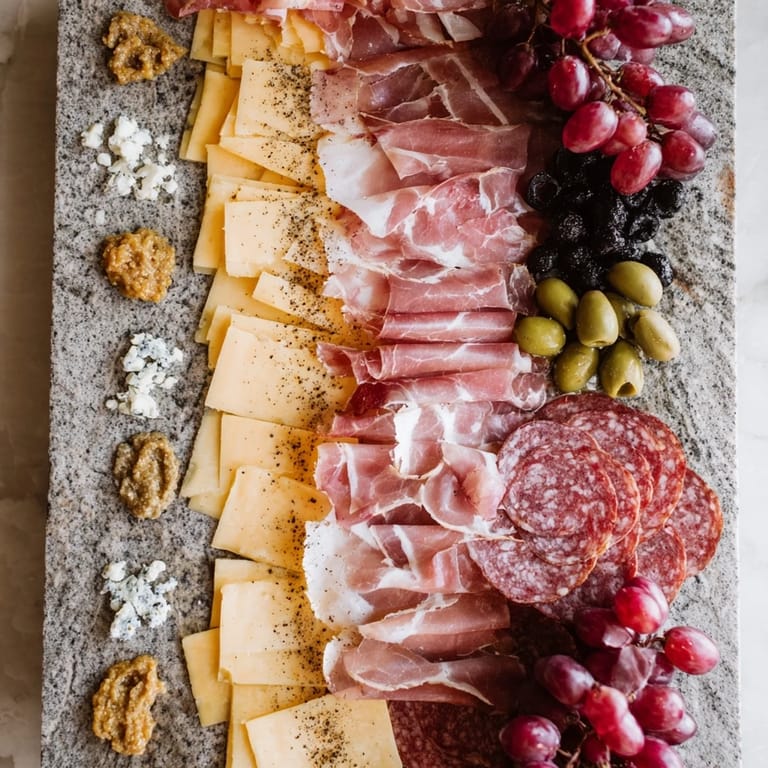
- Move to the other side of the board and repeat the line work with your four cheeses, each type in its own lane. The contrast between the two sides is what makes this feel intentional.
- Fill the middle with brightness:
- Tuck small bunches of grapes, cornichons, and olives into the space between the meats and cheeses, scattering them like you're placing punctuation marks. Nothing should feel random.
- Add mustard with intention:
- Place small dollops of whole grain mustard in a neat line down the center or in a small dish at the edge—this is the condiment station that guests will use without thinking twice.
- Finish with pepper and presence:
- Give the meats and cheeses one final light grind of black pepper, letting the aroma rise. Step back and look at it—the roughness of the slate against the precision of your lines should feel both relaxed and deliberate.
 Pin Recipe
 My brother asked me once why I'd gone to so much trouble for "just cheese and meat." But watching people approach that platter and actually pause, actually choose deliberately instead of grabbing the first thing, I realized it wasn't about the ingredients at all—it was about permission to slow down and pay attention.
The Power of Restraint
The hardest thing about this platter is resisting the urge to add more. We're trained to pile things high and fill every gap, but the spaces on slate matter as much as what's there. The empty air around each line of cheese or meat lets your eye settle and makes you taste more slowly. That's when flavor actually registers.
Reading Your Guests
I've learned that what people reach for first tells you something real about them. Some go straight for the blue cheese, others pick grapes first, then build outward. The beauty of this arrangement is that it doesn't force a path—everyone can enter the platter wherever they want and move through it their own way.
Building Your Own Version
Once you've made this a few times, the template becomes second nature and you can play with it. Swap in prosciutto di Parma or Serrano ham, try Pecorino or Comté, whatever speaks to you that week. The method stays the same, but the conversation changes.
- Keep your ingredient quantities balanced so no single flavor dominates the palette.
- Cold is non-negotiable—everything should come straight from the fridge or, better yet, from a quick chill before serving.
- Your slate should be large enough that lines never feel crowded; space is part of the design.
 Pin Recipe
 This platter taught me that elegance isn't complexity—it's clarity. Serve it with intention and watch what happens to the room.
Recipe FAQs
- → What type of stone is best for this platter?
A heavy, unpolished stone or slate board works best to emphasize the rustic and industrial aesthetic while keeping ingredients cool.
- → Can I prepare this platter ahead of time?
It's best arranged just before serving to maintain freshness and prevent ingredients from drying out or warming too much.
- → How should the meats and cheeses be arranged?
Arrange cold meats in parallel lines on one side, with sharp cheeses in similar lines on the opposite side for clear separation and visual appeal.
- → What accompaniments enhance the platter?
Seedless grapes, cornichons, mixed olives, and whole grain mustard add complementary flavors and textures to the meats and cheeses.
- → Are there vegetarian alternatives for this platter?
Yes, replace cold meats with marinated artichoke hearts and roasted nuts to maintain variety and balance.
- → What drinks pair well with this platter?
A crisp dry white wine like Sauvignon Blanc or a bold red such as Cabernet Sauvignon complements the flavors beautifully.