 Pin Recipe
 The first time I made minestrone, I was snowed in during a surprise blizzard with nothing but a refrigerator full of aging vegetables and some pantry staples. My Italian neighbor had always told me that soup is just a hug in a bowl, and that day, with wind howling against the windows, I finally understood what she meant. The kitchen became my sanctuary as I chopped and simmered, the steam fogging up the windows until the world outside disappeared. When I finally sat down with that steaming bowl, I felt like I'd discovered something ancient and necessary, the kind of comfort that transcends weather or circumstance.
Last winter, my sister came over after a terrible week at work, and I set a pot of this on the stove without saying much. She sat at the counter, watching the vegetables soften and the broth turn that deep, rich red, and by the time we were eating, she'd started talking again. Something about soup breaks down walls in the same way it breaks down vegetables, extracting flavor and tenderness from hard things.
What's for Dinner Tonight? 🤔
Stop stressing. Get 10 fast recipes that actually work on busy nights.
Free. No spam. Just easy meals.
Ingredients
- Olive oil: The foundation of so much good cooking, use a decent quality one since you'll taste it
- Onion and garlic: The aromatic base that builds depth, take your time sauteing them until they're translucent and fragrant
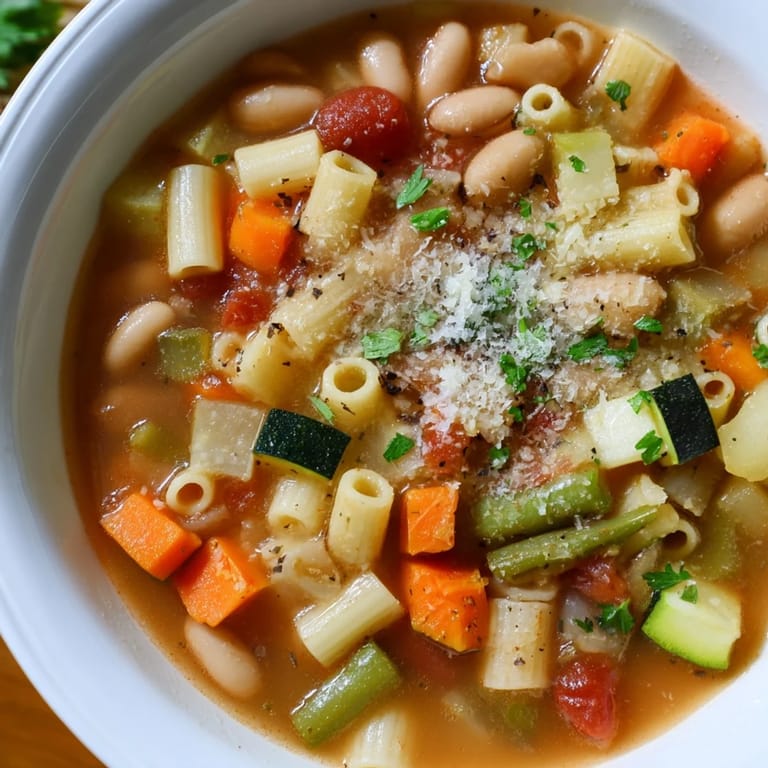
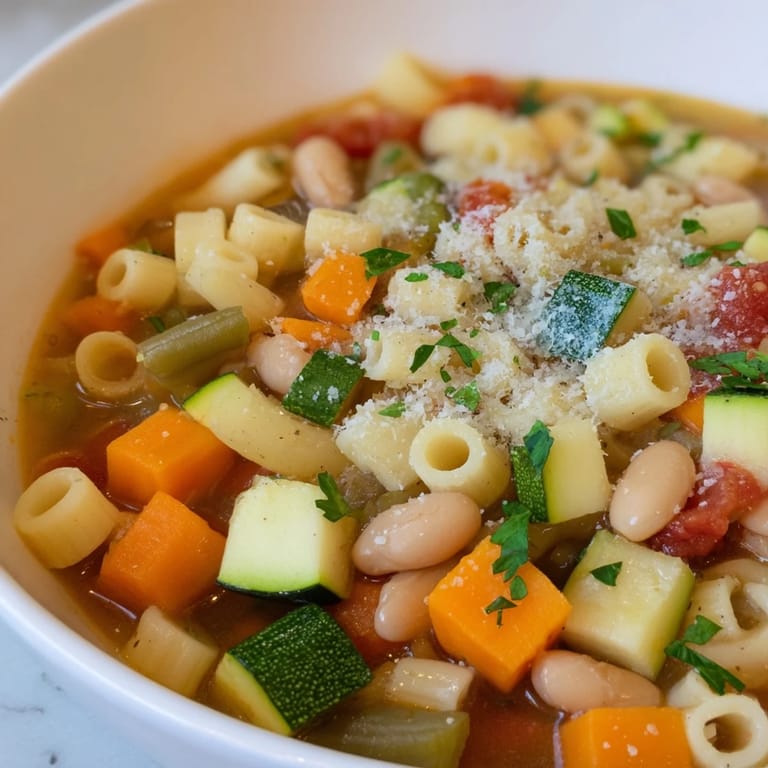
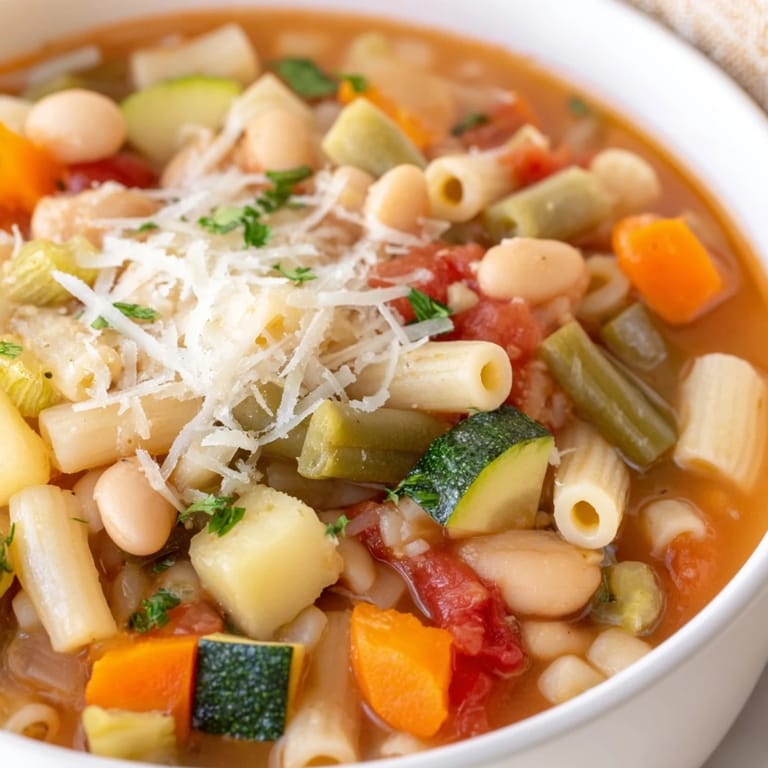
- Carrots, celery, zucchini, potato, and green beans: This combination creates texture variety and sweetness as they cook down
- Canned diced tomatoes: The juices are essential for that beautiful red broth color and acidic brightness
- Vegetable broth and water: Using both prevents the soup from becoming too aggressively salty or rich
- Cannellini beans: These creamy white beans melt slightly into the broth while holding their shape, adding protein and body
- Small pasta: Ditalini or elbow macaroni are traditional because they catch beautifully on spoons
- Dried oregano and basil: These Mediterranean staples infuse the broth while simmering
- Bay leaf: That subtle background flavor that makes soup taste professionally made
- Fresh parsley and basil: Added at the very end, they bring brightness that dried herbs can't achieve
- Parmesan cheese: The final flourish that adds umami depth and a luxurious finish
Instructions
- Build your aromatic foundation:
- Heat that olive oil in your largest pot over medium heat, then add the chopped onion and minced garlic. Let them saute for about 3 minutes until they're soft and translucent, stirring occasionally so nothing browns. Your kitchen should start smelling wonderful already.
- Soften your vegetables:
- Add in the carrots, celery, zucchini, potato, and green beans all at once. Stir everything together and let them cook for 5 to 6 minutes, just until they start to soften slightly and smell sweet. This step prevents them from disintegrating later.
- Create the soup base:
- Pour in the canned tomatoes with all their juices, followed by the vegetable broth and water. Add the dried oregano, dried basil, bay leaf, and season generously with salt and pepper. Bring everything to a rolling boil.
- Simmer the vegetables:
- Reduce the heat to maintain a gentle simmer, cover the pot, and let it cook for 15 minutes. The vegetables should be nearly tender by this point, and your broth will have taken on a beautiful color.
- Add the heartiness:
- Stir in the drained cannellini beans and the uncooked pasta. Continue simmering, this time uncovered, for 10 to 12 minutes. The soup will thicken slightly as the pasta releases starch into the broth.
- Finish with fresh herbs:
- Fish out and discard the bay leaf, then stir in the chopped fresh parsley and basil. Taste the soup and adjust the seasoning if needed. This is your last chance to perfect the balance.
 Pin Recipe
 There's a moment near the end of cooking when you taste the soup and realize suddenly that it's become greater than the sum of its parts. The vegetables have surrendered their individual identities to create something entirely new, a transformation that never ceases to feel like a small miracle.
Making It Your Own
The beauty of minestrone lies in its adaptability to whatever you have on hand. I've made versions with spinach in spring, cabbage in fall, and even added a rind of Parmesan cheese to simmer in the broth for extra depth. Some days the vegetables change, but the comfort remains.
Serving Suggestions
A thick slice of crusty Italian bread is non-negotiable for soaking up that flavorful broth. I like to rub the bread with a cut clove of garlic before toasting it, and if I'm feeling especially indulgent, I'll drizzle it with good olive oil. A glass of Chianti doesn't hurt either.
Storage And Reheating
This soup keeps beautifully in the refrigerator for up to 4 days, though I rarely let it last that long. When reheating, you might need to add a splash of water or broth since the pasta will have absorbed quite a bit of liquid.
- Freeze individual portions for those nights when cooking feels impossible
- The flavors actually improve after a day or two in the refrigerator
- Never reheat it to a rolling boil or the pasta might start breaking down
 Pin Recipe
 There's something profoundly satisfying about turning a pile of humble ingredients into a meal that feeds both body and soul. I hope this soup brings you the same comfort it's brought my kitchen through many seasons.
Recipe FAQs
- → What vegetables work best in minestrone?
Traditional minestrone includes carrots, celery, onions, zucchini, green beans, and potatoes. You can easily adapt based on what's in season—try adding spinach, kale, cabbage, or Swiss chard during the last few minutes of cooking.
- → Can I make minestrone soup ahead of time?
Absolutely. Minestrone actually tastes better the next day as flavors have time to meld. Store in the refrigerator for up to 4 days. Note that the pasta will continue absorbing liquid, so you may need to add more broth when reheating.
- → How do I prevent pasta from getting mushy?
Cook the pasta separately and add it to individual bowls when serving, or slightly undercook the pasta directly in the soup since it will continue softening in the hot broth. You can also use smaller shapes like ditalini that hold their texture well.
- → Is minestrone soup freezer-friendly?
Yes, freeze for up to 3 months. For best results, freeze without the pasta and cook fresh pasta when reheating. If freezing with pasta included, expect it to be softer than freshly made.
- → What can I serve with minestrone soup?
Crusty Italian bread or garlic bread is perfect for soaking up the flavorful broth. A simple green salad with vinaigrette balances the heartiness. For a traditional Italian meal, pair with a glass of Chianti.
- → Can I make minestrone vegan?
Easily adapt by skipping the Parmesan garnish or using a plant-based cheese alternative. The soup itself is completely vegan-friendly, relying on vegetables, beans, and herbs for its rich flavor.