 Pin Recipe
 There's something about spring that makes you crave floral desserts, and this tart arrived in my kitchen on a particularly gray afternoon when I needed something to look forward to. A friend had raved about elderflower with white chocolate, and I found myself standing in the market studying rhubarb stalks like they held secrets. The combination felt a bit sophisticated, maybe even a touch risky, but that's exactly why I needed to try it.
I made this the first time for my sister's birthday dinner, and I remember her pausing mid-conversation when she took a bite, which was all the validation I needed. The kitchen had smelled like caramelizing sugar and fragrant steam for hours, and somehow that anticipation translated into the final result. She asked for the recipe before dessert was even finished, which felt like the ultimate compliment.
What's for Dinner Tonight? 🤔
Stop stressing. Get 10 fast recipes that actually work on busy nights.
Free. No spam. Just easy meals.
Ingredients
- All-purpose flour: The foundation of everything, and using a slightly heavier hand with it keeps your crust tender rather than tough.
- Cold unsalted butter: This is non-negotiable for a crisp shell, so keep it genuinely cold, and work quickly so it doesn't warm.
- Powdered sugar: Dissolves into the dough and adds a subtle sweetness that whispers rather than shouts.
- Egg yolk: Binds everything together while adding richness that you'll taste in every bite.
- White chocolate: Choose quality chocolate here because it's the star; cheap versions can taste waxy and hollow.
- Heavy cream and whole milk: The cream makes it luxurious, but the milk tempers it so the filling isn't overwhelmingly rich.
- Elderflower cordial: This floral note is what makes people pause and ask what that flavor is; it's the magic ingredient.
- Rhubarb: Cut it into uniform batons so everything roasts evenly and looks intentional on the plate.
- Lemon zest: Brightens the rhubarb and prevents the whole dessert from feeling too heavy.
Instructions
- Make the crust foundation:
- Pulse your flour, cold butter cubes, powdered sugar, and salt until the mixture looks like coarse breadcrumbs, which means the butter is in tiny pieces that will create a flaky texture. Add the egg yolk and just 1 tablespoon of cold water, pulsing gently until the dough barely holds together; you want it shaggy, not smooth, because overworking it toughens the crust.
- Rest and chill the dough:
- Shape it into a disk, wrap it, and let it sit in the fridge for a full 30 minutes, which allows the gluten to relax and the butter to solidify again. This step prevents shrinkage when it bakes, so don't skip it even though you're eager.
- Line the tin and chill again:
- Roll the chilled dough between two pieces of parchment to prevent sticking, then press it gently into your tart tin and trim the edges. Chill for another 15 minutes before baking, which is your second insurance policy against a crust that shrinks away from the sides.
- Blind bake until golden:
- Line the crust with parchment and fill it with baking beans to weigh it down and prevent puffing, then bake at 180°C for 15 minutes. Remove the beans and parchment, then bake another 5 to 7 minutes until the bottom is pale golden and looks genuinely cooked, not just pale.
- Prepare the custard base:
- Heat your cream and milk until steam rises and small bubbles form at the edges, which is just below boiling. Whisk your egg yolks with sugar and vanilla until pale and thick, then slowly pour the hot cream into the eggs while whisking constantly to prevent scrambling.
- Thicken gently over heat:
- Return the mixture to the saucepan over low heat and stir constantly until it coats the back of a spoon, which takes about 3 to 5 minutes and feels like a small victory. The moment it reaches this consistency, remove it from heat, or you risk ending up with scrambled eggs instead of silky custard.
- Add the floral white chocolate element:
- Stir in your chopped white chocolate and elderflower cordial until completely smooth, then pour this into your cooled crust. The warmth of the custard will melt the chocolate, creating an almost pourable filling that sets into something luxurious as it chills for at least an hour.
- Roast the rhubarb to tender perfection:
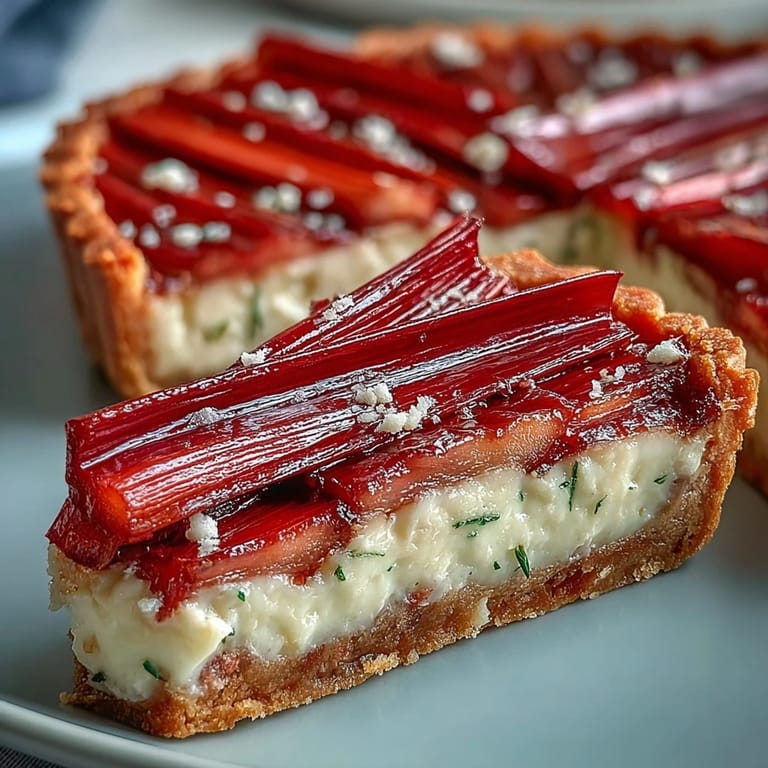
- Arrange your rhubarb batons in a single layer, sprinkle generously with sugar, lemon zest, and elderflower cordial, then cover loosely with foil. Roast at 190°C for 15 minutes covered, then uncover and roast another 5 to 8 minutes until the rhubarb is tender enough to cut with a spoon but still holding its shape.
- Bring it all together:
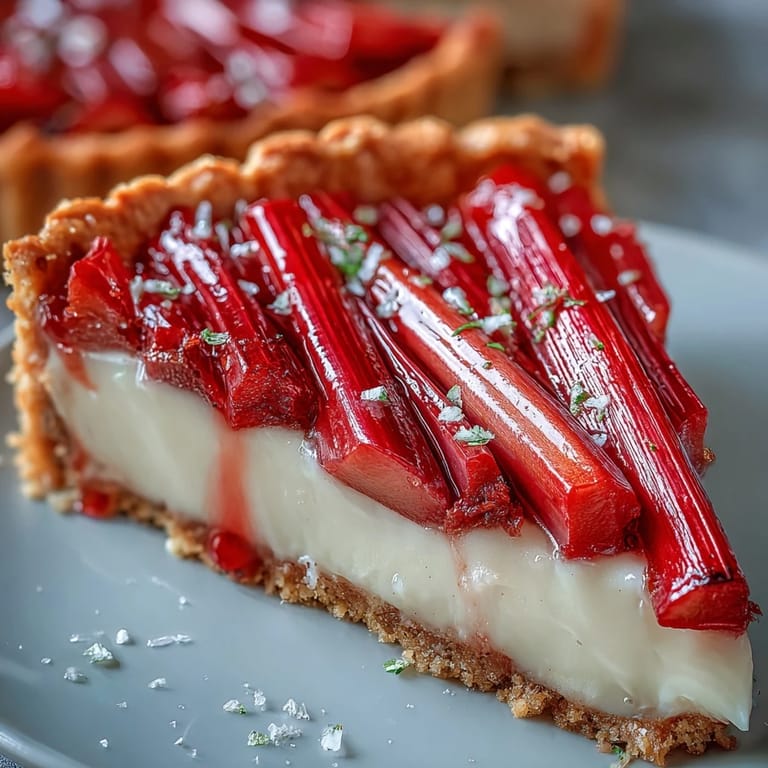
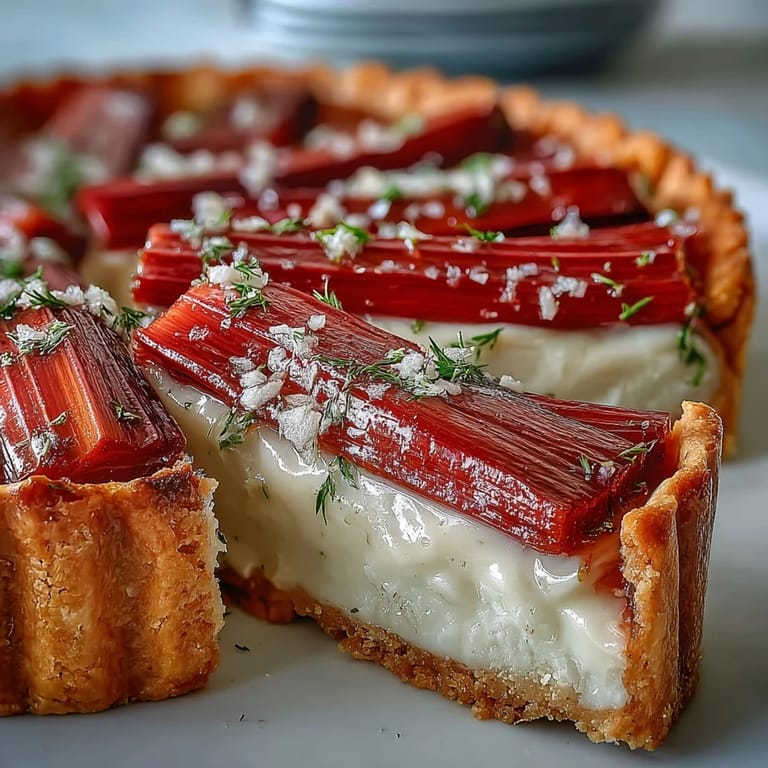
- Once everything is completely cool, arrange the rhubarb artfully over the set custard, optionally brush with a touch more cordial for shine, and chill until serving. This is the moment when you step back and realize you actually made something that looks like it came from a proper bakery.
 Pin Recipe
 There was something quietly proud about presenting this tart at the table and watching people genuinely slow down to savor it. The layers all worked together in this unexpected way, and I realized that the best desserts aren't always about being complicated, just about being thoughtful.
The Art of a Crisp Tart Shell
A good tart shell is a study in contrasts: it should be buttery and tender but sturdy enough to hold a creamy filling without becoming soggy. The trick is working with cold ingredients and not overworking the dough, which takes restraint but becomes intuitive after you've done it once. Temperature and timing matter more than technique here, so don't feel pressured to be fancy about it.
Understanding Custard Temperament
Custard is one of those fillings that seems intimidating until you realize it's just cream and eggs having a conversation over gentle heat. The constant whisking prevents the eggs from scrambling, and the low temperature prevents the cream from breaking, so think of yourself as a mediator keeping everything calm. Once you've made it once successfully, you'll understand why it's so beloved in classic pastry.
Flavor Layering and Why It Works
This tart succeeds because each component has a distinct job: the crust provides texture, the white chocolate and elderflower create luxury and floral notes, and the rhubarb adds brightness and tartness. None of them compete; instead they create a progression of flavors that keeps you interested through every bite. If you're nervous about the elderflower, start with a smaller amount and taste as you go, because it's potent and personal.
- Toast some pistachios or almonds and sprinkle them over the tart just before serving for unexpected texture and nuttiness.
- If rhubarb isn't in season, roasted strawberries work beautifully and feel less austere if that's more your mood.
- Make the tart up to 6 hours ahead, and it actually improves as the flavors settle together.
 Pin Recipe
 This tart has a way of making an ordinary dinner feel like something worth celebrating, and that's the kind of recipe worth keeping in your rotation. Serve it with sparkling wine or a simple cup of tea, and let it remind you why you love baking in the first place.
Recipe FAQs
- → Can I make this tart ahead of time?
Yes, this tart is perfect for advance preparation. You can assemble it completely up to 24 hours before serving and keep it chilled in the refrigerator. The flavors actually develop beautifully when given time to meld together.
- → What can I use instead of elderflower cordial?
If elderflower cordial is unavailable, you can substitute with a combination of lemon juice and honey, or use orange blossom water for a different floral note. Alternatively, simply increase the vanilla extract for a classic custard flavor.
- → How do I prevent the rhubarb from becoming too mushy?
The key is to roast the rhubarb just until tender but still holding its shape. Keep the pieces in uniform 5 cm batons and watch carefully during the final uncovered roasting phase. Let it cool completely before arranging on the tart to maintain structure.
- → Can I freeze this tart?
While the tart shell can be frozen unbaked, the filled tart is best enjoyed fresh from the refrigerator. The custard texture may become grainy upon freezing and thawing, and the rhubarb will release excess moisture.
- → What type of white chocolate works best?
Choose a good quality white chocolate with at least 30% cocoa butter for the best flavor and smooth melting. Avoid white baking chips or confectionery coating, as these won't create the same creamy custard texture.
- → How do I know when the custard is properly thickened?
The custard is ready when it coats the back of a spoon and you can draw a clear line through it with your finger that doesn't immediately run. It should be around 75-80°C, thick but still pourable. Don't let it boil or the eggs may scramble.