 Pin Recipe
 There's something about spring that makes you crave bright, delicate flavors, and this risotto arrived in my kitchen on one of those perfect March afternoons when the farmers market suddenly overflowed with tender peas and fragrant mint bundles. I'd been standing in my kitchen stirring stock into rice when my neighbor walked by the open window and asked what smelled so good—that buttery, herbaceous cloud that escaped into the afternoon was impossible to ignore. It's become my go-to dish when I want to feel like I've created something restaurant-worthy without spending hours at the stove.
I made this for my sister's surprise dinner last spring, and watching her eyes light up when she tasted that first spoonful made me understand why risotto has that almost magical reputation. She kept asking if I'd added something secret—it was just the combination of perfectly timed butter, good Parmesan, and the green brightness of mint at the very end. That moment taught me that sometimes the simplest approach, done with attention and care, tastes better than anything complicated.
What's for Dinner Tonight? 🤔
Stop stressing. Get 10 fast recipes that actually work on busy nights.
Free. No spam. Just easy meals.
Ingredients
- Fresh or frozen spring peas: If you can find fresh ones at the market, use them—they're sweeter and add a delicate pop of color, but honestly, frozen peas work beautifully and sometimes taste fresher than the pale ones sitting in produce bins.
- Arborio rice: This short-grain rice is essential because its starches release slowly, creating that signature creamy texture without any added cream if you prefer to skip it.
- Vegetable broth: Keep it warm the entire time you're cooking—cold broth will shock the rice and ruin the silky consistency you're after.
- Unsalted butter: Use good butter, divided into two parts so you can build flavor at the beginning and finish with a creamy flourish at the end.
- Parmesan cheese: Freshly grated makes all the difference; the pre-shredded versions have anti-caking agents that prevent it from melting smoothly into the risotto.
- Fresh mint: Chop it just before using so it stays vibrant and aromatic rather than turning dark and tired.
- Dry white wine: The acidity cuts through the richness and adds depth that you'd miss without it.
- Lemon zest: Optional, but it's that secret ingredient that makes people ask what you did differently.
Instructions
- Set up your station:
- Pour your vegetable broth into a medium saucepan and bring it to a gentle simmer over low heat—this is the beating heart of your risotto, so keep it warm and ready throughout the entire cooking process.
- Build your flavor base:
- In a large, heavy-bottomed skillet, heat the olive oil and 2 tablespoons of butter over medium heat until it's foaming gently. Add your chopped onion and let it soften into translucency over about 4 minutes, stirring occasionally so it becomes sweet and tender without browning.
- Wake up the garlic:
- Add your minced garlic and cook for just 1 minute, letting the kitchen fill with that unmistakable aroma that tells you everything is on track.
- Toast the rice:
- Stir in the Arborio rice and keep stirring constantly for 2 minutes—you'll notice the grains becoming slightly translucent at the edges, which means they're ready to absorb liquid. This step is crucial because it seals the outside of each grain so your risotto stays creamy rather than turning mushy.
- Add the wine:
- Pour in your dry white wine and stir until it's almost completely absorbed, which should take about 2 minutes of constant stirring.
- Begin the slow dance of ladle and stir:
- Now comes the meditative part—add one ladle of warm broth at a time, stirring frequently and waiting until each addition is mostly absorbed before adding the next. This takes about 18 to 20 minutes total, and yes, you need to stay with it, but it's the kind of cooking that actually feels relaxing once you settle into the rhythm.
- Introduce the peas:
- When you've got about 5 minutes of cooking time left, stir in your spring peas and let them warm through gently.
- Finish with elegance:
- Remove the pan from heat and stir in the remaining tablespoon of butter, your freshly grated Parmesan, heavy cream if you're using it, chopped mint, and lemon zest. Taste and season with salt and pepper, but go easy on the salt since the cheese is already salty.
- Rest and serve:
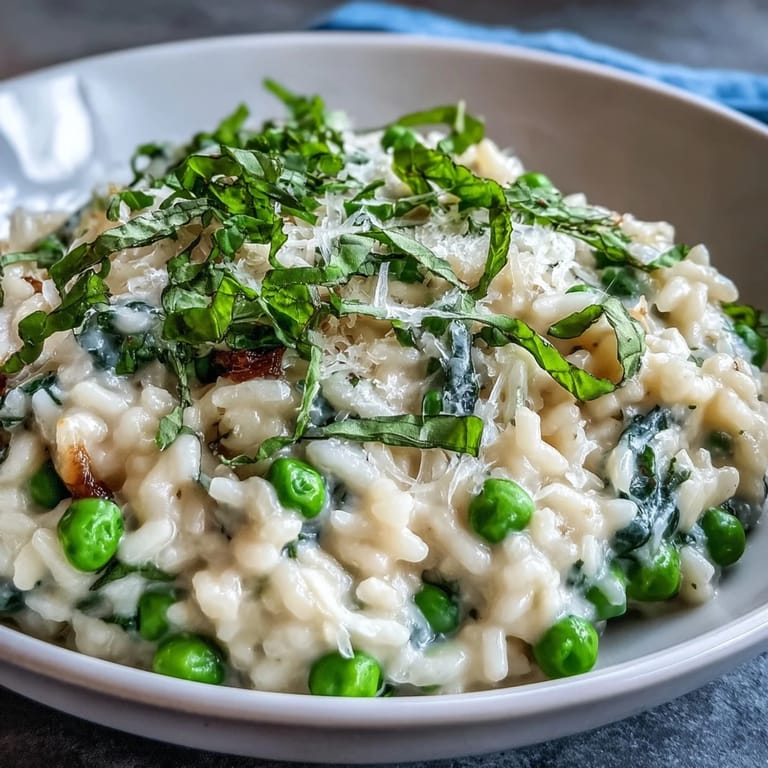
- Let the risotto sit for 2 minutes—this brief pause allows everything to settle into its creamiest state. Serve immediately while it's still flowing and luxurious on the plate, with a extra sprinkle of mint and Parmesan on top.
 Pin Recipe
 There was an evening when a friend who usually orders takeout asked if she could watch me make this, and by the time we finished, she'd decided she wanted to learn to cook risotto herself. Seeing someone discover that they could create something that tastes like it came from a proper restaurant kitchen changed how I think about sharing food—it's really about sharing a small bit of confidence.
Making It Your Own
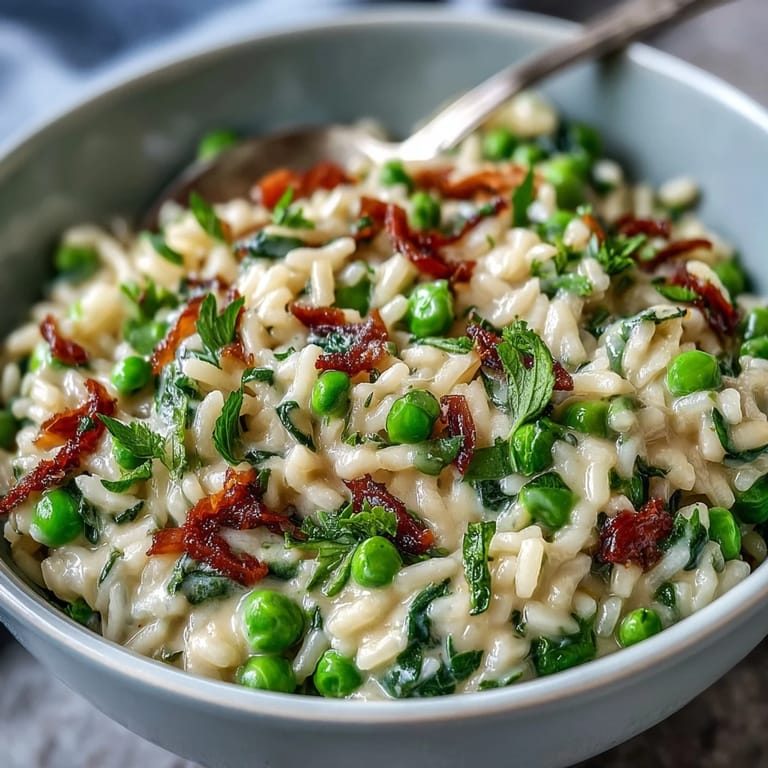
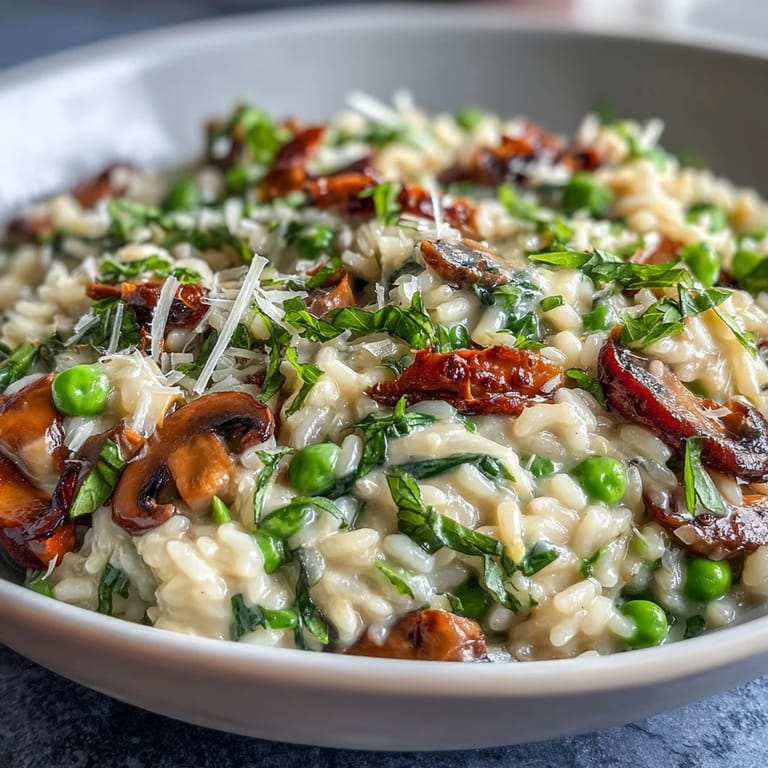
The beauty of risotto is that it's a framework rather than a rigid formula, so once you master this spring version, you can adapt it to whatever's in season or whatever you're craving. I've made it with summer corn and basil, autumn mushrooms and thyme, even winter spinach and nutmeg. The technique stays the same, but the personality changes completely, so don't be afraid to swap in different vegetables or herbs once you've made this version a few times and understand how the rice behaves.
When You Need Shortcuts
Some nights you're inspired and patient, and other nights you just want risotto without the constant stirring, so I've learned a few tricks that get you 90 percent of the way there with less hands-on time. You can use a good quality, warm risotto base from a specialty shop, or even prepare the rice ahead by doing the initial toasting and wine-soaking step, then finishing it with the broth when you're ready to eat. It's not quite the same meditative experience, but it's still delicious, and honestly, a good risotto you actually make is better than a perfect risotto you talk yourself out of cooking.
Serving and Pairing Ideas
Risotto likes good company, so think about what you're serving alongside it rather than drowning it on a huge plate. A simple green salad with a bright vinaigrette cuts through the richness beautifully, and if you want to add protein, grilled chicken or seared scallops are elegant without overwhelming the delicate flavors. Wine-wise, stick with crisp whites like Sauvignon Blanc or Pinot Grigio—the acidity complements the Parmesan and mint in a way that makes the whole meal feel intentional.
- Serve immediately while the risotto is still flowing and creamy on the plate, not stiffened and clumpy.
- Top with extra fresh mint and Parmesan shavings for a fancy finish that takes 30 seconds but looks restaurant-worthy.
- If you want to add vegetables like spinach or toasted pine nuts, fold them in gently at the very end so they stay vibrant and distinct rather than disappearing into the rice.
 Pin Recipe
 This risotto has become the dish I reach for when I want to feel like I've created something special without the stress, and now when friends ask what's for dinner, I often answer with a knowing smile. There's real magic in watching someone taste this and realize that restaurant-quality food is entirely possible in a regular kitchen on an ordinary Tuesday.
Recipe FAQs
- → How do I achieve a creamy texture in risotto?
Slowly adding warm broth one ladleful at a time while stirring frequently helps release the starch from Arborio rice, producing a creamy consistency.
- → Can frozen peas be used instead of fresh?
Yes, frozen peas work well and can be added a few minutes before the end of cooking to retain their sweetness and texture.
- → What is the role of white wine in this dish?
White wine adds acidity and depth of flavor which balances the richness of the butter and Parmesan in the risotto.
- → How can I make this dish vegan-friendly?
Substitute butter and Parmesan with vegan alternatives and omit the cream to maintain the creamy feel and enhance plant-based flavors.
- → What herbs complement the fresh mint in this preparation?
Delicate herbs like basil or parsley can complement the fresh mint, adding brightness without overpowering the dish.