 Pin Recipe
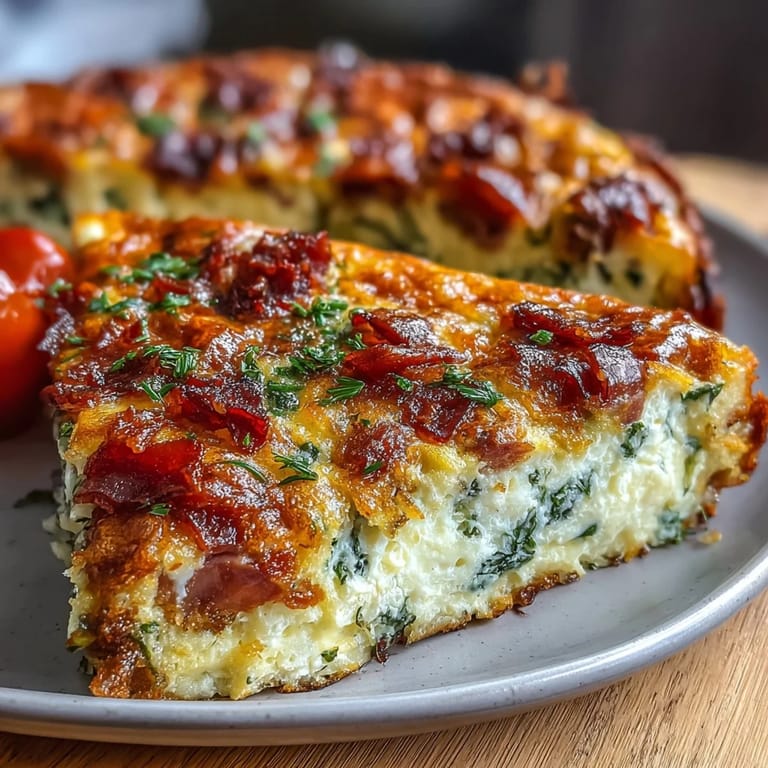
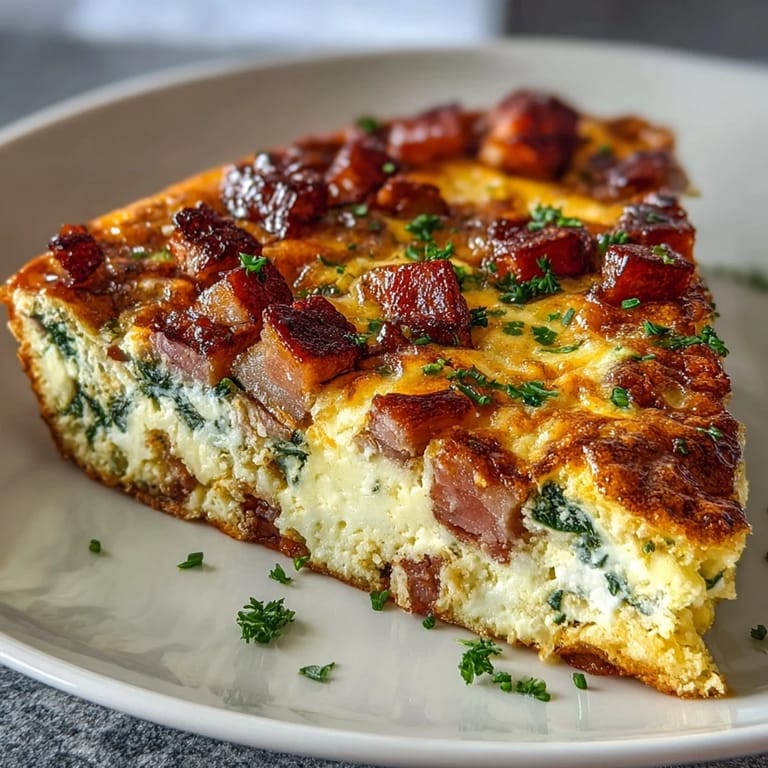
 There's something magical about a frittata that comes together in one pan while you're still in your pajamas on a Saturday morning. My neighbor once stopped by unannounced with fresh spinach from her garden, and instead of panicking, I threw together whatever eggs and ham I had on hand, and what emerged from the oven was this golden, puffy creation that made the whole kitchen smell impossibly good. That moment taught me that frittatas aren't fussy—they're forgiving, adaptable, and honestly, they make you look like you have your life together even when you're winging it.
I made this for my sister the morning after she got back from a red-eye flight, and watching her devour two slices while still in her coat told me everything I needed to know about this recipe. She called me later that week asking for it again because apparently reheating a slice in the microwave had become her emergency breakfast move, and honestly, I took that as the highest compliment.
What's for Dinner Tonight? 🤔
Stop stressing. Get 10 fast recipes that actually work on busy nights.
Free. No spam. Just easy meals.
Ingredients
- 8 large eggs: The foundation here—make sure they're as fresh as you can find them, because that's what gives you that tender, custard-like texture instead of rubbery eggs.
- 1/4 cup whole milk: This keeps the eggs silky; I learned the hard way that skim milk just doesn't add the same richness, so don't skip the full-fat version.
- 1 cup shredded cheddar cheese: Sharp cheddar works beautifully if you want more bite, but regular is perfectly fine and melts like a dream.
- 1/4 cup grated Parmesan cheese: The secret weapon that adds a salty, nutty depth you didn't know you needed.
- 1 cup diced cooked ham: Already cooked is the move here—it saves you time and prevents you from accidentally drying it out.
- 1 cup baby spinach, chopped: Wilts down to nothing, so don't be shy with the amount; it adds color and nutrition without weighing things down.
- 1/2 cup cherry tomatoes, halved: These burst during cooking and create little pockets of bright flavor, but if you can't find them, halved regular tomatoes work too.
- 1/4 cup finely chopped red onion: Gets soft and sweet when sautéed, adding subtle complexity that makes people ask what's in this.
- 1/2 tsp salt, 1/4 tsp black pepper, 1/4 tsp garlic powder: Keep these measured and ready—seasoning an egg dish properly is what separates forgettable from memorable.
- 1 tbsp fresh chives, chopped (optional): A finish that looks fancy and tastes bright, but genuinely optional if you don't have them.
- 2 tbsp olive oil: Just enough to prevent sticking without making things greasy; good olive oil makes a difference here.
Instructions
- Get your oven ready:
- Preheat to 375°F and let it fully heat while you prep—a hot oven is what creates that lightly golden top and sets the center just right.
- Whisk the egg base:
- Crack your eggs into a large bowl and whisk them together with the milk, salt, pepper, and garlic powder until everything is smooth and the color is uniform. This is when you know your seasoning is evenly distributed.
- Add the cheese:
- Stir in the cheddar and Parmesan until they're fully mixed into the egg mixture. There's no need to wait for the cheese to melt—it'll do that in the oven.
- Build flavor in the pan:
- Heat your olive oil in an oven-safe skillet over medium heat, then add the red onion and let it soften for about 2 to 3 minutes until it starts turning translucent and smells sweet. Don't rush this step.
- Layer in the fillings:
- Scatter the diced ham, spinach, and cherry tomatoes into the pan with the onions and cook for another 2 to 3 minutes, stirring gently so everything gets warmed through and the spinach starts to wilt. You'll notice the pan suddenly smells incredible at this point.
- Pour and distribute:
- Pour your egg mixture slowly and evenly over everything in the skillet, using a spatula to gently nudge the fillings so they're somewhat distributed but not perfectly arranged. The eggs will seep down and around everything as it cooks.
- Start on the stovetop:
- Let the frittata cook undisturbed on medium heat for about 2 to 3 minutes until you see the edges begin to set and firm up slightly. You're not looking for it to be fully cooked—just slightly set around the edges.
- Finish in the oven:
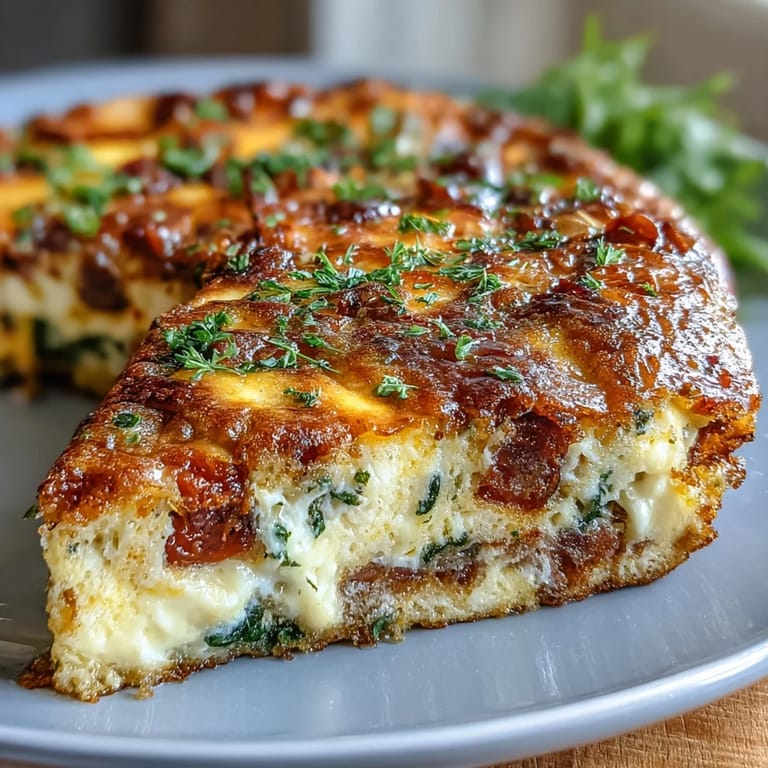
- Transfer the entire skillet to your preheated oven and bake for 15 to 18 minutes until the center is just set when you give the pan a gentle shake and the top has turned a light golden brown. The middle should still look slightly creamy, not dry.
- Rest and serve:
- Pull it out and let it cool for about 5 minutes before you slice—this makes serving cleaner and lets the eggs firm up just slightly. Garnish with fresh chives if you have them, and serve it warm or at room temperature.
 Pin Recipe
 My coworker once brought leftover slices to the office and suddenly everyone wanted the recipe because apparently reheated frittata tastes even better than fresh. That's when I realized this dish had crossed over from just breakfast into the category of things people genuinely crave, which feels like winning at cooking.
Swaps and Substitutions That Actually Work
Frittatas are incredibly forgiving, and I've made dozens of variations depending on what's in my fridge. Swiss cheese brings a nuttier flavor if cheddar feels too sharp, or feta adds a tangy bite that feels almost Mediterranean. Bell peppers, mushrooms, or even leftover roasted broccoli all work beautifully; just make sure any raw vegetables get sautéed first so they're tender by the time the frittata sets. I've even swapped out ham for crumbled bacon or sausage, and honestly, the results are just as good.
Make-Ahead and Storage Wisdom
This is where the frittata truly earns its place in my weeknight rotation—it keeps perfectly in the refrigerator for up to four days when stored in airtight containers. You can eat it straight from the fridge, reheat a slice in the microwave for about a minute, or warm the whole thing gently in a 325°F oven if you're serving a crowd. I've also frozen individual slices for up to a month, and they thaw surprisingly well, though eating it cold from the fridge has honestly become my favorite method because it tastes fresher somehow.
Serving Ideas and Pairings
A simple green salad with lemon dressing alongside a warm slice feels elegant enough for brunch guests, while pairing it with whole-grain toast and fruit makes an easy weekday breakfast feel intentional. On mornings when I'm eating it solo straight from the fridge, a few grinds of fresh pepper and maybe some hot sauce is honestly all I need. The beauty is that it works warm, cold, or anywhere in between, which makes it the ultimate versatile dish.
- Serve it with a side of fresh fruit or avocado toast for a more substantial breakfast spread.
- Pair it with a simple tomato salad if you want something fresh alongside the richness.
- Sprinkle extra fresh chives, a drizzle of hot sauce, or even a dollop of sour cream when serving.
 Pin Recipe
 There's something deeply satisfying about pulling a golden frittata from the oven knowing you've just made something that'll feed you well for days and impress anyone lucky enough to eat it fresh. This recipe has quietly become my go-to when I need breakfast to feel both effortless and genuinely nourishing.
Recipe FAQs
- → Can I substitute the cheddar cheese?
Yes, Swiss or feta cheeses work well for different flavor profiles without compromising texture.
- → Is this suitable for meal prepping?
Absolutely. The frittata stores well in the refrigerator for up to 4 days and reheats nicely in the microwave.
- → Can I add other vegetables?
Yes, bell peppers or mushrooms can be added during the sauté step to boost flavor and nutrition.
- → What kind of pan is best to use?
An oven-safe nonstick skillet (10–12 inch) is ideal to sauté and bake evenly without sticking.
- → How do I know when the frittata is cooked?
The edges should be set and the center lightly golden but still slightly soft; a gentle shake can confirm firmness.