 Pin Recipe
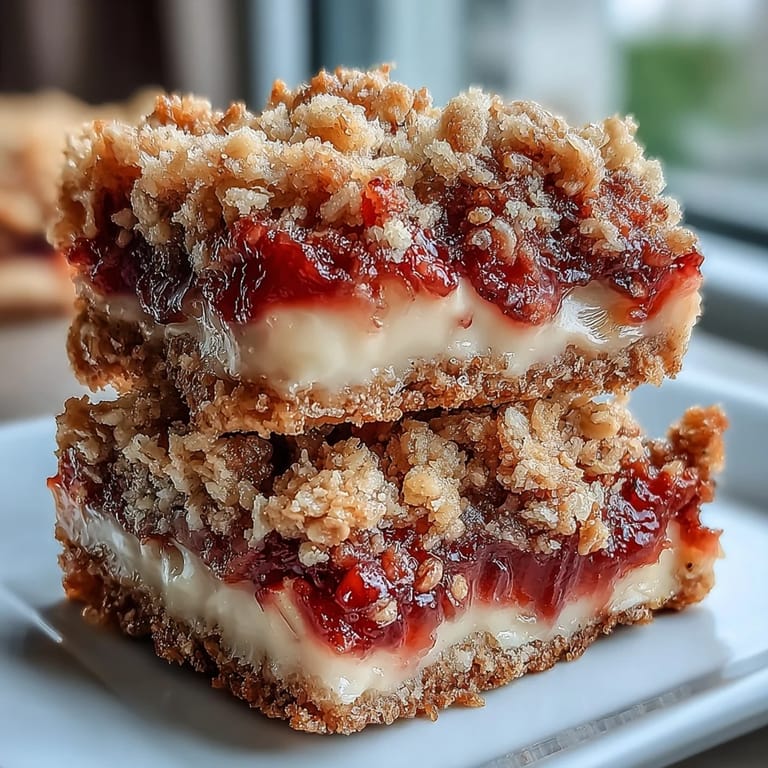
 My mum always said the secret to a proper afternoon tea was having something that made people pause mid-conversation, and these rhubarb and custard bars do exactly that. There's something about the way the tart rhubarb plays against the silky custard that feels almost theatrical, like you've managed to capture spring and cream in one bite. I stumbled onto this combination one March when rhubarb was practically forcing itself into every corner of the market, and I had half a pot of custard sitting in the fridge from an earlier baking project. The result was so good my neighbor asked for the recipe before she'd even finished her first piece.
I made these for my book club once, and what I remember most wasn't the compliments but the silence when everyone bit into them. Someone asked if I'd bought them from a bakery, which felt like the highest compliment at the time, though I've learned to smile at that question instead of explaining my whole process.
What's for Dinner Tonight? 🤔
Stop stressing. Get 10 fast recipes that actually work on busy nights.
Free. No spam. Just easy meals.
Ingredients
- Fresh rhubarb, 400 g: Trim the woody ends and chop into roughly 2-centimeter pieces; the fresher it is, the tangier your bars will be, which balances the sweetness beautifully.
- Granulated sugar, 75 g (for rhubarb): This is less sugar than you might expect, but the rhubarb releases its own liquid and you want to taste its tartness.
- Lemon juice, 1 tbsp: A small amount that brightens the rhubarb without making it taste citrusy; use fresh if you have it.
- Cornstarch, 1 tbsp (for rhubarb): This thickens the rhubarb so it doesn't make the custard watery, which I learned after a soggy first attempt.
- All-purpose flour, 250 g: Standard baking flour works perfectly; I've never felt the need to switch to fancier varieties for this.
- Rolled oats, 100 g: These add texture and nuttiness to the crumble; instant oats work but the bars taste better with regular rolled oats.
- Unsalted butter, 150 g (cold and cubed): Cold butter is crucial for a crumbly texture, so pull it from the fridge just before you need it.
- Light brown sugar, 100 g: The molasses note complements the rhubarb and gives the crumble a deeper flavor than white sugar would.
- Salt, 1/2 tsp: A pinch that makes everything taste more like itself.
- Whole milk, 300 ml: Full-fat milk creates the silkiest custard, though semi-skimmed works if that's what you have.
- Large egg yolks, 2: These are the custard's backbone; room temperature eggs whisk more smoothly.
- Granulated sugar, 60 g (for custard): This sweetens the custard without overwhelming it.
- Cornstarch, 2 tbsp (for custard): This prevents the eggs from scrambling and gives the custard its glossy set; don't skip it.
- Vanilla extract, 1 tsp: A small amount that shouldn't be tasted directly but rather felt as warmth in the background.
Instructions
- Heat your oven and prep your pan:
- Set the oven to 180°C and line your square baking pan with parchment paper, leaving some overhang so you can lift the whole thing out later. This is the moment that saves you from frustrated chiseling.
- Make the rhubarb compote:
- Combine the chopped rhubarb, sugar, lemon juice, and cornstarch in a saucepan over medium heat, stirring every minute or so. You'll watch it go from chunky fruit to a thick, jammy sauce in about eight to ten minutes, and it should smell bright and almost cider-like when it's ready.
- Build the crumble base:
- Mix flour, oats, brown sugar, and salt in a large bowl, then add your cold butter pieces and rub everything together with your fingertips until it looks like coarse breadcrumbs. If your butter is too soft, pop the mixture in the freezer for five minutes.
- Press and bake the base:
- Use about two-thirds of this crumble mixture to form a firm, even layer on the bottom of your pan, then bake for fifteen minutes until it's pale gold. The remaining third gets reserved for topping, so set it aside somewhere visible so you don't accidentally forget about it.
- Prepare the custard layer:
- While the base bakes, heat your milk in a saucepan until steam rises from it; you want it hot but not boiling or the eggs will scramble. In a separate bowl, whisk together the egg yolks, sugar, and cornstarch until the mixture is completely smooth and pale, then slowly pour in the hot milk while whisking constantly so the eggs cook gently.
- Finish the custard on the stove:
- Return the mixture to the saucepan and stir it over medium heat for two to three minutes until it thickens enough that a line drawn through it with a spoon stays visible. Remove from heat and stir in the vanilla.
- Assemble the layers:
- Once the base has cooled just slightly, spread the rhubarb compote over it in an even layer, then pour the custard on top, letting it settle into the gaps. Try to spread it gently so you don't push the rhubarb around too much.
- Add the crumble topping and final bake:
- Sprinkle your reserved crumble mixture evenly over the custard, then bake for thirty minutes until the crumble is golden and the custard feels just barely set when you jiggle the pan gently. You want it to have a tiny wobble in the very center, not completely solid.
- Cool and chill:
- Let the whole pan come to room temperature on a wire rack, then refrigerate for at least two hours before you lift out the whole slab and cut it into bars. Cold custard is custard at its best.
 Pin Recipe
 The moment these bars became more than just dessert was when a friend who usually doesn't eat sweets asked for a second piece, and then took the last one home wrapped in napkins. That's when I stopped seeing them as a recipe I'd executed and started seeing them as something that brought people joy.
Why the Layers Work Together
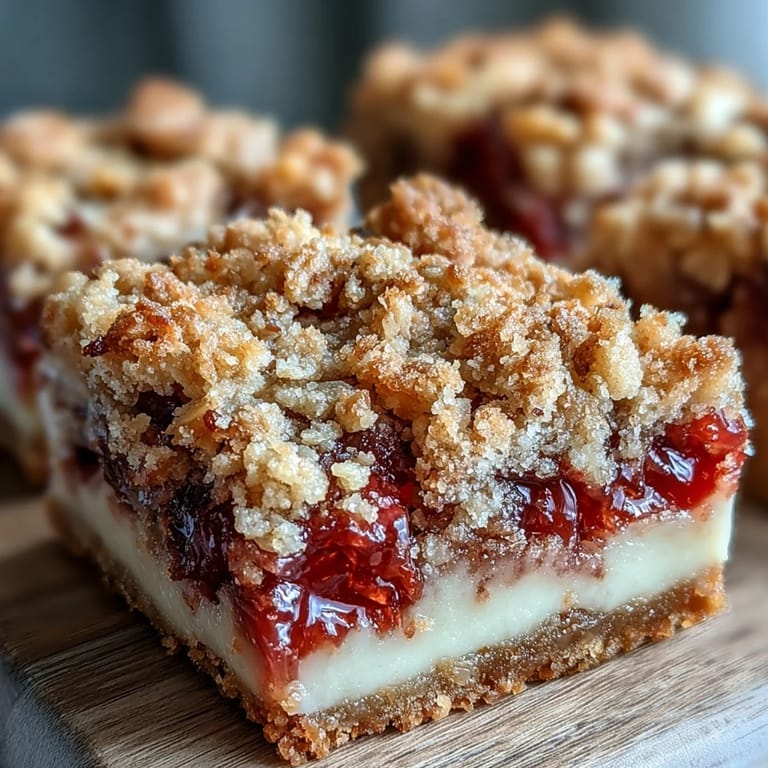
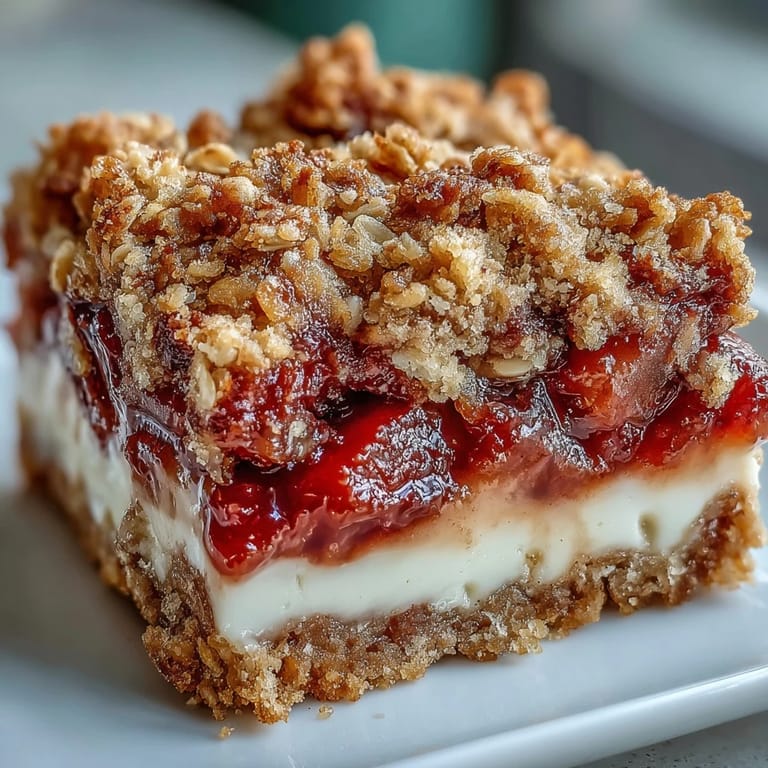
Each layer serves a purpose beyond just looking pretty. The shortbread base catches the moisture from the rhubarb and custard so nothing gets soggy, and the crumble topping provides a crucial textural contrast that keeps your teeth from feeling bored. I've tried versions with just two layers and they always felt incomplete, like a sentence missing a clause. The rhubarb is tart enough that it cuts through the richness of the custard and butter, making the whole thing feel balanced rather than heavy.
Timing and Temperature Matter More Than You'd Think
The first time I made these, I had the oven too hot and the crumble burned while the custard was still liquid. Now I use an oven thermometer because I learned that my oven runs five degrees warm, and that small difference is the difference between golden and burnt. Another thing I discovered by accident: if you let the base cool for even two minutes before adding the custard, the layers stay more distinct instead of mingling into one confused layer. Custard behaves differently at different temperatures, so respecting the timing actually makes your life easier, not harder.
Making These Ahead and Storage
These bars are actually better the next day when the flavors have settled and the custard has firmed up completely, so there's real permission to make them in advance without feeling like you're cutting corners. They live happily in a covered container in the fridge for three days, though I've never had them last that long when there are people around who know about them.
- Cut the bars with a hot, wet knife wiped clean between each cut for neat edges that don't drag the layers around.
- If you're taking them somewhere, wait until just before serving to cut them, as they're more forgiving as one large slab.
- Serve them cold straight from the fridge or at room temperature depending on whether you want the custard firm or slightly softer.
 Pin Recipe
 These bars are the kind of thing that makes you feel capable in the kitchen without requiring you to be experienced. They're springtime in bar form, and once you've made them once, they become the thing people ask for.
Recipe FAQs
- → Can I use frozen rhubarb instead of fresh?
Yes, frozen rhubarb works well. Thaw and drain excess liquid before cooking to prevent a watery filling.
- → How do I know when the custard layer is set?
The custard should be slightly jiggly in the center but not liquid. It will firm up completely as it cools and chills.
- → Can these bars be made ahead of time?
Absolutely. They store well in the refrigerator for up to 3 days and actually taste better after chilling overnight.
- → What can I substitute for rhubarb?
Try tart cherries, blackberries, or a mix of raspberries and strawberries for a different fruit layer with similar tang.
- → Why do I need to chill the bars before cutting?
Chilling allows the custard to fully set and makes cutting much cleaner, giving you neat, professional-looking bars.
- → Can I freeze these bars?
Yes, wrap individual bars in plastic wrap and freeze for up to 2 months. Thaw in the refrigerator before serving.