 Pin Recipe
 I discovered Swiss fondue not in Switzerland, but in a cramped kitchen during a snowy January when a friend casually mentioned she'd inherited her grandmother's caquelon. We decided right then to christen it properly, and something about the ritual of slowly melting cheese together while standing around a tiny burner felt like we'd stumbled onto pure alchemy. That first time, the wine hit the heat and released this wonderful vinegary steam, and I remember thinking: this is what winter entertaining should taste like.
Years later, I made it for my partner's family on their first visit, nervous about whether this Swiss classic would land properly in a California kitchen. The moment the first piece of bread came out of that pot, dripping and golden, someone laughed and said it tasted like a memory they didn't know they had. That's when I realized fondue isn't really about precision—it's about creating a moment everyone can participate in together.
What's for Dinner Tonight? 🤔
Stop stressing. Get 10 fast recipes that actually work on busy nights.
Free. No spam. Just easy meals.
Ingredients
- Gruyère cheese (200g, grated): The backbone of fondue—nutty, slightly sharp, and it melts into that dreamy silkiness you're after. Don't skip grating it fresh; pre-shredded cheese has anti-caking agents that make everything grainy.
- Emmental cheese (200g, grated): This is the gentle partner, mild and creamy, balancing Gruyère's intensity so the fondue feels approachable rather than aggressive.
- Dry white wine (1 cup/240 ml): Use something you'd actually drink—it's the entire flavor foundation. Fendant is traditional, but any crisp, unoaked white works beautifully.
- Kirsch (1 tbsp/15 ml, optional but encouraged): This cherry brandy adds a subtle complexity and helps prevent the cheese from becoming gluey. If you can't find it, a splash of lemon juice does similar work.
- Cornstarch (1 tbsp/8 g): This keeps the cheese emulsified and silky instead of separating into sad, oily puddles. It's not optional—it's your safety net.
- Garlic clove, halved: One quick rub around the pot is all you need; too much and it bullies the cheese.
- Nutmeg and white pepper (1/4 tsp each, freshly grated/ground): These whisper rather than shout, rounding out the cheese without making anyone say 'what is that flavor?'
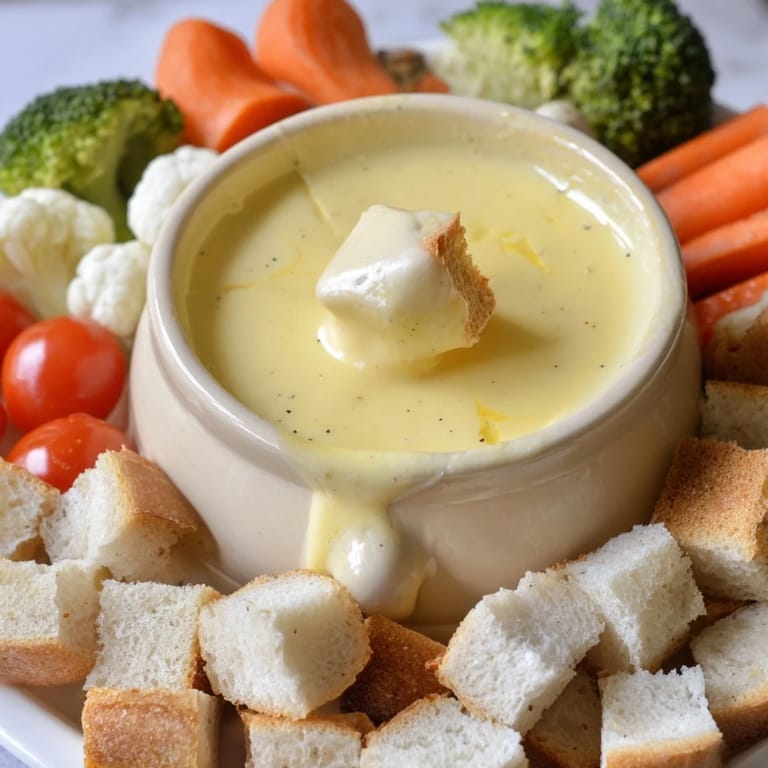
- Bread: Cut a crusty baguette or rustic loaf into cubes the size of your thumb, and let them sit out for a day if possible—slightly stale bread grips the fork better and doesn't fall off mid-dip.
- Vegetables (broccoli, cauliflower, cherry tomatoes, baby carrots): Blanch the cruciferous ones so they're just tender, which makes them easier to eat and less likely to cool down the fondue.
Instructions
- Prepare the pot:
- Cut your garlic clove in half and rub it firmly along the inside of your fondue pot, especially the bottom and corners where the heat hits first. This releases a quiet garlic flavor that seasons the wine without making anything taste like garlic soup. Discard the clove.
- Heat the wine:
- Pour the white wine into your prepared pot and set it over medium-low heat. You want it gently simmering—small, lazy bubbles rising to the surface—not aggressively boiling, which would cook off all the subtlety and turn your fondue sharp.
- Coat the cheese:
- While the wine warms, toss your grated cheeses and cornstarch together in a small bowl until every bit of cheese is coated in that fine starch. This prevents clumping when the cheese hits the heat and is genuinely the difference between silky fondue and a mess.
- Melt the cheese:
- Once the wine is simmering, start adding the cheese in small handfuls, stirring constantly in that classic figure-eight motion. This isn't just tradition—the figure-eight actually ensures every part of the pot is in motion and the cheese melts evenly. Watch for the moment when the cheese fully disappears into the wine, which takes 5–7 minutes total.
- Season and finish:
- When all the cheese is melted and smooth, stir in the kirsch (if using), the nutmeg, and the white pepper. Give it a taste now—you want it to taste slightly richer and more interesting than you think it should, because it will mellow slightly as people dip into it.
- Keep it warm and serve:
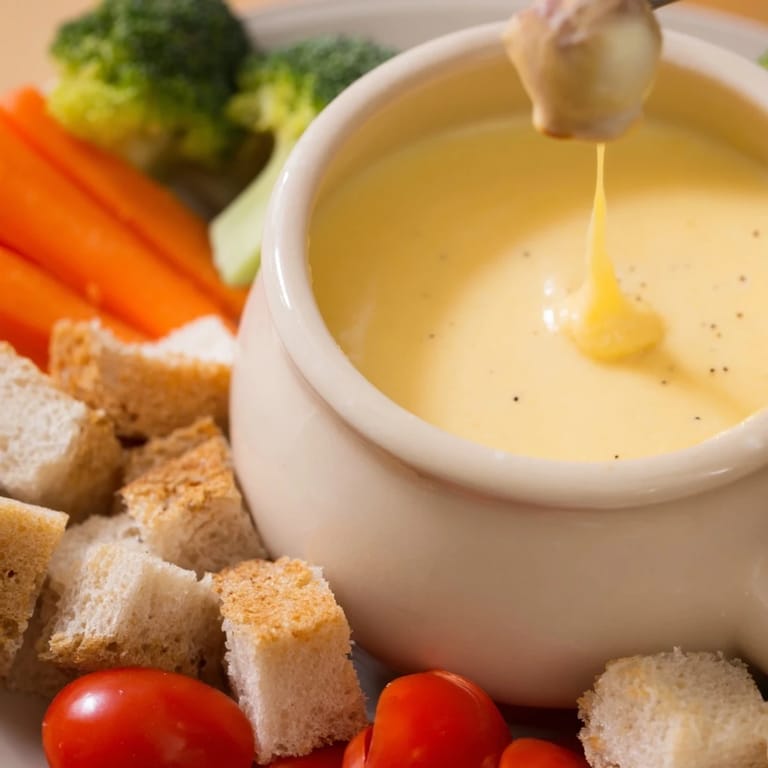
- Transfer the pot to a tabletop burner set to low heat, or keep it in a warm place if using a fondue pot with a built-in heating element. The fondue should stay at a gentle simmer, never boiling; if it starts to break or look oily, whisk in a splash of warm wine to smooth it out again.
 Pin Recipe
 I once made fondue while fighting with someone, and I swear the tension made my sauce break halfway through. We stood there in silence, watching it separate, and then my co-diner just started laughing—really laughing—and suddenly we weren't fighting anymore. There's something about the vulnerability of making something that can fail so visibly that strips away pettiness.
The Art of Dipping
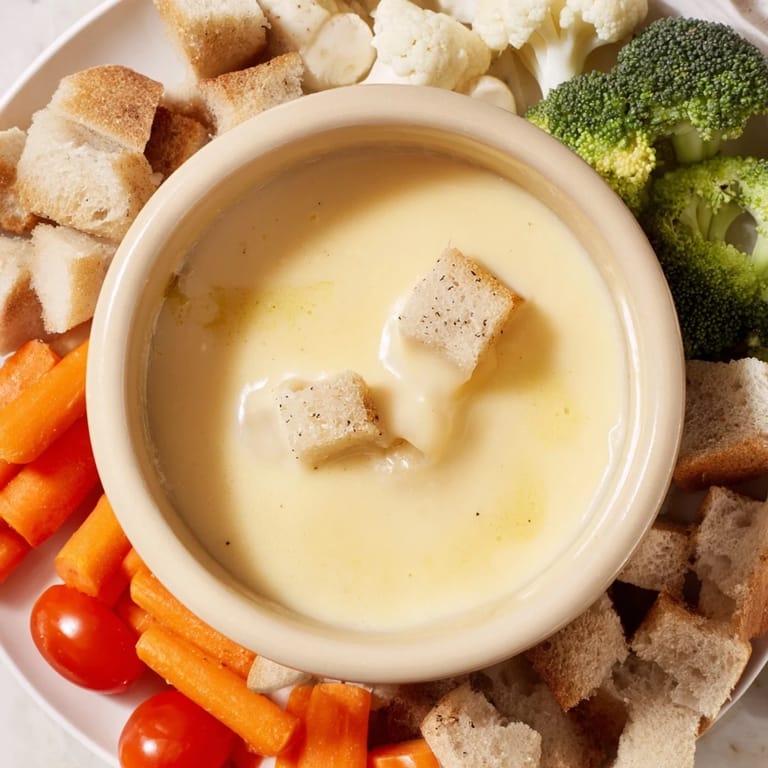
Fondue only works if you have the right dipping vehicles. Bread is obvious, but the vegetables are where it gets interesting—blanched broccoli and cauliflower absorb the cheese beautifully without falling apart, cherry tomatoes burst with acidity that refreshes your palate between bites, and carrots add sweetness that balances the salt and wine. The sequence matters too: start with bread to coat your mouth with that rich, creamy flavor, then move to vegetables to cleanse and prepare for the next round. It's like a conversation where everyone gets a turn and nothing overshadows anything else.
Wine and Cheese Pairing
The traditional pairing is a dry white Swiss wine like Fendant or Valais white, which echoes the wine in the fondue and keeps everything tasting coherent and intentional. If you're not a white wine person, a crisp pilsner or lager beer works surprisingly well—the carbonation cuts through the richness, and the slight bitterness plays beautifully against the nutty cheese. Some people pour a small glass of kirsch after the meal to help digestion, which feels less like nutrition science and more like a small magic trick.
Troubleshooting and Secrets
Fondue can seem fussy, but it's really just cheese, wine, and patience. If the cheese is grainy, you rushed the heat; turn it down and stir gently until it smooths back out. If it's too thick, add wine in small splashes until it flows like warm honey. If it's separated and slick with oil, the temperature got too high—lower the heat, whisk vigorously, and accept that next time you'll be gentler with it. The true secret is respecting that cheese is delicate and heat is powerful, and that low and slow always beats fast and hot.
- Always use freshly grated cheese, never the pre-shredded kind that's been sitting in a bag collecting anti-caking agents.
- If you can't find kirsch, a squeeze of lemon juice or a splash of brandy will do similar work in preventing greasiness.
- Keep a small pot of warm wine nearby to loosen the fondue if it thickens up during the meal.
 Pin Recipe
 Fondue is one of those rare dishes where the meal is really just an excuse to sit together and move slowly through the evening. Once you've made it once, you'll understand why it's been a Swiss tradition for centuries—not because it's complicated, but because it's one of the few ways to turn eating into a ritual that naturally gathers people around the table.
Recipe FAQs
- → What cheeses are essential for this fondue?
Gruyère and Emmental cheeses provide the distinctive creamy texture and nutty flavor essential for an authentic fondue experience.
- → How does kirsch influence the flavor?
Kirsch adds a subtle cherry-brandy depth that enhances the richness, but it can be omitted without compromising the balance.
- → What is the purpose of cornstarch in the mixture?
Cornstarch helps to stabilize the melted cheese, preventing separation and ensuring a smooth, cohesive texture.
- → Which breads and vegetables complement the fondue best?
Crusty baguette or country bread cubes pair well alongside blanched broccoli, cauliflower, cherry tomatoes, and baby carrots for dipping.
- → How should the fondue be kept warm for serving?
Place the fondue pot over a tabletop burner set to low heat to maintain the cheese melt at an optimal silky consistency without boiling.
- → Can I customize the cheese blend?
For a stronger flavor, part of the Gruyère or Emmental can be replaced with Appenzeller, enhancing the overall taste profile.