 Pin Recipe
 I remember the first time I attempted to plate a dish that felt more like edible art than just dinner. It was during a particularly quiet evening in my kitchen, when I wanted to create something that would make my guests pause before they took their first bite. That's when The Infinity Loop Flow came to life—a dish inspired by the idea that food, like life, has no real beginning or end, just a beautiful continuous journey. The moment I arranged those salmon flakes and vegetables in that figure-eight pattern, I knew I'd stumbled onto something special. Now, it's become my signature way of reminding people that the most memorable meals are the ones that feed both the eye and the soul.
I'll never forget the first time I served this to my sister's book club. She walked into the dining room, stopped mid-conversation, and just stared at the platter. Someone said it looked too pretty to eat, which made everyone laugh, but then the first taste proved that beauty was only half the story. That moment, when someone experienced the delicate balance of flavors dancing across their palate, solidified this dish in my kitchen forever. It became proof that you don't need complicated techniques to create something memorable.
What's for Dinner Tonight? 🤔
Stop stressing. Get 10 fast recipes that actually work on busy nights.
Free. No spam. Just easy meals.
Ingredients
- Fresh salmon fillets (300 g), skinless: The heart of this dish—look for fillets that are bright pink and firm to the touch, as they'll flake beautifully without falling apart when you handle them
- Pearl couscous (1/2 cup): The perfect canvas for your infinity loop, holding its shape while absorbing flavors; don't skip the ice bath after cooking if you're making this ahead
- Zucchini, carrot, and fennel, thinly sliced: These vegetables give you both color and texture—the key is slicing them evenly so they blanch at the same rate and create that stunning visual progression
- Baby spinach leaves (1 cup): Delicate enough to nestle between other components but sturdy enough to hold its shape, adding a whisper of earthiness to each bite
- Greek yogurt (2 tbsp): Your creamy anchor and gentle acidic note—it's what transforms simple elements into something that feels indulgent
- Lemon zest and fresh dill: These aren't just seasonings; they're the invisible thread that ties all the flavors together, making people ask what that bright, herbaceous note is
- Capers and toasted pine nuts: The texture heroes—little bursts of briny saltiness and toasted nuttiness that keep each bite interesting
- Olive oil and vegetable broth: The quiet supporters that ensure nothing sticks and everything stays tender
Instructions
- Set your stage:
- Preheat your oven to 180°C (350°F)—this gentle heat is your friend for salmon, keeping it moist and delicate rather than dry and flaky in the wrong way. Get your workspace organized because once you start assembling, everything needs to come together at once.
- Cook the couscous foundation:
- Bring the vegetable broth to a rolling boil and pour it over your pearl couscous, then reduce the heat and cover. Let it simmer undisturbed for 10 minutes—resist the urge to peek. When the time's up, fluff it gently with a fork, creating tiny pockets of air that'll catch and hold the other ingredients. Set it aside to cool slightly.
- Blanch your vegetables:
- Bring a pot of salted water to a boil and gently slip in your zucchini, carrot, and fennel slices. You're looking for that moment—about 1 to 2 minutes—when they're just tender enough to bend slightly but still have a whisper of firmness. Immediately transfer them to an ice bath to stop the cooking and lock in that vibrant color. Pat them dry with paper towels; any water clinging to them will dilute your careful arrangement.
- Bake the salmon:
- Rub your salmon fillets with olive oil—this is your insurance policy against sticking and dryness. Season generously with salt and pepper, then place them on a parchment-lined tray. Into the oven they go for 12 to 15 minutes, until the flesh is opaque and just beginning to flake when you press it gently with a fork. Let them cool slightly, then use two forks to break them into large, presentable flakes that maintain their integrity.
- Mix the yogurt dressing:
- In a small bowl, combine your Greek yogurt with lemon zest and fresh dill. Stir gently—this creamy mixture is delicate and should be treated as such. This is your flavor secret, the thing that makes people ask what's in it.
- Create the infinity loop:
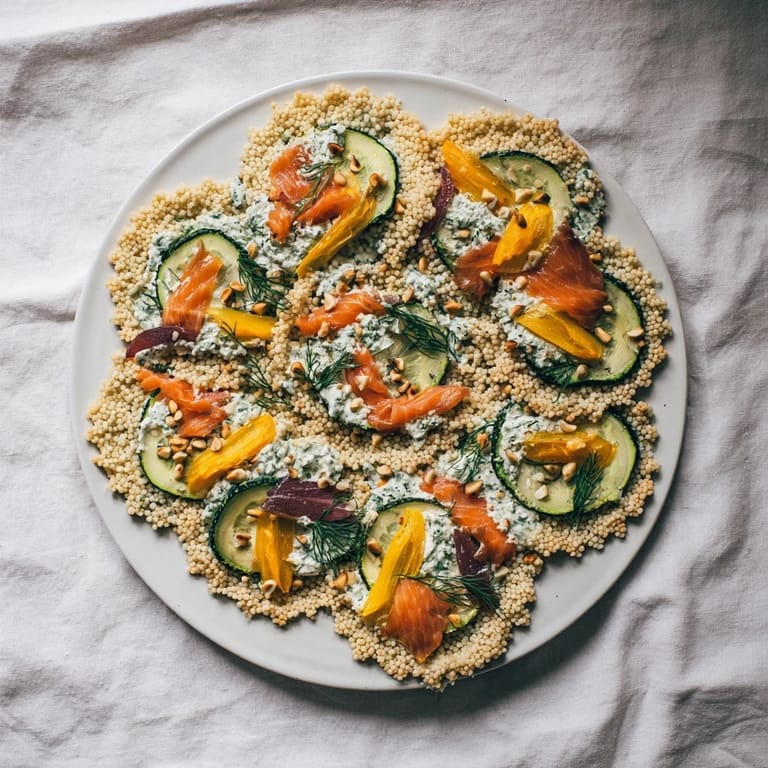
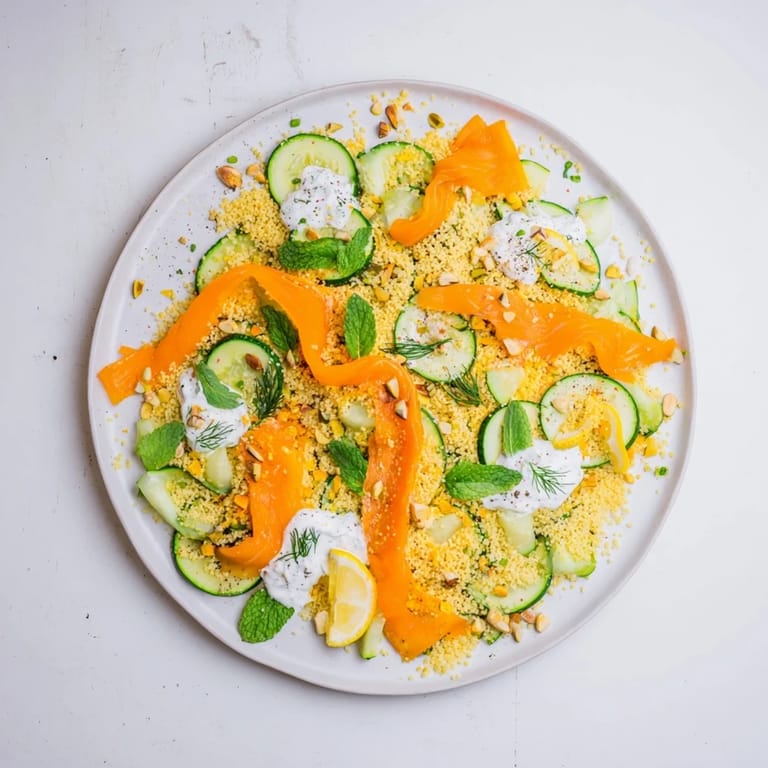
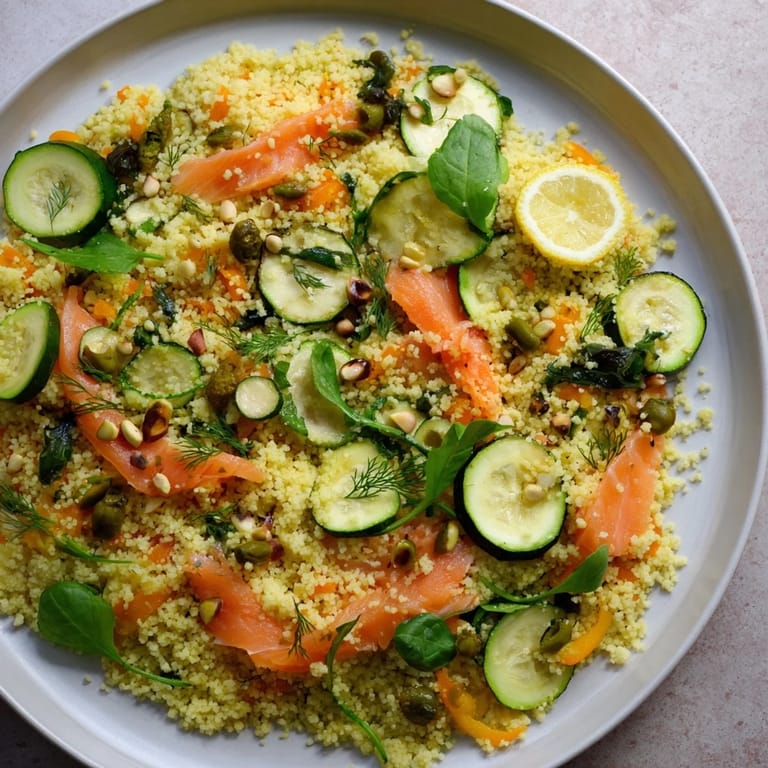
- Now comes the meditative part. On your largest platter, spoon the cooled couscous in a continuous figure-eight pattern—start at the center, loop right, bring it back, loop left. Don't stress about perfection; the organic nature of this shape is its charm. Along the entire loop, arrange your blanched vegetables in alternating colors—the golden carrot next to the pale zucchini, then the pale fennel creating a visual rhythm that draws the eye around the loop. Nestle your salmon flakes into the gentle curves, creating little pockets of protein. Scatter your capers throughout, add small dollops of yogurt dressing, and finish with toasted pine nuts sprinkled over everything like edible confetti.
- Serve with intention:
- Bring this to your table while it's still cool but not cold, and watch the reactions. Guide your guests to start at one point of the loop and follow it around—this isn't just plating, it's a journey on a plate.
 Pin Recipe
 There was an evening when my usually quiet neighbor came over for dinner and brought her teenage daughter who, in her mother's words, 'wasn't eating anything these days.' Watching that teenager take a bite, pause, and then ask for seconds of something she thought she'd hate—all because it was presented with care and beauty—that's when I understood that this dish isn't just about technique. It's about creating a moment where food becomes a conversation starter and a memory maker.
The Art of the Arrangement
The infinity loop isn't just a shape—it's a commitment to visual storytelling. When you're arranging this dish, think of it as conducting a color symphony. The pale couscous provides your neutral base, then the vibrant vegetables add rhythm and movement, and the salmon flakes anchor everything with protein and richness. The beauty here is that there's room for your own interpretation. If you have radishes or beets, slice them thin and weave them through the loop. If you prefer the palette of just two vegetables plus the salmon, that works too. The key is that your eye should be able to follow the entire loop without confusion—it should feel like one continuous journey rather than scattered elements.
Wine and Serving Suggestions
This dish loves the company of crisp white wines that echo its delicate, bright flavors. A Sauvignon Blanc brings out the herbaceous notes of the dill and the mineral quality of the lemon, while a light-bodied Pinot Gris complements the salmon without overwhelming it. Serve the dish on a chilled platter or room-temperature plates—never hot plates, as the contrast between the cool vegetables and hot ceramic will wilt everything. If you're making this for a dinner party, you can arrange the loop up to two hours ahead and keep it in a cool place, then bring it to the table just before serving. The couscous won't absorb moisture from the vegetables if you've patted everything dry, so you have a surprisingly wide window for preparation.
Variations and Substitutions
While salmon is the muse for this dish, it's truly flexible based on what you have on hand or what your guests prefer. Trout brings a slightly earthier flavor that works beautifully with the fennel, while cod offers a more delicate, sweet profile. You could even use white fish like halibut for a lighter touch. Beyond the fish, the vegetable selection is completely customizable—think of the couscous loop as your foundation and then paint with whatever vegetables are at their seasonal best. Beets add drama and earthiness, radishes bring a peppery crunch, and thinly sliced red onion creates a sharp, fresh note. The yogurt dressing is also your canvas: stir in a touch of smoked paprika for depth, or swap the dill for tarragon or chervil depending on your mood.
- Try substituting regular couscous for pearl couscous if that's what you have, though pearl couscous holds its shape more beautifully and is worth seeking out for this specific presentation
- If tree nuts are a concern, toasted sunflower seeds or pumpkin seeds offer the same textural contrast without the allergen
- Make the yogurt dressing richer by whisking in a touch of crème fraîche if you want extra decadence
 Pin Recipe
 This dish has taught me that sometimes the most meaningful meals aren't about complexity or traditional technique—they're about taking time to arrange, to present, and to honor the simple elements in front of you. Every time I make it, I'm reminded that we eat with our eyes first, and when you give people something beautiful alongside something delicious, you've created something they'll remember long after the last bite.
Recipe FAQs
- → How is the pearl couscous cooked for this dish?
Simmer the pearl couscous in boiling vegetable broth for about 10 minutes until tender, then fluff with a fork and set aside.
- → What vegetables complement the salmon in this preparation?
Thinly sliced zucchini, carrot, fennel, and baby spinach leaves are gently blanched and arranged alongside the salmon.
- → How is the salmon prepared to maintain its texture?
The salmon fillets are rubbed with olive oil, seasoned, and baked until just cooked through before being broken into large flakes.
- → What ingredients contribute to the dressing's flavor profile?
The dressing combines Greek yogurt with fresh dill and lemon zest, adding creaminess and brightness.
- → What is the significance of the figure-eight arrangement?
The continuous figure-eight shape visually represents an elegant flow, ensuring a balanced progression of flavors and textures with each bite.
- → Can the fish type be substituted in this dish?
Yes, trout or cod can be used as alternatives to salmon depending on preference.