 Pin Recipe
 My neighbor knocked on the door mid-morning with her arms full of melons from the farmer's market, asking if I wanted to tackle a fruit platter together for the block party that afternoon. I'd never thought much about fruit platters until that moment—they seemed like something you bought pre-made or assembled without much care. But standing in her kitchen with those impossibly ripe melons, watching her face light up as she explained her idea for a honey-lime dip, I realized there's real magic in turning simple fruit into something that makes people pause and smile.
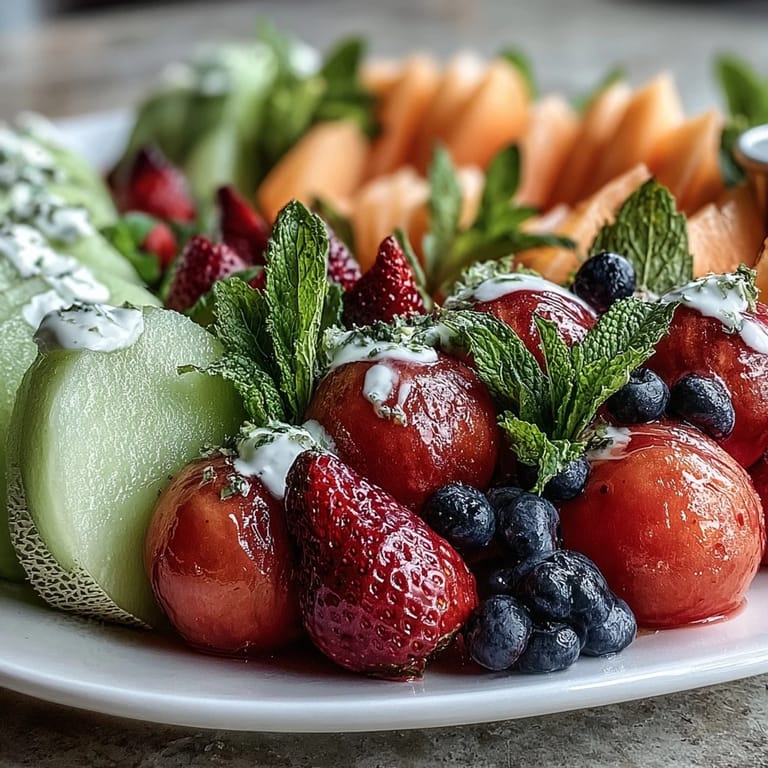
That afternoon, watching neighbors circle back to the platter multiple times, dipping berries and melon into that creamy, bright yogurt sauce, I understood why my neighbor had been so excited. It wasn't fancy or complicated—it was just thoughtfully arranged, refreshingly cold, and perfectly balanced between sweet fruit and tangy-sweet dip. Someone's kid even asked for the dip recipe, which apparently never happens at these gatherings.
What's for Dinner Tonight? 🤔
Stop stressing. Get 10 fast recipes that actually work on busy nights.
Free. No spam. Just easy meals.
Ingredients
- Watermelon: Choose one that feels heavy for its size and sounds slightly hollow when you tap it—that's your signal it's perfectly ripe and juicy, not mealy.
- Cantaloupe: The smell tells you everything; a ripe one should be fragrant even through the skin, almost musky, and the ends should yield slightly to gentle pressure.
- Honeydew melon: This one's trickier because it doesn't have the strong aroma of cantaloupe, so go by feel—the blossom end should be slightly soft, not rock hard.
- Strawberries: Buy them as close to serving time as possible; they deteriorate faster than other berries and look sadder in the platter when they're not at peak freshness.
- Blueberries: A handful of these scattered throughout adds visual interest and prevents the platter from feeling monotonous, plus their tartness balances the sweet melons.
- Seedless grapes: Both red and green varieties work beautifully together, and they're honestly the easiest fruit to prepare—just rinse and you're done.
- Fresh mint: Don't skip this; it brightens the entire platter visually and adds a subtle freshness that ties everything together.
- Greek yogurt: The tanginess is crucial here—it contrasts beautifully with the sweetness of the fruit and honey, creating balance on your palate.
- Honey: Quality matters slightly here since you're using it raw, but even standard grocery store honey creates that luxurious sweetness the dip needs.
- Fresh lime juice: Bottled lime juice feels flat compared to fresh; squeeze it yourself and you'll taste the difference immediately in the brightness of the dip.
- Lime zest: Those tiny flakes of oils from the peel add an almost electric citrus note that's hard to replicate any other way.
- Salt: A pinch sounds tiny, but it amplifies all the other flavors and prevents the dip from tasting one-dimensionally sweet.
Instructions
- Gather and prepare your fruit:
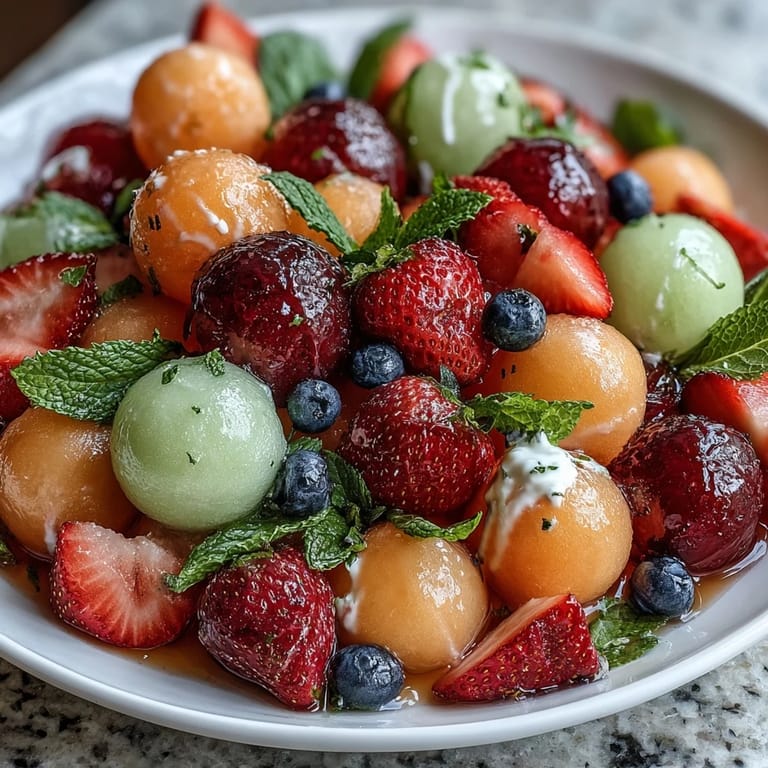
- If you're using a melon baller, you'll feel a satisfying little click as the ball releases—it's oddly meditative work. If you're cutting by knife, aim for roughly bite-sized pieces; they should feel easy to spear with a toothpick or eat with your fingers without being so tiny they disappear.
- Wash and prep the berries:
- Pat strawberries dry after hulling them, as extra moisture makes them look tired on the platter. Blueberries and grapes just need a quick rinse and they're ready to go.
 Pin Recipe
 There's something quietly satisfying about standing back and looking at a platter you've just arranged, knowing it's going to be the thing people reach for first. It's not complicated cooking in any technical sense, but it requires a little thoughtfulness about color, balance, and timing, which somehow makes it feel more intentional than recipes with longer ingredient lists.
The Melon Baller Game-Changer
If you've never owned a melon baller and have been cutting melons into cubes your whole life, you're genuinely missing out. The first time I used one, I felt like I'd discovered a hidden kitchen superpower—suddenly I had perfect little spheres of melon that looked restaurant-quality without any real skill required. The balled fruit creates visual texture that cubes simply can't match, and honestly, eating melon balls feels more fun and less like you're just eating fruit salad.
Variations That Work
Seasonal fruits swap in beautifully here without changing the formula at all. Summer brings mango and pineapple, both of which pair gorgeously with the lime in your dip. Stone fruits like peaches and nectarines work if you're timing this for early fall, and they add a subtle sophistication that berries alone can't quite achieve. Even just switching the herbs—adding basil instead of mint, or using both—changes the entire mood of the platter while keeping everything as simple as it started.
The Dip Variations and Customizations
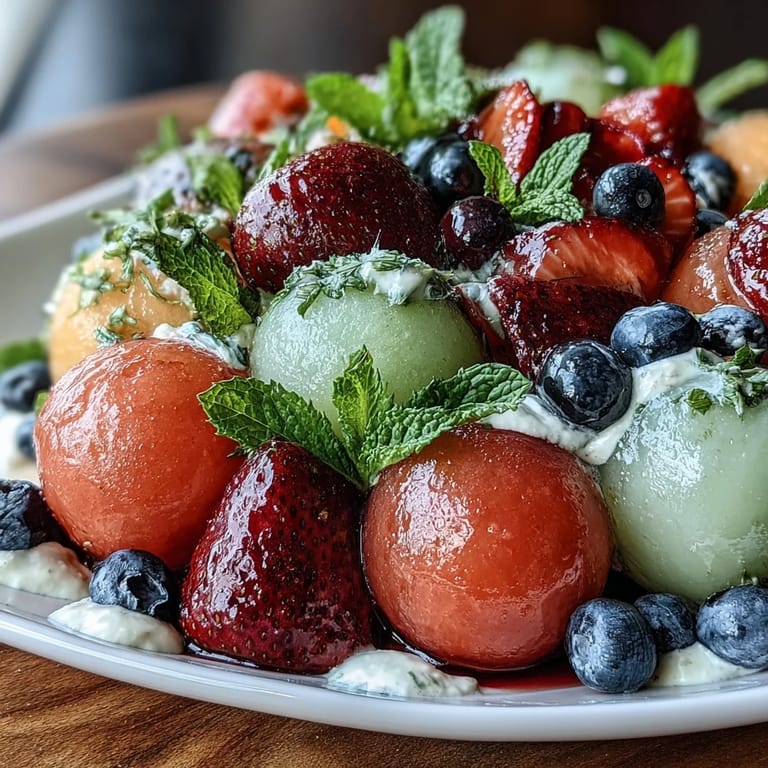
The honey-lime combination is your starting point, not your only option. I've added a pinch of chili powder to wake people up, mixed in a tiny bit of ginger for warmth, or even stirred in some coconut yogurt when dairy-free guests were coming. The base is forgiving enough that you can play with it, and every small change creates a subtly different experience without requiring any additional prep work.
- Dairy-free yogurt swaps in directly with zero texture or taste compromise if you need this vegan.
- A touch of vanilla extract adds depth that surprises people in the best way.
- Extra lime zest on top of the dip just before serving looks beautiful and tastes bright.
 Pin Recipe
 This platter has become my go-to for any gathering where I want to impress without spending hours in the kitchen. There's real generosity in putting this kind of thought into what you serve, and somehow people always recognize it.
Recipe FAQs
- → What fruits are best for this platter?
Watermelon, cantaloupe, honeydew melon, strawberries, blueberries, and seedless grapes provide a balanced and colorful selection.
- → How do I prepare the honey lime dip?
Whisk together plain Greek yogurt, honey, fresh lime juice, lime zest, and a pinch of salt until smooth and creamy.
- → Can I substitute the yogurt?
Yes, dairy-free or plant-based yogurts can be used to accommodate dietary preferences or allergies.
- → What tools are needed for preparation?
A melon baller or sharp knife, mixing bowl, whisk, and serving platters are essential for assembling the platter and dip.
- → How can I add extra flavor to the fruit?
Sprinkle additional lime zest or a dash of chili powder over the fruit to enhance its taste with a citrusy or spicy kick.
- → Is this suitable for gluten-free diets?
Yes, all included ingredients are naturally gluten-free, making it a safe choice for gluten-sensitive individuals.