 Pin Recipe
 There's something almost meditative about watching a single pot transform into a complete meal. One winter evening, I found myself cooking this spiced cod for friends who'd shown up unannounced, and what started as a scramble through my pantry became the most effortless dinner I'd made in months. The warmth of cumin and paprika filled the kitchen before the fish even touched the pan, and by the time I nestled those delicate fillets into the sauce, everyone was already gathered around the stove asking what smelled so incredible.
I made this for my partner on a Tuesday when we'd both had impossibly long days, and somehow the ritual of cooking together, even in silence, felt like the exact reset we needed. We stood at the counter chopping vegetables in that comfortable way long-term couples do, and by the time dinner was ready, the mood had completely shifted. The simple act of this meal coming together seemed to quiet everything else.
What's for Dinner Tonight? 🤔
Stop stressing. Get 10 fast recipes that actually work on busy nights.
Free. No spam. Just easy meals.
Ingredients
- Cod fillets (4, about 150g each): Choose fillets that are bright white and smell clean like ocean spray; the thickness matters because it determines cooking time, and these portions ensure they'll cook through gently without falling apart.
- Onion (1 large, finely chopped): This is your flavor foundation and will soften into the sauce almost invisibly, so don't skip the mincing step or you'll have chunks interrupting the silky texture.
- Garlic cloves (2, minced): Mince them fine and add to the softer onions so they infuse rather than burn, which transforms the entire depth of the dish.
- Bell peppers (1 red and 1 yellow, diced): The color isn't just pretty; different pepper colors have distinct flavor profiles, and together they create brightness and slight sweetness that balances the warming spices.
- Diced tomatoes (400g or 1 can): Canned works beautifully here and actually concentrates flavor better than fresh; they become the body of your sauce and keep everything from feeling too heavy.
- Baby spinach (150g): Add this at the very end so it just barely wilts into the sauce and retains its nutritional power and delicate texture instead of becoming mushy.
- Lemon (1, sliced): These slices do more than garnish; they infuse subtle brightness throughout the cooking and make the whole dish feel intentional and restaurant-quality.
- Ground cumin (1 tsp): This warm spice is the quiet hero of the dish, grounding all the brighter flavors and adding an earthy depth that makes people ask what that intoxicating smell is.
- Smoked paprika (1 tsp): Smoked, not regular, because it adds a subtle depth and smokiness that makes people think you've been cooking this all day.
- Ground coriander (1/2 tsp): A less obvious spice that adds sophistication and pairs beautifully with cumin in ways that feel almost Mediterranean without being obvious.
- Cayenne pepper (1/4 tsp, optional): Start with just a pinch if you're cautious about heat; you can always add more, but you can't take it back once the dish is simmering.
- Salt and black pepper (1 tsp and 1/2 tsp respectively): Season in layers as you cook rather than all at once, which lets each component taste its best before coming together.
- Olive oil (2 tbsp): Use something you wouldn't feel terrible drizzling on bread, because it's not just cooking medium here; it carries the spice flavors into the sauce.
- Fish or vegetable stock (250ml): Fish stock adds elegance, but vegetable stock works perfectly if that's what you have, and either creates the gentle liquid that keeps everything tender.
- Fresh cilantro or parsley (handful, chopped): Cilantro if you love its brightness, parsley if you prefer something more neutral; either way, add just before serving so it doesn't wilt into invisibility.
- Lemon wedges (for serving): These are not optional; they're how guests adjust brightness to their taste and make each bite feel personalized.
Instructions
- Warm your pot and toast the spices foundation:
- Heat olive oil in a large skillet or Dutch oven over medium heat until it's shimmering but not smoking. This gentle start means nothing burns and you control the entire flavor development from this moment forward.
- Build flavor with aromatics:
- Add your chopped onion and let it soften for 3 to 4 minutes, stirring occasionally until the edges turn translucent and it starts releasing its sweetness. When it smells almost caramelized, you're ready for the next layer.
- Deepen with garlic and peppers:
- Stir in your minced garlic and diced bell peppers, cooking for another 3 minutes so everything softens together and begins releasing its flavors. The kitchen will start smelling incredible and that's not a coincidence; it's aromatics doing exactly what they should.
- Bloom the spices:
- Add all your spices at once, stirring constantly for about 1 minute until the air above the pan fills with warm, fragrant smoke. This blooming step is where the magic happens; it wakes up the cumin and paprika and makes them exponentially more flavorful.
- Create the sauce base:
- Pour in your diced tomatoes and stock, stirring well to combine everything into a unified sauce. Bring it to a simmer, which means small bubbles breaking at the surface rather than a rolling boil that would toughen the fish.
- Establish texture and depth:
- Cover and let simmer for 8 to 10 minutes, stirring occasionally, until the vegetables are tender and the sauce thickens slightly. This is the pause that lets flavors marry and become something greater than their individual parts.
- Nestle the fish gently:
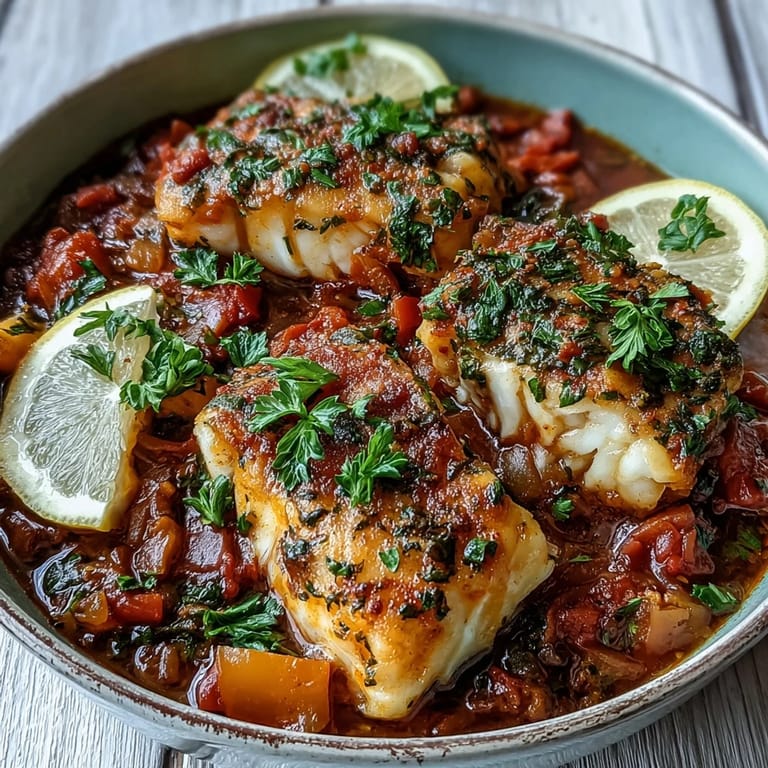
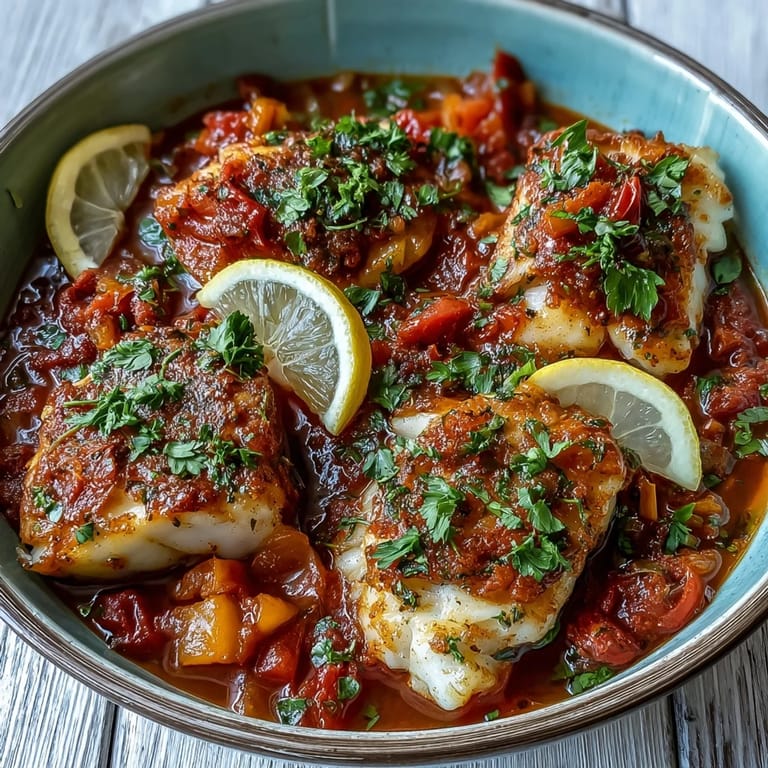
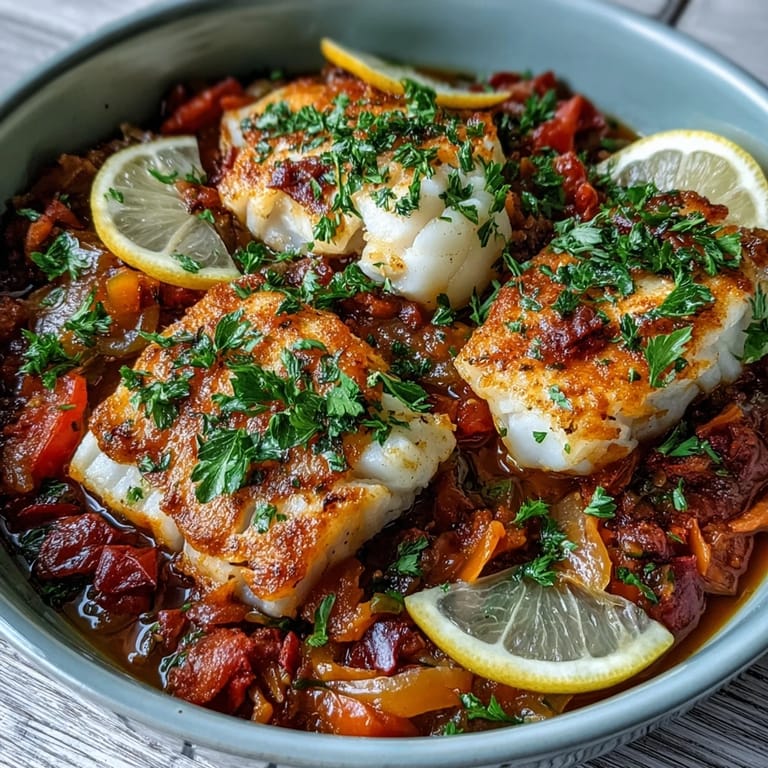
- Arrange your cod fillets into the simmering sauce in a single layer and top each with a lemon slice. Cover again and cook for 8 to 10 minutes, watching for the moment the flesh turns opaque and flakes with just a gentle fork press.
- Finish with wilted greens:
- Add your spinach and cook for just 2 minutes more, stirring gently so the leaves wilt throughout the sauce without disintegrating. This final step adds brightness and nutrition without requiring a separate side dish.
- Serve with intention:
- Transfer to bowls or plates while everything is still steaming, scatter with fresh herbs and extra lemon wedges, and watch people's faces when they taste how something this simple tastes this good.
 Pin Recipe
 I served this to my mother once when she was stressed about something work-related, and she took a bite and just stopped talking for a moment. That's when I realized this dish isn't really about the ingredients or techniques; it's about creating a moment where people slow down enough to remember how good simple food can taste. Food that doesn't demand your attention while you eat it, but somehow makes everything feel manageable anyway.
Why This One-Pot Approach Changes Everything
The beauty of building this entire meal in one vessel isn't just about cleanup, though your future self washing dishes will be grateful. There's something about letting all those flavors develop in the same space that creates a cohesiveness you can't achieve cooking components separately. The oil carries spice into the vegetables, the tomatoes and stock absorb all that seasoned foundation, and then the fish quietly steams in this already-complex sauce instead of being added to something neutral. By the time everything sits together on a plate, it feels intentional and complete, like you've been planning this meal for days when really you started forty minutes ago.
Choosing Your Fish and Understanding What Happens
Cod is ideal here because it's forgiving, neutral-flavored enough to showcase the spices, and firm enough that it won't disintegrate the moment it touches warmth. But if your fishmonger is out or you prefer something else, haddock or halibut work beautifully with the exact same technique. The real lesson isn't about cod specifically; it's about understanding that you want a white fish with some structure, not something delicate like sole that would shatter, and not something assertively flavored like salmon that would compete with your carefully balanced spices.
Sauces, Sides, and Knowing When to Stop Adding
That sauce is intentionally light because you're likely serving this with something absorbent: crusty bread for soaking, steamed rice for absorbing, or couscous for catching every flavorful drop. If you serve it with nothing, you'll have a thinner, brothier meal, which is fine if that's what appeals to you, but people often feel satisfied when they can soak something into that sauce. The genius of restraint here is that you're not making a heavy, cream-based situation; you're making something vibrant enough to stand alone but humble enough to pair with simple carbohydrates.
- Crusty bread soaks up sauce like it was designed for this exact purpose and turns dinner into something you want to slow down for.
- Steamed rice or couscous absorbs the spices and becomes flavorful itself rather than just being filler on the side.
- Even plain yogurt on the side creates a cooling contrast that some people love, though it's not traditional and you definitely don't need it.
 Pin Recipe
 This meal reminds me that some of the best dinners aren't the ones we plan obsessively; they're the ones that come together because we showed up, chose decent ingredients, and didn't overthink it. Make this when you need something nourishing but don't have much time or energy left to give.
Recipe FAQs
- → Can I use frozen cod fillets?
Yes, just ensure they are fully thawed and patted dry before adding to the pot for even cooking and best texture.
- → What other fish works well in this dish?
Haddock, halibut, or any firm white fish are excellent substitutes. Adjust cooking time based on fillet thickness.
- → How do I know when the cod is properly cooked?
The fish should be opaque throughout and flake easily when tested with a fork. Internal temperature should reach 63°C (145°F).
- → Can I make this ahead of time?
The vegetable base can be prepared in advance, but cook the fish fresh to maintain its delicate texture and prevent overcooking.
- → What should I serve alongside this dish?
Crusty bread, steamed rice, couscous, or quinoa all pair beautifully and help soak up the delicious spiced tomato sauce.
- → How can I adjust the spice level?
Omit the cayenne pepper for mild, keep it for moderate heat, or add chili flakes for extra kick. Taste and adjust to your preference.